web analytics

Tag: Reviews

  • #37 album of 2013 – New by Paul McCartney

    #37 album of 2013 – New by Paul McCartney

    Artist: Paul McCartney

    Album: New

    Paul McCartney writes good-natured melody-driven pop songs, which often (as on New, or 2005’s Nigel Godrich-produced Chaos and Creation in the Backyard, or his electronics-driven albums as the Fireman) make an effort to keep up with Paul_McCartney_Newcontemporary production innovations. There’s a good chance you knew that, come to think. He co-led a ’60s band called the Beatles, who were usually celebrated as leading a musical revolution (reports differ as to whether they wanted to be counted in for the destructive bits) while selling then-record numbers of albums (or as Casey Kasem would put it “These guys are from Ireland and who gives a shit”). But they occasionally were attacked by otherwise intelligent people (in this case Lawrence Miles) on the grounds that “Nothing they did in their entire existence was genuinely new, certainly not the supposed ‘revolution’ of Sergeant Pepper, yet they displayed an astonishing ability to take other people’s music and make it so straightforward – you might even say banal – that everybody on Earth could understand it”. Which is a silly way of saying that they took avant-garde ideas generated by academics and other weirdos, and turned them for the first time into songs, excellent songs, thus making an extraordinary run of albums.

    McCartney’s solo career, from 1970 on, has long suffered from a vague widespread disappointment that he has no desire, left on his own, to be ahead of the pack. But by refusing to ever be left completely behind, Paul McCartney reached the age of 70 able to make a very fine New album in which different songs sounded like different stops along the entire timeline of his life — 2013 included.

    At the most modern end, Appreciate is club-dance electronica, McCartney’s vocals switching among trendy James Blake-style neo-R & B, a heavily processed chant feel, and an especially catch bit of rapid-fire singing. The gentle Looking at Her could easily have been an acoustic guitar ballad, but instead is synthetic, twinkly, and taken over at unpredictable intervals by aggressive industrial-ish beats in a rather dubstep-style structure. Hosanna is a pretty minor-key harmony piece over acoustic guitar, but the guitar’s natural echo is processed into a vividly unnatural creature of its own, haunting the song in company with bird-calling synthesizers. Road‘s wobbling synthesizers, distant drums, and ominousness put much of the song in the vicinity of late-’90s trip-hop, except when the piano’s forceful bass chords take over.

    Then again, New , a jaunty music-hall song with piano, horns, handclaps, and lightly psychedelic production touches, could have fit unobtrusively onto Magical Mystery Tour in 1967. Queenie Eye, after a brief string quartet opening, is thumping piano-led Paul_McCartney_Tearock’n’roll with a shouty chorus. Save Us‘s overdriven, compressed power chords feel like nothing before the 1980s, but the jubilant feeling and piano and horns and urgently tuneful group-sung chorus all harken back to rock music’s founding. Alligator‘s occasional heavy guitar hook is produced like a ’90s grunge band covering Ennio Morricone, and the treble synthesizer activity feels like the same era, but there’s barbershop quartet in the vocals and skiffle, Paul’s pre-Beatles genre, in the song’s core. The folk-rock Everybody Out There feels in some ways timeless, but there’s a guitar hook that’s pure ’80s R.E.M. and crowd-baiting, whoa-oh-oh’s, and echoed beats that would feel at home in ’80s arena metal. Then again, the folky Early Days and country-stomp sing-along Get Me Out of Here would have sounded fine when Paul was a little kid.

    The lyrics are fine but don’t mostly affect my reaction to the record. My favorite song here, the acoustic-guitar-centered On My Way to Work (which does have a couple nicely fuzztoned hooks), is an affecting song about loneliness, and watching other people looking for some sort of direction in life, where the narrator is blatantly not Paul; more often we either don’t know anything about the narrator, or it’s clearly the perspective of an old rock star. The main things Paul McCartney has learned about life are that if you’re rich and millions of people love you, you can be happy, and if you have a gift for writing catchy but subtly unpredictable melodies, you should write lots of them. You’ll need to decide for yourself how useful you find those lessons, but on their own terms, they’re wise. And as any newscast will remind you, not everyone who *does* need those lessons learns them.

    – Brian Block

    To see the rest of our favorites, visit our Favorite Albums of 2013 page!

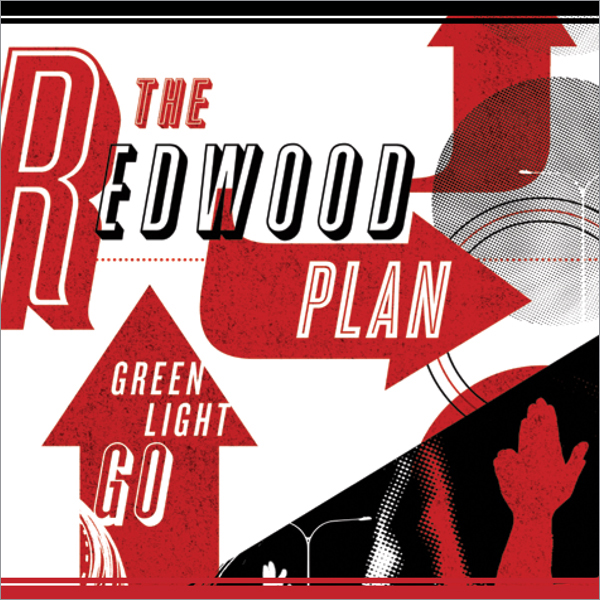
  • #38 album of 2013 – Green Light Go by Redwood Plan

    Artist: Redwood Plan

    Album: Green Light Go

    For some of you, I can do a one-sentence review of the Redwood Plan‘s second album Green Light Go that’s reductive but useful: they’re like if Sleater-Kinney used catchy New Wave synthesizers and only Carrie Brownstein (the one who ended up in Wild redwoodplan_GreenLightCoverFlag)’s vocals. Or maybe like if X-Ray Spex featured a singer from Seattle instead of Brixton, better vocal pitch, and those catchy New Wave synthesizers instead of saxophone. Redwood Plan singer / keyboardist Lesli Wood doesn’t seem like she’d mind the comparisons: the punk/ riot-grrl scene, as a place to act out rebellion and personal liberation among friends, is a repeated concern of her lyrics. “We need to rattle at the cage, instead of staying silent”; “No one said it would be easy, or that it’s always fair/ You do it cuz you love it, that’s the motivation here”; “It’s been a long damn way to come/ to barely know which side you’re on”; that’s from three different songs. “Your mama gotta take it out on you/ and you are so vicious when you’re feeling so small/ but all the things that bug you don’t mean anything at all”, she sings elsewhere, on Your Fair Share. A song later you and she will “be strong” and “keep our stride” and “[not] waste a second” because “you and me, We are the Team“.

    “We don’t need to work it out in silence/ You know that you got to get a reaction”, from the title track, is the record’s central premise. Of course the adult world screwed you up, of course you’re weak and conflicted, of course sometimes you’ve done the wrong thing; but Redwood Plan are here, with forceful singing and pumping drumbeats and limber electric guitars and anthemic blasts of synthesizer, to bring you back to your best self.

    Lesli Woods’s full-time work is as a personal injury lawyer, which seems apropos, not because anything on Green Light Go is policy-political (it isn’t), but because hers is a misunderstood line of work whose clients, though often in the right, are looked on with contempt. Hundreds of urban legends circulate about personal injury lawsuits, in which greedy regular joes do something idiotic to hurt themselves, then sue innocent corporations and win millions of dollars. They virtually never hold up to Snopes-type investigations, which reveal that many of the legends are conjured from thin air — no burglar ever sued a homeowner for injuries Redwood Plansustained while robbing, nobody ever sued a nightclub over getting hurt while trying to sneak in a back window — while most of the rest look entirely legitimate with facts in hand. When a jury awarded 79-year-old Stella Liebeck $2.9 million in damages from McDonald’s, for example, headlines about idiot jurors rewarding some ditz for spilling hot coffee on herself dominated the headlines; the stories rarely bothered to mention that Liebeck had spent eight days in the hospital receiving skin grafts, that McDonald’s regularly kept its coffee 60 degrees hotter than safety allowed, that it had continued to do so while ignoring over 700 reports of 3rd-degree burns from its coffee over a decade, that the “outrageous” fee awarded was two days’ worth of the profit McDonald’s made from coffee alone, or that the judge reduced the fine to less than 20% of what the jury awarded anyway. Woods, when she isn’t singing, is presumably urging her clients, too, to take seriously the wounds inflicted on them by criminal negligence, and not blame themselves just because most of their neighbors are blaming them. No surprise if it carries into the music, and her words-first delivery.

    The arguable downside of the record is monotony: that however exciting one Redwood Plan song is, the others are doing the same thing. That’s not absolute, and there’s distinctions to be made. Panic On, the lead single, has an especially catchy clash of rhythmic elements hitting hardest at different beats. The Scenery & Melody is the prettiest song (though still at punk energy), the most plausible fake entry in 1983’s MTV rotation, and the strongest case for Woods being able to sing much more demanding kinds of music. Rattle has the most dance-club rhythm section, and even drops out twice for simple drum-machine solos. Your Fair Share shows the clearest awareness of Skinny Puppy, Nine Inch Nails, and the rhythms of public speaking. The One is sort of a synth-punk power ballad. It Goes Something Like This has a minor-key moodiness suggesting both goth-pop and Another Brick in the Wall, and the chorus rhythm is fierce and unpredictable, tied to the logic of rhetoric instead of beats. Green Light Go has lots of extra syncopation.

    Still, these are differences on the margins, of songs that are 70% alike, and I’ve been known to be picky about that. I’m not very picky here because, if you’re going to have a formula, it might as well be a fast, catchy, exciting one. Thinking is an extremely important (and underrated) thing to do *before* the protest. During the action, it’s as important to still feel like acting.

    – Brian Block

    To see the rest of our favorites, visit our Favorite Albums of 2013 page!

  • #39 album of 2013 – Adam Ant is the BlueBlack Hussar Marrying the Gunner’s Daughter

    #39 album of 2013 – Adam Ant is the BlueBlack Hussar Marrying the Gunner’s Daughter

    Artist: Adam Ant

    Album: Adam Ant is the BlueBlack Hussar Marrying the Gunner’s Daughter

    Adam Ant (born Stuart Goddard) was already a weirdo in his rock star days, circa 1980. A young glam-rocker, playful and flashy and sly, he was allowed to emerge after the decline of what should have been his subculture, because he used enough prominent Adam_Ant_BlueBlack_HussarAfrican drumbeats, and a twerpy enough singing voice, to sound New Wave. Within a few years, though, he was softening his sound and pushing his synthesizers forward, and while he kept recording hits for awhile, he lost the interest of critics (and of me). In 1995 he released a more acoustic-based soft rock album, Wonderful, the title track of which was just enough of a hit for me to process it as awful. Then he stopped issuing new music.

    Until, in 2013, he re-emerged with a fair candidate for the best, most interesting album of his career. Which, as far as I’m concerned, is what Orchestral Maneouvres in the Dark did in 2010, the Dead Milkmen did in 2011, and the Fixx did in 2012, so maybe there’s something to be said for relaxing, living life, and storing up your comeback at a rate of one new song per year.

    Adam Ant is the BlueBlack Hussar Marrying the Gunner’s Daughter is flash and excess as a title — Hussars were Hungarian cavalry noted far more for elegant aristocratic clothing than for actual fighting skill — and the 17-song album fits, but not in an in-your-face way. His guitarists (Boz Boorer and Chris McCormack) provide plenty of rock energy, in styles ranging from spaghetti-western (Cool Zombie) to ’50s rock’n’roll (Vince Taylor) to Smiths impressions (Dirty Beast) to swirling shoegaze feedback layers (Stay in the Game) to Rage Against the Machine stomp (Hardmentoughblokes). But his voice has grown casually conversational, tossing its highly expressive flow in the direction of notes but never glancing over to see where they land. The drums are usually prominent, as in his prime, but more often country-rock, marching-band, or even proto-industrial (Shrink) rather than sub-Saharan tribe.

    His musical softer side is present, but strange. The languid country-ish lament Valentines is beset by bizarre vocal harmonies: some low and droning, some in bird-chirp falsetto. Darlin’ Boy doesn’t have a single non-weird element: not Ant’s exaggerated articulation and long gliding syllables, not the very stubborn quarter-note percussion tapping, not the half-barked half-yapped vocal harmonies, not the near-subliminal guitar squall bending notes in peculiar sequence. Punkyoungirl‘s guitars swirl like Ocean Rain-era Echo and the Bunnymen or Disintegration-era Cure, picking up dark grunge-inflected bass riffs, but it’s a cheerful song paced by a perky drum machine. The synthesizer notes of Cradle Your Hatred wobble in and out of focus like passing aircraft, and actually you should just *assume* every song here has its own weird-ass vocal arrangements.

    Lyrically, Marrying the Gunner’s Daughter feels personal, which isn’t to say confessional. Adam_Ant_2013Cockiness is a thing Ant does, hence him naming himself after the glamorous hero of a TV action show (Adam Adamant Lives!, created by Doctor Who’s great producer Verity Lambert). Cradle Your Hatred is an apology edged into a fierce attack on the fact that you’re still mad. Hardmentoughblokes is a complaint about bullies (“McQueen, Tim Roth, Vinnie Jones, you can all fuck off “, intriguingly linked to the claim “They are the one percenters”, and we do know Occupy Wall Street was defeated by paid, organized violence as much as anything else)… but he slips into the role of the tough guy himself before it ends.

    The claim “I nearly done a Vince Taylor”, name-checking the ’60s rocker, probably means “I nearly destroyed my life with drugs and alcohol”, and maybe “I came close to where I could’ve only saved myself by joining a religious cult”, but it’s kept vague. Marrying the Gunner’s Daughter is about having been a “frightened boy” who “wanted death”, and portrays how the pressures of fame made it hard to properly enjoy, but can’t help being pleased that “They sentenced him to life: Anarchy and girls’ bodies, epiphany for life (nice dream)”. Punkyoungirl appreciates youth, in a gross way: “Punky young girl needs a middle-aged man/ whose midlife crisis you began/ Punky young girl, such a work of art/ licensing each body part/ Ooh, don’t wanna go yet/ Lift up your skirt, let me lick the alphabet”. Like Bullshit (which is middle-aged, cynical, and cranky), it doesn’t suggest a man in search of *ideas* from the young.

    But Adam Ant is getting new ideas from somewhere, and delivering them with panache, along with a varied and expert assortment of old ideas he’d once seemed to forget. There’s supposed to be swagger in Mr. Goddard’s performance, after all. Being old can be about reflection. But it can also be about knowing what you’re good at, and taking a relaxed pleasure in showing it off.

    – Brian Block

    To see the rest of our favorites, visit our Favorite Albums of 2013 page!