
web analytics

Tag: Reviews

  • Don Henley’s Cass County…

    Don Henley’s Cass County…

    Rating:

    don henley cass county

    I’ve listened to Don Henley’s Cass County and I think it’s a keeper!

    Fall is one of my favorite times of year for many reasons. One of the best reason October rocks is that it’s a good time for new music. Don Henley’s Cass County was released on September 25, but I have been taking the week to get to know this new release. It’s Henley’s first new release in fifteen years and he’s lined up an all star roster of Nashville stars to help him make Cass County a great album. While much of Cass County’s songs are original Henley compositions, quite a few tracks are covers. Henley named this album after Cass County, the county where his hometown of Linden, Texas is located.

    I purchased the sixteen track iTunes deluxe version of this album, though several versions are available. Frankly, if I’d had the ability to, I would have bought Target’s version, which features bonus tracks by Alison Krauss and Stevie Nicks that aren’t the iTunes version. Wal-Mart also has a deluxe version of this album. The standard version is twelve songs and is available on Amazon.com. Unfortunately, the iTunes version doesn’t include liner notes, so I’m left having to guess about some of the personnel.

    Cass County kicks off with “Bramble Rose”, a gentle waltzing ballad featuring Miranda Lambert and Mick Jagger, of all people. Jagger’s distinctive vocals are an interesting addition to this otherwise smooth number. I will admit to not being very familiar with Miranda Lambert’s music, but she has a very pleasing voice that blends well with Henley’s. The three mix wonderfully toward the end of the track as they sing the chorus. I never thought I’d hear Mick Jagger sing anything resembling country music, but I will admit he does fine on this… and recognize that his own style is heavily influenced by rhythm & blues and soul, which is a cousin to country music.

    The next song is “The Cost of Living”, a song Henley performs with Merle Haggard. Henley had commented that singing with Haggard was sort of on his bucket list. Again, a solid track, though it’s not my favorite on this album, nor is it the most memorable.

    The energy kicks up with “No Thank You”, which is a rocker with amusing lyrics. Henley has a reputation for being sometimes difficult and cranky. That crankiness comes out in this song, which sounds like an old codger who’s been there and done that. The more I hear this song, the more I like it, mainly because I identify with its cranky mood. It’s a real “anti bullshit” number… maybe right up there with “Get Over It”, Henley’s 1994 hit with The Eagles.

    I really like “Waiting Tables”, a song that speaks to me because I waited tables for awhile, biding my time until something better came along. This song’s melody reminds me a little of “Tequila Sunrise” and a little by “Learn To Be Still” by The Eagles. It sounds like a song they could have recorded in the 70s and many will identify with it, especially women who grew up in a small town.

    The dramatic ballad “Take A Picture Of This” sounds a little more like Henley’s more recent offerings. It reminds me a little of his sweet love song, “Taking You Home”. It’s followed up by the pretty waltzing tune of “Too Far Gone”, a song that laments love lost.

    Henley teams up with the dynamic Martina McBride on the driving, rock edged song, “That Old Flame”. Henley and McBride sound great together… this song sort of reminds me of when Henley teamed up with Patty Smyth in 1992 and sang “Sometimes Love Just Ain’t Enough”. This song has a similar sound, only it’s more Nashville than rock and roll. And, in fact, the song is about how you can get burned trying to rekindle an old flame. That’s true… there’s usually a reason people break up, right?

    “The Brand New Tennessee Waltz” is a cover of the late Jesse Winchester’s original composition. I like this song because it kind of has an old fashioned feel to it, with lots of acoustic strings and a quick stepping waltzing rhythm.

    “Words Can Break Your Heart” has more of a modern sound. It’s a pensive ballad, again reminding me of “Learn To Be Still”. Unfortunately, this song didn’t successfully download on iTunes and I ended up having to get it from Amazon.com. The woman singing with Henley is not identified. I am guessing it’s Trisha Yearwood, but I’m not sure.

    I don’t have to guess who the lady singer is on the next track. It’s Dolly Parton, still sounding wonderful as she joins Henley on their majestic duet “When I Stop Dreaming”. I read in an interview that Henley had to coax Dolly to sing as high as she does on this song. It was a good instinct on Henley’s part. Dolly is still awesome and a welcome voice on Cass County.

    “Praying For Rain” is an interesting song that will resonate with those who have noticed climate change. It wouldn’t be a Henley album without some mention of the environment, since it’s no secret that Don Henley is a big supporter of environmental causes. It’s a good song with strong lyrics, and it won’t be too surprising to anyone who has listened to Henley’s music over the years. The mandolin accents on the chorus sound tingly, like maybe the fresh drops of rain would feel after a prolonged drought.

    A little saloon piano opens “Too Much Pride”, a song warning against being too hard to satisfy. I wonder how closely Henley follows the advice in this song about “lightening up”. Henley explains in a CMT interview that he knows he has a reputation for being easily upset. He explains he’s a normal guy who isn’t so bad. He just doesn’t satisfy fools gladly. Alright then. I like the song, though. I should probably heed the words myself.

    “She Sings Hymns Out Of Tune” is a cover of a song originally done by The Dillards and written by a little known composer named Jesse Lee Kincaid. Henley explains that he thinks this is a very interesting song. I tend to agree. The lyrics tell a story, again, about an ordinary person with a story.

    It wouldn’t be a country album without a song about a train, right? “Train In The Distance” is a song with a story that brings to mind scenes from the past, of growing up in a small, southern town, seeing Grandma every day and dreaming of what’s beyond the tracks.

    “A Younger Man Now” is a ballad about a guy who admits to his woman that he’s not the man she wants. He sings of not being a knight in shining armor. She’s looking for a younger man than who he is. Perhaps this song could be described as the song before the breakup. I think a lot of men will relate to it, especially if they’ve gotten involved with someone who is trying to change them into someone they aren’t.

    The last track on my iTunes deluxe version of Cass County is another rocker. It’s called “Where I Am Now” and has a lead guitar that sounds very familiar… kind of like the country songs that have been coming out of Nashville for years. This track is different because Don Henley is singing it. The lyrics are pretty cool, though. They’re about a guy who has become comfortable in his own skin. He likes where he is now. So do I.

    If you are living in the States, you have the chance to buy a number of different versions of Cass County. It kind of annoys me that artists do this nowadays, but I guess it’s their way of making more money, especially since people can now download only parts of albums. True fans are liable to buy all the different versions of whatever they’re selling. At this point, I can’t get the Target version of Cass County in Germany. If I were in the States, I’d probably go for that one over the one I have. Your mileage may vary.

    Overall, I think Cass County is worthwhile for Henley’s fans, especially if you like country music.

  • #14 album of 2013 – Love by Cloud Cult

    Artist: Cloud Cult

    Album: Love

    By late 2009, for reasons I’m about to explain, it became impossible for me to ever be objective about the Minnesota alt-rock-plus-strings band Cloud Cult. So I’m happy that I still have on file my old ballots in Tris McCall’s Critics’ Polls for the years 2007 and 2008, where *at the time* CloudCult_LoveI voted their the Meaning of 8 and Feel Good Ghosts the 4th- and 3rd-best, respectively, albums of their year. Lower than I’d rate them now, but if you’re not new here, you’ve seen the amount of enthusiasm I manage to spend on even the 20th or 30th best albums of a year, let alone higher.  I was, in other words, excited about Cloud Cult even before the summer where I introduced my then 2- and 0-year-old sons to the world of music videos. (Caution: if you’re here for the album review and don’t want to hear this story, skip to the asterisks below.)

    We didn’t watch TV. There’s a lot of worrisome research about the effects of TV on young kids’ brains, and I’m inclined to something between caution and paranoia about it. But music videos are short, and the kids enjoyed letting me point out events in the videos, narrating everything that happened: it was vocabulary lesson, it was music-listening education, it was highly active parenting. If it was also a chance to enjoy favorite songs while claiming to be On Duty, and if at times I was still saying “music videos are short!” as we watched eight of ‘em in a row, I wasn’t averse to that either.

    Donovan, my older kid, had been essentially mute through his second birthday, and was in speech therapy; his vocabulary that summer probably wasn’t more than ten words. He communicated choices of videos by pointing, where possible, and by inventive vocalizing. He’d request Crazy Train by going “I! I! I!” like Ozzy at the start of the song; Jane Siberry’s Ingrid and the Footmen, similarly, by imitating the “yah-dee-yah-dee-yah-dee” bit. He’d request the Sparks’ Dick Around by putting on a particular facial expression and asking “cats?” (although a year or two later, inevitably, Dick Around became the first song he learned to request by title). But in those first ten words — and easily the most difficult to say — was the most special request of all: “Cloud Cult”.

    I don’t know quite how they grabbed his imagination in such a particular way. Most of his favorite videos, then and now, are full of imaginative things happening; Cloud Cult, like a couple of other exceptions (Amy X Neuburg in particular), we saw instead in a live setting, building up, say, No One Said It Would be Easy layer by easily identified layer. The kids learned to identify singer Craig Minowa and his guitar pick, Shannon Frid and her violin and her high harmonies, Sarah Young and her cello, Arlen Peiffer’s cymbals and kick drum and timpani and part-time beard, and Connie Minowa’s live painting during the concerts. I shared some of the band’s bio, too, the Meaning of 8 being the only CloudCult_FeelGoodGhostsalbum I ever bought because of an article at the environmentalist web site Grist, where the personable eco-journalist Dave Roberts praised the music to the skies while telling about how Cloud Cult recorded their music on Minowa’s organic farm by using geothermal energy, and packaging everything in recycled materials. My family and I do much-simpler eco stuff of our own (we’re vegetarian, we have solar cells, we get the rest our electricity — including for our electric car — through wind turbines using Arcadia Power). Maybe even at 2 Donovan noticed a resemblance. Maybe he just noticed the music’s gorgeous, which it is.

    Shortly after turning 3, Donovan started having behavior trouble at his Montessori school — hitting kids, for example, with no apparent malice; not doing his work. Now, we resolved the issue through straightforward pragmatic actions — getting artificial dyes out of his diet, sending him to preschool five mornings a week instead of two, persuading the school to give him visits to the next higher level so the work would be more interesting to him, letting time pass so his language skills would grow and his frustration at muteness would shrink away. But day to day we were resorting to What Would Cloud Cult Do? It was his idea: he was the one getting behavior notes by asking us “Are Cloud Cult vegetarian?” (“yes”), “Do Cloud Cult like green peppers?” (“I don’t know, but probably”), “Do Cloud Cult like to play Go Fish?” (“I have no idea, sorry”). Cloud Cult certainly wouldn’t get frustrated and hit a 2-year-old. That one we knew, and it made enough sense to him to get him, sometimes, through the day.

    In June 2010 we were visiting relatives across the river from Philadelphia when Cloud Cult, who never seem to tour the Confederacy, were playing in Philly. We couldn’t take him, because seriously you don’t take a 3-year-old to a concert with a listed start time of 8:30 p.m., but I’ve never felt sadder to miss a show. By August, meeting his new teacher, she asked him “What kind of music do you like?” and, thinking over his now-larger vocabulary, he answered “Tori Amos”. But when Cloud Cult released Light Chasers that September, it was his first direct experience with having brand new music from a band he loved. All three records, by now, are permanently imprinted on my mind. Fortunately, they’re full of worthwhile details that I’m delighted to have there. (The Meaning of 8 has, I think, the largest quantity of terrific music, being long; Feel Good Ghosts the highest average-per-song quality and the most interesting experiments; Light Chasers the most structural ambition and prettiness. If you like one you’ll probably like all three.)

    **********

    Love follows faithfully in the footsteps of the Cloud Cult albums before it. Donovan was 6 when it came out, half a lifetime older and with many more interests, so I haven’t been asked to play Love a hundred times; it strikes me and the boys as excellent, not as a magic talisman. By describing it CloudCult2013in broad strokes I can also describe its predecessors. As mentioned, it’s pretty and ‘90s “alternative”, rock fully integrated with keyboard/ cello/ violin. It’s sweet and earnest. Even when they rock out hard — raggedly like Complicated Creation, darkly like 1x1x1, frantically and with chime-and-xylophone-led ominousness on Sleepwalker — they have zero interest in being edgy, and they’re rebellious only by calm example. Ingredients are usually added one at a time, giving a feeling of constant momentum, except in the innocuous little acoustic guitar songs (You’re the Only Thing in Your Way, Good Friend). One comparison I like, for anyone it helps, is with Flaming Lips, if their highly orchestrated Soft Bulletin and Yoshimi Battles the Pink Robots had maintained more guitar rock; Craig Minowa, for one thing, sings like a Wayne Coyne who managed to keep his high strained voice on the aimed-for notes.

    Some of the arrangements are genuinely unusual — for example, It Takes a Lot’s assemblage of vocoder’d singing, tingling keyboards, constantly shifting live and electronic percussion, rusty-tuned-swingset noises, and bowed strings — but none of them are flashy. Even when the Show Starts Now closes the album with a soft ballad of encouragement, and suddenly the band are singing together over thunderous drums, the volume’s been turned down enough that the thunder is clearly in the next room.

    Despite the band’s passionate environmentalism, the songs are apolitical, focused on the individual-level challenges of trying to be a good person, face life’s challenges, love the people around us, and stay motivated in a universe that too often seems indifferent to our concerns. If we’re honest, Cloud Cult are not my usual sort of favorite band. Oh, the sophisticated arrangements are, but I love flash, and wordplay, and giddiness, and jokes, all of which are much easier than being a good and motivated person. But like the Agony Family, whose Earth was my favorite album of 2012, Craig Minowa and company just wouldn’t be any fun *not* to like. There are people in the world who defy all our hard-won irony by being, I suspect, every bit as nice and good and useful as they seem. They’d be too easy as targets, and they’re not smug so there’s no joy in resenting them. Sometimes they make wonderful music, with the best of intent. As my kids (too young for irony anyway) know, we might as well enjoy it.

    – Brian Block

    To see the rest of our favorites, visit our Favorite Albums of 2013 page!

  • #15 album of 2013 – Diseases of England by the Indelicates

    Artist: the Indelicates

    Album: Diseases of England

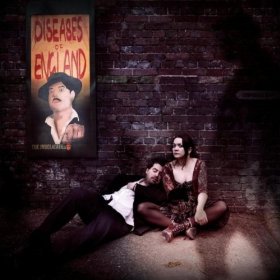
    The Indelicates, first of all, have a brilliantly chosen band name. “Indelicate” is, especially in their native England, a judgment of improper behavior, misbehavior. To brag of indelicacy is to forward naughtiness, rebellion. But it’s to do so in an environment where decorum and olde Indelicates_Diseases-of-Englandstandards apply: an upper class, at least a schooled upper-middle one, and one largely vanished by the time of the Indelicates’ 2008 debut. It is a band name for scruffy punks, but ones with music training, who wear their ties and school sweaters but simply refuse to arrange them correctly. It is a band name for youngsters who do take pleasure in fucking shit up, sure, but prefer the artfulness of doing so while hiding in other characters from other times. And would rather write a clear melody, then bump it around a tad, than destroy their perfectly good ears in daily blasts of distortion.

    Simon and Julia Indelicate, in their educated, articulate voices, are very good lyricists. Chameleonic ones, taking any perspective that seems worth a reaction and running with it. Prior to 2013’s Diseases of England they’d placed four songs on my various best-of-the-year mix-cd sets. America, unfashionably anthemic like the Joshua Tree by way of Sister Christian, attacks their native scene as hurtfully as possible by comparing it unfavorably to the dankest aspects of the New World colonies: “The pop stars who write operas and make fatuous remarks/ the theory-quoting upstarts who snort fair-trade coke in parks/ I find myself a loner and I find myself bereft/ Agreeing with Bill O’Reilly more than the Left”. Which is unreasonable to me too, but then, Jerusalem, a quick-stepping music-hall duet, attacks someone who “Know(s) exactly how clever sounds/ the soft consonants and rounded vowels…/ You and your friends discussing how/ it seems rebellious to vote Conservative now”. That said, Jerusalem’s narrators know their own stereotypes too — “We all love the Smiths and we all love the Clash/ but the smell of leather is intoxicating/ Brilliant minds, we are genii/ we excel at drama and formal debating” — but proudly declare victory in advance.

    Savages, slow and grandiose, is a showy doomed-romantic anthem, lovers too powerful for a dull, scuffling world: “We are ash, we are books/ coffee-stained and overlooked/ we are ornamental swords/ forged for the peace after the war/ and the world has no need/ of the songs that we sang/ we are savages, you and I/ and we will hang, hang hang”. And McVeigh, a fast funky dance number with urgently roughened vocals, is an anti-government rant that many of my friends and I would agree with the majority of — sung from the perspective of the genocidal racist who blew up the Murrah Federal building (killing hundreds of Americans) and intended to kill a thousand times more by poisoning major water systems. All four narrators are self-righteous and cocky, but no two can be the same person, and I haven’t even brought up, e.g., the song from one of Patti Hearst’s kidnappers yet.

    **********

    Diseases of England is the fourth Indelicates album, and their third straight excellent one. It shows off some splendid new tricks. The openers, Bitterness is the Appropriate Response and Pubes, are the heaviest, loudest songs of their career: nasty (but cleanly-produced) bass riffs, swirling carefully-shaped feedback, pounding piano or high-speed synthesizer melodies in the background, Simon and Julia shouting their melodies and harmonies and sensually rolling their r’s.  We are Nothing Alike is sprightly with danceable acoustic guitar — flamenco or similar — with soaring duet vocals and, then again, a fervent angry breakdown in 7/4 time. Class gets to the 1:24 mark on only vocals and a powerfully Indelicates_hand-puppetssustained cathedral organ drone, before brass, woodwind, and strings loosen the tension with an instrumental melody. (Only at 2:52 do the drums show up, carrying a triumphant oom-pa beat to the end.) Dirty Diana slyly morphs from mediaeval hymn to a light-opera translation of a chain-gang work song.

    The rest of Diseases of England is a more usual Indelicates mix of show-tune, jazz-pop, and English and Irish folk-song, with just enough hints of woodwind and cello dissonance to keep you from sitting too comfortably. For some reason these more band-typical songs, though nice, are slow and low-energy this time, which tells you right now what excuse I found, besides the usual tyranny of math, to rank the album down at #15.

    As for what they sing about, there’s certainly fond new versions of the we-are-better-than-you-lot pose — Everything is Just Disgusting, indeed — but there’s also a new left-wingness to them. Dirty Diana sings the hatred of a servant girl (“grit in her eyes and her cheek/ … acid in the joints of her limbs”) for her masters: “You disgust her with your books and tea and wisdom/ you disgust her with your stories of yourself/ You would lead us, now she sees you on your belly”. Clarifying “the scardom they deserve/ for their comfort and their nerve/ and their pale, flaccid weakness most of all”, the girl exposes the vicious irony of Matthew 5:5: “the meek inherited the earth” already, and paid the strong to do all their work for the lowest wages they could find. Class, written from upper-class perspective, mocks the uselessness of protest by “the envious” when “The scum with aching feet will march ignored in the next street/ because the TV speaks to diction and to stars”. It admits that Downing Street is “a cesspit filled with lime”, but sneers “It would be pretty as a picture if you’d studied architecture/ you haven’t, but you can, for thirty grand”. We are Nothing Alike, sung from old money, tells a rising young professional that she will be embraced and made to look just like them, but will never, ever be treated as equal. Pubes seems at first like its target is internet porn, but turns out to be about how easily women can be dismissed once “the presence of their sex organs has been implied”.

    I’d like to think I’ve learned something about the Indelicates’ actual worldview with Diseases of England, but that’s just a fancy way of saying I’d like to think my own worldview is so obviously right that anyone who can articulate it so well must agree with it. This is not a safe assumption. But the Indelicates have never had to agree with me to be an extremely good band. And despite their new albums’ pacing problems, in many ways they’re a more fascinating good band than ever.

    – Brian Block

    To see the rest of our favorites, visit our Favorite Albums of 2013 page!