web analytics

Tag: Reviews

  • #40 album of 2013 – Of This & Other Worlds by Hidden Masters

    Artist: Hidden Masters

    Album: Of This & Other Worlds

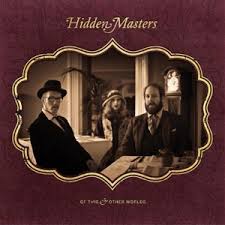
    Of This and Other Worlds, the 2013 debut of Glasgow’s Hidden Masters, would have slipped nicely into some record label’s 1971 release schedule. Something like Love’s Forever Changes crossed with the Who Sell Out, with extra doses of Odessey and Hidden_MastersOracle vocal harmonies and the loudest Beatles and Thirteenth Floor Elevators riffs and mysticism, it is unembarrassed psychedelic retro, and it is *really good at it*. My ranking it at #40 serves only as a reminder, first, that all my rankings are compliments, and second, that if you care more about classic rock more than I do, you might rank it way, way higher.
    Opening track She Broke the Clock of the Long Now shows off quite a few of their tricks in 4:39: fierce-but-catchy flanged guitar, agile tempo changes, fast solos, sharply-composed vocal harmonies (behind the confident, smooth lead vocals of David Addison), a slowed-down spacey bridge. Into the Night Sky kicks off with rapid, perky folk-rock, works in Procol Harum organ, slows down into a drum/ piano/ wavery-bass workout (highlighted by more vocal harmonies), jumps back into double-time, then almost immediately delves into a-cappella, then tricky rhythm changes; seems ready to return to the slowed-down bit, but instead lets everyone stand aside for a proto-Black Sabbath guitar solo; jumps into spy-chase music; and winds back up at perky folk-rock. Perfume is, on average, slower and grander (it still shifts around a lot), and makes extra-sure you notice how good a drummer John Nicol is and how much he enjoys echo.

    See You in the Dark plays a Lovin’ Spoonful cheerfulness at extra velocity. Like Candy is a different side of Lovin’ Spoonful, their gentle bubblegum pop, done Hidden Masters style — which means it detours into something more like an Everly Brothers duet, perhaps if they’d been produced by someone tripping, and then into something a bit like the Archies trying to make Immigrant Song, then into clean-cut finger-snapping college a-cappella group in front of the Byrds’ instrumentalists or something. Grey Walls Grey brings the syncopation and the organ and even more enthusiastic harmonies than usual; Fall in Line, while on average rather dignified and stately, keeps bringing in new ideas for almost six full minutes. And none of the variation is in the show-off-ish Bohemian Rhapsody/ Mr. Roboto style; all the songs on Of This and Other Worlds can pass for standard first-wave psych-rock, until you make yourself wonder “How did we get here from *there*?”

    I can imagine someone having no interest in classic psychedelic pop-rock. I can imagine someone who *does* like classic psychedelic pop-rock finding it inherently ghoulish for a band of young men to never once draw on a single muse more recent than the first three Blue Oyster Cult albums. Still, either of those attitudes would be a pity. If you’re not stuck with either, then the Hidden Masters, within the chosen confines of those old forms, bring a surplus of abilities, fresh ideas, harmonies, and hooks into the open.

    – Brian Block

    To see the rest of our favorites, visit our Favorite Albums of 2013 page!

  • #41 album of 2013 – Flying Colours by Shad

    Artist: Shad

    Album: Flying Colours

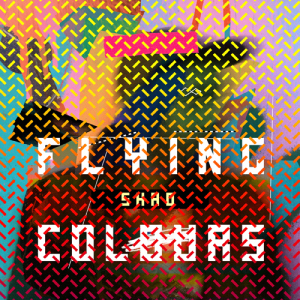
    The Kenyan-born Toronto rapper Shad‘s magnificent given name is Shadrach Kabango. Surely if he’s been more aggressive and posturing in his style, someone at absolute minimum would’ve convinced him to hold onto the syllable “bang”. Shad has enough ego Shad_Flying Coloursto survive in the rap game, yes: his 4th album Flying Colours includes its genre’s requisite wordplay bravado games (“Ooh, look at how I’m killing these tracks/ I’m a vet but not the type that’s feeling these cats/ Where’s the real Emcees at? I’m dying, I need to hear someone as ill as me, stat” — a genuinely clever through-line of double meanings, wasted on pure peacocking). But Shad is also a misfit in his genre: an immigrant, a Christian, a guy who can sustain Star Trek wordplay over a lengthy verse instead of just a quick one-liner, and a do-gooder who needs a big ego to justify his sense of social responsibility. His rapping strikes a solid compromise between the demands of rhythm and a desire to be conversational. And Flying Colours is an unusually pretty rap album, as well as occasionally a daring one.

    Y’all Know Me has a ’70s Stevie Wonder feel, built on acoustic bass, tambourine, spacey synthesizers, melodic “Ooh-ooh-ooh” harmonies, and Shad‘s unsteady, but potentially smooth and soulful, tenor singing voice. Fam Jam (Fe Sum Immigrins) is built on a sunny Buddy Holly-style guitar loop — I’d swear it’s a sample of Kleenex Girl Wonder’s great the Pathetic Fallacy if it wasn’t extraordinarily unlikely that you or Shad has ever heard of it —  as well as ’80’s-style record-scratching noises and a pleasant, barely audible bass line. The saxophone, Rhodes keyboard, and piano of He Say She Say are back to ’70s soul with a touch of ’80s Bruce Hornsby, although the clunky drum machine adds it more modern charm. Dreams has a low bass keyboard, mournful cello, and highly syncopated drum machine that suggest a more musicianly take on the Cure’s bleakest years (sampled musicians, sure, but bleakly lovely). Stylin’ — part his second boasting song, part his love letter to hip-hop as a salve for a confused black immigrant boy — has similar bass keyboard, but plays everything for joy, letting Kabango rap gleefully fast, then sing inside heavy echo that makes him sound like he’s refracting into a dozen of himself. Progress Progress is weird, and perhaps my favorite thing here, progressing from slam poetry unaccompanied, to slam poetry over piano and skittering fake drums, to slam poetry over intense and dissonant orchestra strings, to singing over acoustic guitar and chilled-out beats. Or Remember to Remember might be my favorite, hypnotic and urgent, over sawing cello, synthesizers like distant arcade-game space battles, and gorgeous circling vocals from Valerie “Lights” Poxleitner.

    A big part of how I learned to enjoy hip-hop is displayed on Flying Colours: it’s perfectly capable of building itself from ingredients I already loved in pop songs, sometimes putting them in combinations I haven’t heard before. Then a lot of stylized Shad_Adopt-a-schooltalking is layered over it: that took adjustment, sure, but it also puts focus on the what the rapper has to say, and a million albums about drug-dealing aside, that can be an important strength. Shadrach Kabango identifies, even in his bragging songs, as “an egghead with glasses”, and cares about what his listeners will hear him say. None of his lyrics deserve the too-short summaries I’ll give them, but Fam Jam celebrates the contributions of immigrants (also giving a quick thanks to Doctors Without Borders), and endorses the concept of working up the class ladder. He Say She Say is a relationship failure portrait that carefully lays no blame, trailing off with a chorus of “Then I wanted to do a verse about how they worked it out, but…”. Dreams protests the crowded noisy concrete ghettos and announces “We think till we’re emotional, then drink until we’re sociable again/ This whole century is sensory overload”. Progress Progress juggles and juxtaposes dozens of allusions, but is arguably centered on how his love for pop culture doesn’t justify the way pop culture is used to deflect us from fury at the bankers who hijack economies and police who tase or water-cannon those who protest. Remember to Remember is a self-conscious song about the importance of rappers being self-conscious: they have a mike, what are they going to do with it?

    Shad certainly uses the right, as we all do, to be cheap and trivial sometimes. But not the right to do harm. Where Jay-Z and Kanye West’s Niggas in Paris is a lavish celebration of exploiting women — some of whom surely enjoyed it, yes, but which women and why and with what possible side effects is clearly of no interest — Mr. Kabango remembers Paris as a place where he ate nuggets. Which is also disrespecting chicks, come to think. But above and beyond the pretty music and nifty drum machine beats, I appreciate the harm he’s at least trying to avoid.

    – Brian Block

    To see the rest of our favorites, visit our Favorite Albums of 2013 page!

  • #42 album of 2013 – Pedestrian Verse by Frightened Rabbit

    #42 album of 2013 – Pedestrian Verse by Frightened Rabbit

    Artist: Frightened Rabbit

    Album: Pedestrian Verse

    Frightened Rabbit singer Scott Hutchison has the greatest thick Scottish accent I’ve ever heard in a singer — yes, even over Craig and Charlie Reid from the Proclaimers. That, and the power (but gentle spirit) in Hutchison’s lungs, really ought to be enough to sell Frightened_Rabbit_Pedestrian_Verseyou on Pedestrian Verse, their fourth and perhaps best album. I’m assuming of course that, like me, you wore your traditional clan kilt at your wedding, or that even if you didn’t — perhaps because you’re female — you realize now what a fine idea that is.

    Maybe you need more info. Maybe you care what the band behind Hutchison sounds like. Okay. They’re a grand, impassioned guitar-rock band, closest to the ’80s versions of U2 and Big Country. Plausibly close to Pearl Jam, too, if you scrape off that band’s grim excess of noise and trade in Eddie Vedder; close to Arcade Fire’s Funeral if you toss aside that band’s bowed strings and occasional female singer. Maybe Pedestrian Verse could even have been an alternate path from Radiohead’s the Bends if Thom Yorke had reacted to fame by making his neuroses more apologetic and inclusive, rather than frightened, repelled, and willfully odd.

    Not to imply Radiohead’s actual experimental path was in any way wrong. I’m just saying that Yorke, unlike Hutchison, has never put in the first person imagery like “I am that dickhead in the kitchen/ Giving wine to your best girl’s glass/ I am the amateur pornographer/ Unpleasant publisher by hand/… Let’s all crowd round the cowering body/ Throw stocky fingers, sticks and stones./ Let’s promise every girl we marry we’ll always love them, though we probably won’t./ Not here, not here, heroic acts of man”. Yorke would leave it in the 2nd person, an accusation, and wouldn’t, as Frightened Rabbit does, imagine finishing the song with anyone trying to improve. So that comparison didn’t work, minor-key acts of musical tension and build-up (and, on Acts of Man, fragile falsetto vocal prettiness) aside.

    Big Country, though, could certainly have written a love song with the electric urgency and nautical sway of Woodpile: “Would you come to brighten my corner? A lit torch to the woodpile/ Come find me now, where I hide, and/ We’ll speak in our secret tongues”. It took Scott Hutchison to frame his sales pitch in a context of “Bereft of all social charms, struck dumb by the hand of fear”, that’s all.

    If anything Frightened Rabbit are, in spirit, that thing which gets called “emo”, though the guilt sounds to me as much like Catholic school. When we sing to their anthems, we take it for granted that we still haven’t found what we’re looking for because we’re blind and stupid, or, more likely, what we’re looking for had the good sense to run away while itFrightened_Rabbit could. It doesn’t mean they aren’t as outward looking as their guitars’ echo and tremolo pedals. State Hospital sings in earnest hope for a romantic couple where “She’s accustomed to hearing she could never run far, a slipped disc in the spine of community” and he’s “a plumber, ruddy and balding, who just needs a spine to dig into, a chest for the head and a hand for the holding”. We’re 20+ years into the era of Kurt Cobain: we know how to use soft/loud/soft, and we know we’re inadequate, but at least we can suck together.

    Frightened Rabbit‘s sound used to be janglier, thinner, wirier, more jittery. My favorite of their songs, 2008’s the Modern Leper, placed the urgent romantic perplexity of “Is that you, in spite of me, coming back for even more of exactly the same?” inside a hilariously thorough metaphor of leprosy, and its central riff was something an adventurous bluegrass band might have stumbled across. Here Acts of Man has piano, State Hospital gentle synthesizer, and the guitars are beefier and more resonant. They have grown into broken adulthood, frayed community. An extremely Scottish frayedness, so, y’know. It works for me.

    – Brian Block

    To see the rest of our favorites, visit our Favorite Albums of 2013 page!