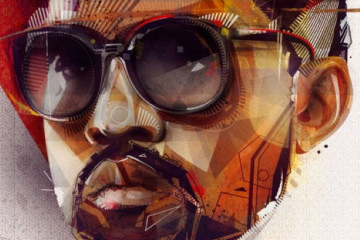
Reviewing Kanye West‘s Yeezus is a double challenge for me. On the one hand, Yeezus was chosen by music critics as a whole, in the giant Village Voice Pazz & Jop Poll, as the #1 best album of 2013 (so my rating it as #33, though intended as a compliment, 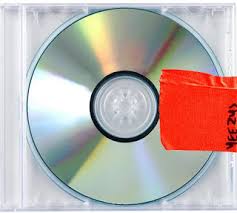 opens the question “Why are you dissing it?”). On the other, I’m pretty sure a majority of *my* readers don’t like Kanye West at all. Since he’s had many hit singles, including Black Skinhead, New Slaves, and Bound 2 from Yeezus, I’m stuck trying to convince readers they’ve made an oversight that isn’t about — as when I’m reviewing Kobo Town or the Burning Hell — “Yo! Look over here! This album exists!”
Yeezus isn’t the record I’d’ve chosen to make my case for Kanye with. Previously, a large part of the case for West is that he’s a brilliant magpie, tossing together genres (and often samples) in ways that make no sense until you hear the results — results which also tended to be highly melodic. I don’t like his earliest albums as albums, but he was recording individual songs I loved as far back as 2004’s Jesus Walks: sad/goofy military doo-wop, joined by aggressive sound effects, by female choral vocals, by snake-charmer woodwinds, by gospel-singing melisma, and his own intense rapping. (That’s also the year he wrote and produced Twista’s hit Slow Jamz, a gorgeously seductive soul song with self-satirizing rhymes like “I’m gonna play some Vandross/ You’re gonna take your pants off.”)
By 2010’s My Beautiful Dark Twisted Fantasy — a Pazz & Jop poll winner that’s in my own top ten for its year — he was juggling more elements than ever. Dark Fantasy led the album with white and black church choral traditions together, lean minor-key hip-hop beats, chamber strings backing cyborg vocals, and a piano hook my 7-year-old would find easy to play that is nonetheless a majestic and lovely way to tie things together. All of the Lights put symphonic synthesizer fanfare (a la John Williams or Vangelis, c. 1980) together with soul singing and the ultra-busy drum machine of techno/jungle music. Hell of a Life turned a synthesized copy of the Black Sabbath Iron Man riff into something even hookier, strafed by fast swirling synth-piano and backing-up garbage trucks; Kanye West himself stole Ozzy’s vocal melody (with permission), sang it in smoother and lower voice, and put more notes in it, proving himself correct to do so. Blame Game had a catchy light cocktail-jazz piano hook, simple drum machine, orchestral drum rolls, saxophone, cello, and vividly weird bits of vocal processing. Lost in the World started with a-cappella close harmony R & B vocals run alienatedly through pitch-correction, then joined them to stomping ’80s rock percussion (an army of stormtrooping Phil Collinses), Michael Jackson tributes, cavernous synthesizer drones, slam poetry, and, for a bit, the rhythmic warping of the entire sound envelope. Good tunes abounded everywhere, new ingredients popped up every few measures, the song-to-song transitions were carefully managed, and the result was a panoramic album that sounded un-self-consciously of a piece. 2011’s Watch the Throne, a joint recording with Jay-Z, encompassed just as much territory, and is in my top ten for its own year.
Yeezus, like-but-unlike 2008’s 808s and Heartbreaks, deliberately sacrifices some of that for the sake of mood. 808s was a sad, guilty-but-unkind-but-analytical album focused on a romantic breakup, and borrowed most of its tropes from synth-pop, which it combined with the most varied, artfully alien, emotionally effective use of pitch-correction I’ve ever heard. Yeezus, on the other hand, finds him relatively happy with his personal life, mostly using his voice un-disguised — and part of his success is that Kanye West may be the most communicative rapper out there, focused and intense and articulate, sly with his occasional punch-lines, building rhythm around the rhetorical demands of his words. But personally happy or not, Yeezus is bristling, paranoid, strutting and fierce in his approach to the world, and its songs are leaner, built on synthesizers as aggressively artificial as I’ve ever heard. Album opener On Sight sounds like a malfunction at first, or would if it wasn’t sneakily/ weirdly tuneful, but even when the harsh rhythm kicks in, it still feels like the music equivalent of the Outer Limits urging you “There is nothing wrong with your television set…. We are controlling transmission… We will control the horizontal. We will control the vertical. We can roll the image; make it flutter”. Black Skinhead is sparse, percussive, somewhere between “stereotyped primitive tribe” and “psychotic cheerleaders”, with a simple, ominous bass-synth tune and some low wobbly resonances to give you something to hum. I am a God cuts up samples of a lovely vocal-classical piece by Indian composer Rahul Dev Berman over low harsh drones, and twists Kanye’s voice so that we’re clear which kind of God he’s claiming to be: the scary-ass Old Testament kind who destroys cities and drowns continents if you don’t “hurry up with my damn croissant”. (It contains some of my favorite punchlines of the year, which doesn’t make the nearby digitized screams any less jarring.) New Slaves is, behind its urgent rap, pure melody, fit for a music box that in turn is fit for vengeful ghost children who are laughing nastily at your inability to see them. I’ve heard people complain that this sort of soundscape has done before in hip-hop — by El-P, by Cities Aviv, by Death Grips. Those examples aren’t wrong, but they’re anti-melodic. Not only does Kanye sing capably when he so chooses, but his every instrumental riff is for us to sing nonsense words to.
One flaw in this is that I’m not accounting for the blatancy of West’s sampling this time out, where his songs shift genres for a minute at a time by reproducing sizable chunks of pre-existing records, a little bit altered and supplemented but entirely recognizable and taking dominant roles. I hated that crap when Vanilla Ice stole Under Pressure for a boring rap, or Puff Daddy stole Every Breath You Take for a boring rap of his own. My justifications for Kanye doing it are (1) that he gets permission and pays royalties, and more importantly (2) that he’s completely open about his sources, and indeed willingly publicizes them, leading to useful pages where you can watch videos of the original songs. Plus, in almost all cases, I like the results and the juxtapositions, and I rarely knew the originals. Tellingly, the one I have a problem with is his use of Nina Simone’s performance of the anti-slavery song Strange Fruit, which I own in original form, and which sure as hell doesn’t belong in a song (Blood on the Leaves) complaining about Kanye’s alimony payments.
Which leads to the second flaw in this account: Kanye West has always presented himself as an arrogant asshole who loves hetero sex in vast quantities but resents women and defines himself by expensive purchases. That used to be balanced against a provocative political intelligence: Jesus Walks‘s self-aware attack on the pro-hedonistic biases of commercial radio; Who Will Survive in America‘s critique of a capitalist America that lulls us away from protesting by making us dream of lovely things we might someday, in theory, afford; Murder to Excellence‘s argument that we need a million more black men as exorbitantly rich as he is in order to get black poverty taken seriously; No Church in the Wild‘s circle-of-insignificance “Human beings in a mob: what’s a mob to a king? What’s a king to a God? What’s a God to a non-believer?”, and its endorsement of polyamory for his wife as well as himself. But on Yeezus we have exactly one intelligent point about the world: New Slaves‘s reminder that the Corrections Corporation of America is legally entitled by the 13th Amendment to use prisoners as slaves, and is therefore profit-motivated to lobby for many, many arrests. It’s drowned by periodic sloganeering (no, Kanye’s mistreatment by record company execs is *not* tantamount to working 18-hour days picking cotton and being flogged if his back pains make him too slow) and a whole lot of discussion of his cars and his penis and how no woman should charge him money for the pleasure of serving his penis. It’s gross.
Like Eminem on his Marshall Mathers LP, Kanye balances this with self-awareness and self-mockery (even the one romantic song 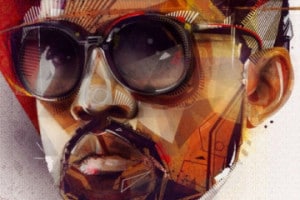 on the album, Bound 2, asks “Hey, do you remember where we first met?/ Okay, I don’t remember where we first met”). Plus occasional vows to improve; it has a mild voyeuristic intrigue. It’s still gross. Tris McCall makes the following defense: Kanye West‘s albums are great, in part, because he makes great use of collaborators. His stable of collaborators keeps growing larger, because he *never loses one*. In other words, he can’t possibly be a narcissistic jackass in person, because he’d drive people away — not everyone, but enough so you’d notice. The level of intense detail on his albums suggests that Kanye is above all a nerdy sound engineer and control freak — a good-natured one who’s welcoming of new ideas as long as he’s allowed to shape their final result — who has adopted the persona of a ridiculously cocky person in order to scare away people who would interfere with his vision. Surely he’s a hedonist, but by itself that’s not all bad. It makes sense. I suspect McCall is right.
Does it matter? Eh, I think it helps a little. Kanye West is an extremely talented man who probably could, if he so chose, make some of my favorite albums of all time. But if he was focusing on me, he’d probably have smaller budgets and fewer people to call on, and then what we hear wouldn’t match what’s in his head. Yeezus is the product of a man who’s extremely successful in a culture that produces and rewards successful jackasses. It doesn’t sound quite like anything else, and it sounds excellent, and now and then it makes me laugh. Even when it makes me cringe, it’s basically aiming to. I’ll take it.
– Brian Block
To see the rest of our favorites, visit our Favorite Albums of 2013 page!
[AMAZONPRODUCTS asin=”B00CV5ZPA2″]
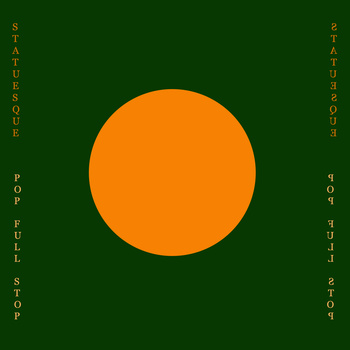 often gave a striking imitation of full-band performance and professional production. I imagine that’s expensive and time-consuming for a hobby, though, so by 2013’s Pop Full Stop he’s settled into releasing large gobs of songs (25 on Pop Full Stop itself, plus he released two other albums that year) that sound much more like one guy plus a part-time drummer. It’s completely understandable but disappointing. Not because the resulting album isn’t a pleasure; it is one, hummable and lonely/ funny and playing with complicated rhymes and over-extended metaphors (about which more in the third paragraph). It’s disappointing only because it’s the outlines of a masterpiece that no one had time to fill in.