Artist: Bye Bye Blackbirds
Album: We Need the Rain
If I’d run a personal poll of my music-geek friends to name the best album of 2013, I think the winner would have been We Need the Rain, an old-fashionedly tuneful guitar-pop album by the Bye Bye Blackbirds. This comes with a caveat: a large share of my voters would have 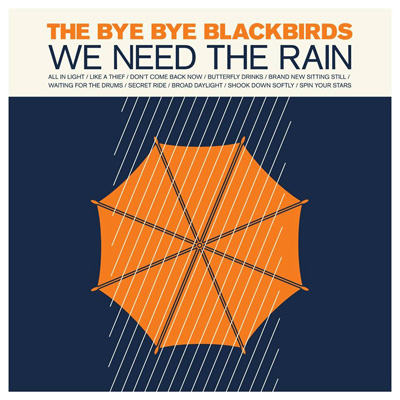 been personal friends of Blackbirds singer/songwriter Bradley Skaught (with whom I’m a friendly online acquaintance). But it also represents something real: Skaught has made at least four albums prior to this, and it’s We Need the Rain in specific that I’ve seen capture listener enthusiasm in such a major way. Its songwriting fits a clear musical tradition — emphatic male tenor/alto vocal melodies, guitar riffs, vocal harmonies, simply propulsive drumming, interesting chord changes, everything built for sing-along catchiness — that used to be highly commercial (Buddy Holly, Rubber Soul) and then kept existing long after it wasn’t anymore (the Rubinoos, the dB’s, Marshall Crenshaw, Adam Schmitt, Richard X Heyman). Its performance, unlike with Skaught’s previous band lineups, is a louder, chunkier rock take on these sounds, with some new country-rock leanings as well, as if Neil Young or the Old 97s had ever tried to pass as British Invasion bands.
Because there’s so many records like this, what makes one stand out can boil down to collections of little details. All in Light cuts the guitars and vocals in and out to leave plenty of emphasis on a syncopated tambourine-and-drumbeat built for sports arenas. Like a Thief spreads out to accommodate several different very good guitar solos, gang-harmonized call-and-response chorus vocals, classic-rock organ, and various key changes, but is pushed along by 5 minutes of gloriously persistent quarter-note drum stomping. Don’t Come Back Now‘s legato vocal melodies trace the quarter note beats with unusual precision, and the guitars flip from mildly sinister to rousing when the lyrics flip from bad romance (“Fathoms deep but still we walk the plank again”) to a determination to move on and be alone. Butterfly Drinks puts a blues-rock swagger to its pop harmonies, pumping up its realistic seduction lines “Meet me where the light looks better on me, I’ll meet you where the light looks better on you./ Just a few drinks for the nerves, and just a few drinks for the road”.
Brand New Sitting Still — co-written with Paula Carino (a wise-ass tunesmith whose 2002 album Aquacade is We Need the Rain‘s major competition for “most widely loved album made in my friendship circle”) — is pretty and restrained, with Christmas-y percussion, but shows 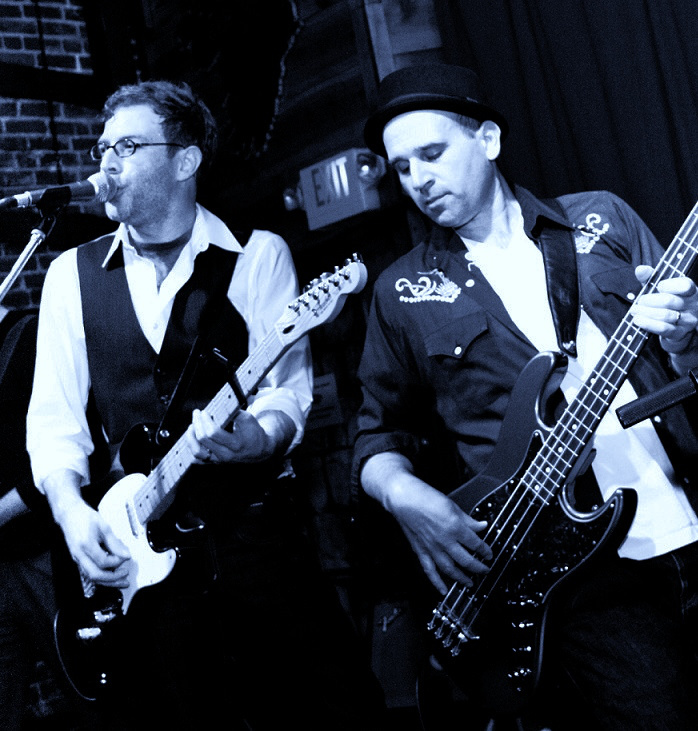 off with quietly impressive guitar soloing and an extreme number of chord changes. Waiting for the Drums genuinely sounds like a re-mastered early Beatles track — not counting the quick rock-god drum solo — right as they were moving on from “She loves you and you know that can’t be bad”, to lyrics more like Skaught’s “Two sad eyes soaking up a desert/ Look around, nothing’s getting better./ Listen to the verse, waiting for the drums/ Aching in your heart, playing like your numb./ But now that you find you’re in love/ will you surprise me?” Arena-rocker Broad Daylight rings out forcefully, but with heavy syncopation and plenty of space.
Then there’s 6-minute album closer Spin Your Stars, co-written with lazy, abusive comic-strip cat Garfield (whose full name turns out to be Lindsay Paige Garfield). It leaves us with a mastery of classic-rock slow-burn drama — I’m thinking of current band Black Mountain, but you can imagine a heavier, de-countrified Hotel California or one of Neil Young’s unfolding desert rockers — building to the plea “Call and change me/ call and save me/ call and change me/ leave this world behind”. Which would be an intense relief to Jon and Odie.
We Need the Rain exists partly to bring vibrant melodies and vocal harmonies to exactly the kinds of guitar-rock where it’s expected, and then again, partly to other kinds of rock where it isn’t. It’s by a California guy I spent a very pleasant afternoon with once, fifteen years ago, a guy who liked me before I had any social skills, and that probably made me pay closer attention than otherwise. What I heard when I did so was all up to the band.
– Brian Block
To see the rest of our favorites, visit our Favorite Albums of 2013 page!
[AMAZONPRODUCTS asin=”B00GHJ1Q9C”]