web analytics

Author: brian

  • #35 album of 2013 – People by Burning Hell

    #35 album of 2013 – People by Burning Hell

    Artist: the Burning Hell

    Album: People

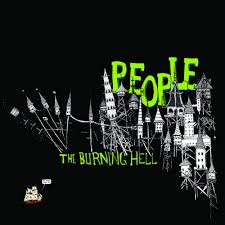
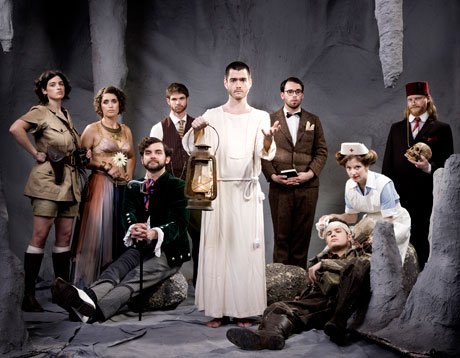
    Canada’s the Burning Hell are still described on their own website as “the alter-ego of ukelele player and all-purpose nerd Matthias Kom”, which made sense as of their 2011 masterpiece Flux Capacitor. As of 2013’s louder, more rock-centric People, it Burning_Hell_Peoplemakes better sense to refer to Kom as a guitarist, but the essential idea holds true: as pleasant as the old-time swing of their sax and clarinet is (where still applicable), the Burning Hell‘s songs revolve around the words, and Kom’s dry, speaking-melodically tenor voice. He tells stories: some autobiographical, some fictional. But even if we can largely tell which are which, it would be unfair to impose such structure on him.
    Grown-Ups, a slow-burning rocker that brings Neil Young’s Americana out towards Pearl Jam or Live without the teensiest hint of melodrama, serenely opens the album by recalling “You were a Nazi hunter/ I was a Cockney punter/ We used to meet on some rainy English street/ You’d be looking sharp, I’d be in a dirty old jumper/ Despite our different social stations/ Despite my lack of vocation/ I’d find you some piece of crucial information”. This is, of course, entirely of a piece with “We used to take photographs in graveyards/ back when we were little goth idiots/ We used to smoke hash before math class/ Everybody did it”. What it’s not of a piece with is “I got the invitation, it’s on the fridge/ beside the picture of you and your kids”. So the song becomes a polite ducking out, rejecting the invitation because “By the time you read this” … an exciting prologue that is never expanded on. By the time you read this, something will have happened: fill in your guesses here. Just don’t make it ordinary: don’t blemish the memory.

    Amateur Rappers is virtually pop-punk, barreling forward eagerly, with one sinister clarinet-led detour into klezmer. Kom’s delivery remains calm, though, stand-up comedy edging at times towards white-guy rap flow (with clarinetist Ariel Sharrat adding sing-song melody for the chorus). It’s about knock-knock jokes, founding a really fun religious cult, finding happiness the wake of apocalypse, theburninghelland how “parenting is the last refuge of the scoundrel”. Holidaymakers, jaunty and pre-rock and swingin’ with woodwinds and rhythm guitar, is a 1st-person-plural narrative in which our heroes have too much fun noticing the world’s little sensory details to get out of the way of an onrushing train, so then they must plead to St. Peter for a chance at reincarnation because they don’t want to be dead and have to miss everything. Wallflowers, acoustic early rock’n’roll (American Graffiti soundtrack plus clarinet and female “ahh-ahh-ahh” backing), is an intentionally awkward/ goofy flirting song, but still again sweetly caught up in details: “I like the way your pants are the same colours/ as the colours of the band around your hat … That sparkle in your eye shines/ like a shiny diamond in a diamond ring/ and like a crow, don’t you know/ I’m helpless around shiny things”.
    Realists and Industrialists, although pleasant as band performances by Burning Hell, represent the downside of Matthias Kom’s slackness, their stories shrugging their way towards generic c’est-la-vie morals like “It is what it is”, “You are what you are and I am what I am”, and “It takes all kinds of people to make a world”. Barbarians is much more fun, a 7-minute narrative where the band speeds up and slows down, rocks fiery and backs into eerie xylophone, shows a sense of guitar drama that often reminds me the Doors’ the End (but at other times of something much more playful), and invents a myth about Vikings, magic trees, Loki, and how destiny likes to play mythical heroes for suckers.

    People isn’t necessarily about *real* people, but then, it generally is. It’s just about us when we’re off-duty. And it bops along with just the right amount of energy that you can dance to it like a person of any age, whether you want to essay a Charleston, a Twist, a very gentle mosh, or me and my 7-year-old twisting my raincoat into a hundred unlikely shapes as our shared partner-dance prop. Which is an act of parenting, thus scoundrelhood. But I think Kom would get it anyway.

    – Brian Block

    To see the rest of our favorites, visit our Favorite Albums of 2013 page!

    (Amazon does not carry the Burning Hell‘s People, but you can buy it at Burning Hell’s bandcamp site, and the band themselves keep 80% of the money you spend there, because bandcamp.com are lovely that way.)

  • #36 album of 2013 – Jumbie in the Jukebox by Kobo Town

    Artist: Kobo Town

    Album: Jumbie in the Jukebox

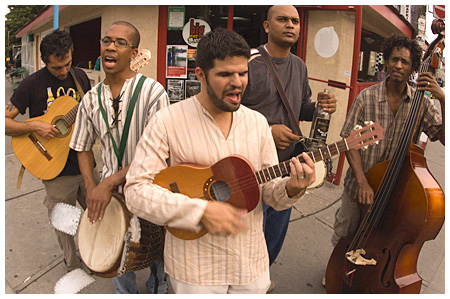
    If you’d asked me a year ago if I like calypso music, there’s a fair chance I’d’ve said “Yes”. At which point you could’ve asked me what calypso albums I owned, and I’d’ve paused, blushed, and given you the following full list: the Essential Harry Belafonte. Even Kobo Town - Jumbie in the Jukeboxthere, I’d’ve had to admit that my fondness for Harry Belafonte stems less from the album (which is indeed very fine) than from his human rights activism, his sense of humor, and especially his singing of perhaps the Muppet Show‘s two greatest musical numbers: their funny skit-centric take on the Banana Boat Song (Day-O) and his solemn, intense, charismatic performance of Turn the World Around. Calypso is distinguished by its swaying, Caribbean-feeling rhythms, its openness to congas and bongos and steel pans and cowbells and Spanish guitar, its horn sections with their own swaying rhythms, and … well, for those of us who are totally inexpert, by singers with thick Trinidad accents. And now, thanks to Kobo Town‘s Jumbie in the Jukebox (which means “spooky and/or amusing dead person haunting a machine that plays songs from a menu when you give it money”) it’s distinguished by being a genre I own *two* albums in. Of what must be the highest Average Quality Per Album for any genre in my collection.

    Drew Gonsalves, Kobo Town‘s Canadian-by-way-of-Trinidad singer /songwriter/ guitarist, has a limber, lilting voice with pretty good singing range and the agile rhythmic half-melodic sense of an excellent rapper. He also has a strong social conscience, writing protest songs rooted in stories of individual people. Mr. Monday is a schizophrenic who lost his family when his mental illness arrived and now collects bottles in order to dance with them awhile before recycling them. Joe the Paranoiac might be listening all day to Rush Limbaugh or Alex Jones, to Fox News or the John and Ken Show, but he finds his meaning in bizarre rumors, surely deserves pity for the ways he’s manipulated, and would be easy to sympathize with if he wasn’t a 50/50 shot to report you as evil to the appropriate agencies. Half of the Houses recounts what happens to a town when everyone who wants to make a decent living (Gonsalves included) has fled far away — which doesn’t mean they don’t miss each other. Indeed, Diego Martin remembers his goodbye to his hometown.

    Road to Fyzabad moved beyond personal perspective, but not by accident: it recounts a worker uprising that had power only because *many* individuals put aside their background and racial differences to stand up for a chance to retain the wealth they all worked each day to create. (The uprising was only defeated because *many* individuals put aside similar differences to gun them KoboTowndown together as British Royal Marines.) The War Between Is and Ought is mythical; the Call is mystical; Tick Tock Goes the Clock is both. The music tends to be unfailingly pleasant — even as Is and Ought “each rained fire down on field and town/ to prove the other wrong”, the trumpet and guitar each get especially nice and imaginative solos, while Tick Tock‘s apocalypse is a head-bobbing, shaker-driven dance song with squawky guitar. Postcard Poverty‘s delightfully acrobatic chorus is about a Western tourist visiting the ghetto in search of stories to tell. It’s not that Gonsalves isn’t angry, or cynical about his country’s status as a “petroleum paradise” (with one of the highest GDP-per-capita economies in the world, yet little electricity outside the cities, few paved rural roads, and regular water shortages). But the Caribbean nations had centuries of being slave-majority populations, and while that’s a horrible existence — one of being robbed for a living — there comes a point, after the crushing peaks of planting season and before the worst of the harvest, when even a slave invents a time and some reasons to smile and dance.

    What Kobo Town‘s Jumbie in the Jukebox reminds me of, more than anything, is the last few Bob Marley albums, Exodus and Survival and Uprising. Gonsalves is actually a better lyricist than Marley, more specific and a better sketcher of character, and the differences between reggae and calypso (or Trinidad vs Jamaica accents) are, to my ears, more subtle than the overlaps. I wouldn’t rate Jumbie in the Jukebox quite equal with Survival at the moment; possibly because its horn section is sparser, less emphatic (although Gonsalves’s excellent guitar work is a counter-argument). Possibly because where Gonsalves’s voice is slightly lower and smoother, Marley’s still had an unmatched passion. Or then again, possibly just because I’ve known the songs on Survival for more than twenty years. Which someday, I hope, will be true of Jumbie as well.

    – Brian Block

    To see the rest of our favorites, visit our Favorite Albums of 2013 page!

  • #37 album of 2013 – New by Paul McCartney

    #37 album of 2013 – New by Paul McCartney

    Artist: Paul McCartney

    Album: New

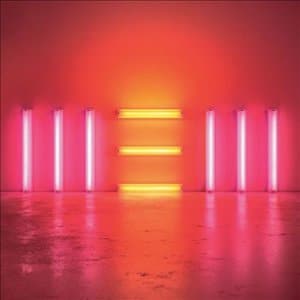
    Paul McCartney writes good-natured melody-driven pop songs, which often (as on New, or 2005’s Nigel Godrich-produced Chaos and Creation in the Backyard, or his electronics-driven albums as the Fireman) make an effort to keep up with Paul_McCartney_Newcontemporary production innovations. There’s a good chance you knew that, come to think. He co-led a ’60s band called the Beatles, who were usually celebrated as leading a musical revolution (reports differ as to whether they wanted to be counted in for the destructive bits) while selling then-record numbers of albums (or as Casey Kasem would put it “These guys are from Ireland and who gives a shit”). But they occasionally were attacked by otherwise intelligent people (in this case Lawrence Miles) on the grounds that “Nothing they did in their entire existence was genuinely new, certainly not the supposed ‘revolution’ of Sergeant Pepper, yet they displayed an astonishing ability to take other people’s music and make it so straightforward – you might even say banal – that everybody on Earth could understand it”. Which is a silly way of saying that they took avant-garde ideas generated by academics and other weirdos, and turned them for the first time into songs, excellent songs, thus making an extraordinary run of albums.

    McCartney’s solo career, from 1970 on, has long suffered from a vague widespread disappointment that he has no desire, left on his own, to be ahead of the pack. But by refusing to ever be left completely behind, Paul McCartney reached the age of 70 able to make a very fine New album in which different songs sounded like different stops along the entire timeline of his life — 2013 included.

    At the most modern end, Appreciate is club-dance electronica, McCartney’s vocals switching among trendy James Blake-style neo-R & B, a heavily processed chant feel, and an especially catch bit of rapid-fire singing. The gentle Looking at Her could easily have been an acoustic guitar ballad, but instead is synthetic, twinkly, and taken over at unpredictable intervals by aggressive industrial-ish beats in a rather dubstep-style structure. Hosanna is a pretty minor-key harmony piece over acoustic guitar, but the guitar’s natural echo is processed into a vividly unnatural creature of its own, haunting the song in company with bird-calling synthesizers. Road‘s wobbling synthesizers, distant drums, and ominousness put much of the song in the vicinity of late-’90s trip-hop, except when the piano’s forceful bass chords take over.

    Then again, New , a jaunty music-hall song with piano, horns, handclaps, and lightly psychedelic production touches, could have fit unobtrusively onto Magical Mystery Tour in 1967. Queenie Eye, after a brief string quartet opening, is thumping piano-led Paul_McCartney_Tearock’n’roll with a shouty chorus. Save Us‘s overdriven, compressed power chords feel like nothing before the 1980s, but the jubilant feeling and piano and horns and urgently tuneful group-sung chorus all harken back to rock music’s founding. Alligator‘s occasional heavy guitar hook is produced like a ’90s grunge band covering Ennio Morricone, and the treble synthesizer activity feels like the same era, but there’s barbershop quartet in the vocals and skiffle, Paul’s pre-Beatles genre, in the song’s core. The folk-rock Everybody Out There feels in some ways timeless, but there’s a guitar hook that’s pure ’80s R.E.M. and crowd-baiting, whoa-oh-oh’s, and echoed beats that would feel at home in ’80s arena metal. Then again, the folky Early Days and country-stomp sing-along Get Me Out of Here would have sounded fine when Paul was a little kid.

    The lyrics are fine but don’t mostly affect my reaction to the record. My favorite song here, the acoustic-guitar-centered On My Way to Work (which does have a couple nicely fuzztoned hooks), is an affecting song about loneliness, and watching other people looking for some sort of direction in life, where the narrator is blatantly not Paul; more often we either don’t know anything about the narrator, or it’s clearly the perspective of an old rock star. The main things Paul McCartney has learned about life are that if you’re rich and millions of people love you, you can be happy, and if you have a gift for writing catchy but subtly unpredictable melodies, you should write lots of them. You’ll need to decide for yourself how useful you find those lessons, but on their own terms, they’re wise. And as any newscast will remind you, not everyone who *does* need those lessons learns them.

    – Brian Block

    To see the rest of our favorites, visit our Favorite Albums of 2013 page!