web analytics

Author: brian

  • #21 album of 2013 – No Blues by Los Campesinos!

    #21 album of 2013 – No Blues by Los Campesinos!

    Artist: Los Campesinos!

    Album: No Blues

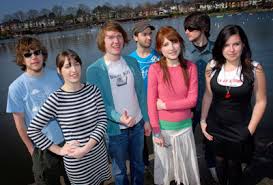
    Los Campesinos!, unlike the majority of the bands I review here, are well-known to, and well-loved by, rock critics and the music blogging community. They sell pretty well too, at least in their native U.K. This makes sense. While a certain percentage of the music I like is outright weird and difficult, I think most of it is blocked from mass popularity by a couple of simple differences between my taste and mass taste. One: most people prefer pop songs about love and lust and loss and romantic confusion, while I keep falling for songs about the childhood neuroses of Alexander the Great; or the psychology and economics of working low-wage crap jobs; or D.I.Y. science experiments investigating the nature of light; or how many puns the songwriter can make regarding an imagined sexual fetish centered on minerals. Two: these days pop music — the share of it that isn’t about robotically pitch-corrected dance tunes — rewards a singing style of untutored enthusiasm, while I often prefer Broadway standards of vocal training and/or comic timing. Los Campesinos!, and the gloriously romantic racket they make, are firmly on the side of the public in both cases.
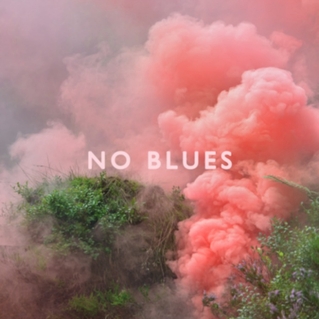
    No Blues — their sixth-ish album from 2007 to the present, and their most varied and mature, which shouldn’t be nearly mature enough to worry anyone — starts with softly ringing synthesizer and Gareth Campesinos’s twee-yet-vigorous alto singing its chorus: “Knees knocking and blood flowing, so/ I want you to know that I want to”. The full (and lovely) seven-piece sound kicks in almost at once: monotone synth in a “choir” keypad setting, percussive piano, thick guitar sounds, regularly pulsing slow drumrolls. That chorus could be a mass hit; so could the verses’ theme, a longing for a female friend to be his girlfriend. “She says ‘If you’re unhappy, then you’ve gotta find the cure’./ Well, I prescribe me one more beer. Beyond that I am unsure./ May not be be-all and end-all; in my defense, she is the whole./ I’ve thrown my goalkeeper forward; she’s catenaccio”. Catenaccio is a defense-first soccer formation; great metaphor, at least for listeners like me who look up words on Wikipedia. I love the way the register shifts between populism — “As I saw God in the bathroom, I baptized him in sick” — and prep school vocab — “embraced him in the cistern and said ‘C’est la mort! Enough of this’”.

    I love too how even though his relationship wishes are not met, his friend can speak in terms reminiscent of You and Me Against the World or NIN’s We’re in This Together. “Later she said something that stuck hard in my mind: ‘We are their Capel Celyn, they’ve got to keep their slippers dry’”. Capel Celyn was a village flooded to make a dam for Liverpool factories; this song (For Flotsam) is gorgeous *and* hyper-enthusiastic *and* poetically inspired *and* teaches me random facts that Gareth thinks I should know. I’m a sucker for it, and I’m delighted to be nowhere near alone in this.

    As for my opinions about the rest of the album, the upside is that I think there’s at least two other songs just as great (What Death Leaves Behind and Avocado, Baby), and every song here has, at least, pretty music with a few good lines. Downside: while I’m happy with the introduction of variety to Los Campesinos!‘s sound — in the past, they’ve sorely tested my limits on how much clattering maximalism I need at once — the variety mostly consists of some of the songs being slower. All the Campesinos play at almost all times: the a-capella group chant “Ex-boyfriend, give us a song” on the bridge of Glue Me is startling. And while they’ve refined their abilities over the years, they have yet to show an interest in toying with other styles. The synth player loves long-held droney notes, the drummer loves vigorous deep-sounding drumrolls, the guitarists love a midpoint between fast ’80s jangle-pop and thick mid-90s shoegaze, and that’s what they do.
    Similar story with the words: Gareth writes about his few favorite themes. Death, and the fear of death, are the big ones I haven’t mentioned yet: “I was the first match struck at the first cremation./ You are my shallow grave, I’ll tend you as a sexton./ If you’re the casket door that’s being slammed upon me,/ I’ll be a plague cross painted on your naked body/… Why must I lie awake, from dusk until the morning/ through fear of being impaled upon an errant mattress spring?” Perhaps the perfect constellation of his concerns comes at the end of the 4th song, using a word for “empty grave marking an unrecovered dead body” that I’d earlier learned from a This Heat song: “I shimmy up the cenotaph, regale with my melancholy./ Two words on my headstone, please, don’t need name or date, just ‘Sad Story’. They boast of poets on their side, but what use will they be if this comes to a fight?/ I glance along the length of pew and all that I can think’s I want to undress you.” Fear of death, sadness, poetry, religion, sex, longing, and oh yeah, the Smiths: the song is called Cemetery Gaits. No Blues deserves to be someone’s favorite album.

    Not mine, no. I’m not much of a romantic; I’m too literal to be a poet; I deal with death by emotional avoidance (and doing my mom’s shopping, and playing Scrabble with her, while she’s still hanging in there). But I recognize great writing. The music doesn’t sound like anyone else, either, especially not with Gareth’s voice pushing things along. It sounds really good. I hope Gareth gets past some of his depression. It shouldn’t kill his muse; it should just free him to write about soccer more directly.

    – Brian Block

    To see the rest of our favorites, visit our Favorite Albums of 2013 page!

  • #22 album of 2013 – Solar Power by Lost World Band

    #22 album of 2013 – Solar Power by Lost World Band

    Artist: Lost World Band

    Album: Solar Power

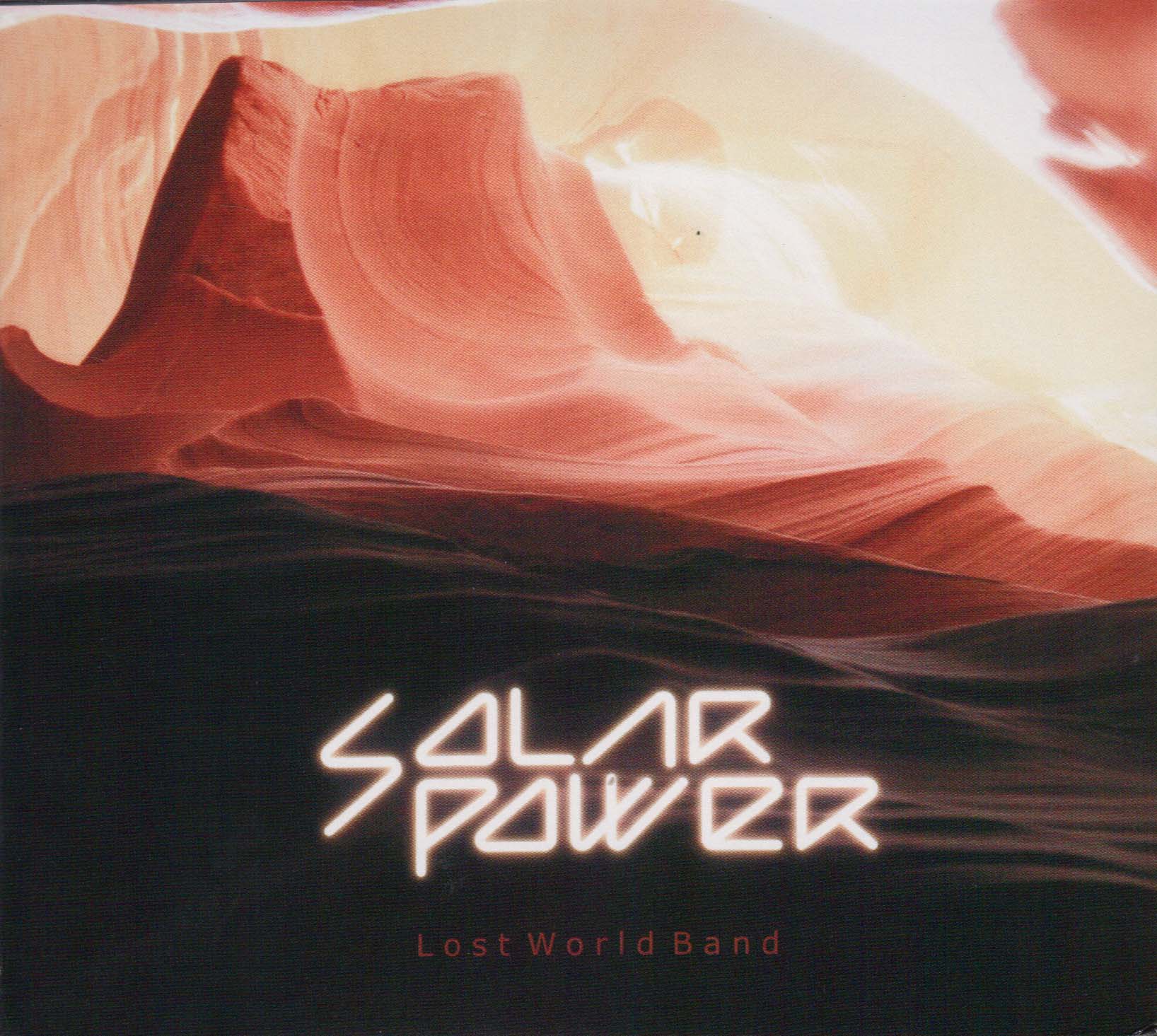
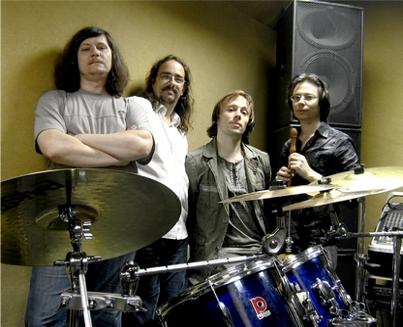
    Lost World Band are currently a Russian quartet of drums, flute, “keyboards/sound/production”, and one man — Andy Didorenko — on violins, guitars, bass, and sometimes vocals. Solar Power is their fourth album and, of the ones I’ve heard, Lost World - Solar Powerclearly their most forthright and catchy. It is also weirdly bifurcated. The majority of the tracks, the instrumentals, are fiery rock tracks. They have the fast agile interplay of good jazz, sure; with an instrumentation more suggestive of chamber music, yes. Their sense of drama and structure is often cinematic; and when Didorenko’s violin really gets going (which is often — he’s spectacular) they have a folk-dance energy. But the firm emphatic hooks, the (literal) (also figurative) electricity, the strong thumping drums once everything kicks in: these are songs to be played on stages of arenas. I have a pretty strong bias in favor of vocals: I focus naturally on a good voice, and my favorite albums tend to be ones where the lyrics make me think or laugh or cheer. Solar Power defeats that prejudice for me: its instrumentals are easily the backbone of a top-ten album for me, which almost never happens. If you know Joe Satriani’s guitar albums, and imagine him in like-minded teamwork with a violinist and flautist and bassist every bit as center-stage-worthy as he is, you’ve got a good mental image to work from right there.

    Then there are the vocal tracks, which — don’t get me wrong — are pleasant. Didorenko sings in English with a thick but dreamy Russian accent, his slightly smoky tenor gliding gently among the notes. Background vocals are soft floating accompaniment or evocative echo. The guitar work glistens; the synthesizer shimmers; the violin holds long, elegant, moody notes, or it plays legato tunes, worthy of any symphony orchestra. The drums tap, or pulse patiently like old clocks. At best (Metamorphoses) they push forward on a bit of churning violin here, some quick folky strums of guitar there, a bit of funky bass later and some fast vibraphone-like keyboard after that, leaving even their freefalls with momentum as well as gorgeous-ness. At worst (Facing the Lost World Band lineupRain or Your Name) they’re still pretty and still a valid change of tempo, guilty of nothing worse than not being the sort of thing I tend to listen to on purpose. Nothing gets most of its force as a successful power ballad just from the urgent rhythms of Didorenko’s soft singing, and a little extra from marching drums and, maybe, some bagpipe?

    Solar Power is imaginatively detailed every time the energy kicks up: the keyboards and sound treatments of Tongues of Flame I, the funky drive of Solar Power, the way Run That By Me Again turns hoedown fiddle and jazz bass into a fierce punk rave-up. The only charge I can make against it is Lost Word Band don’t make the song I *want* them to: one where Didorenko’s words and singing are carried along by a powerful, hard-charging, stadium-ready, violin-led band. Russia isn’t isolated from the modern world anymore, now that it’s run by capitalist mafiosos and swindlers instead of communist inspectors and paper-shufflers: Lost World Band know that multi-tracking exists, and have Didorenko teaming up with Didorenko and Didorenko on most of their songs at some point. They haven’t, I guess, worked out how to make his fieriest and most peaceful sides work together artistically.

    It’s not even necessary that they do so: Solar Power ebbs and flows with masterful pacing. I recommend it strongly. But I’m petty, and prone to preferring faster-faster-faster to “masterful pacing”, so I’m holding back my highest raves until I hear them make a proper try at putting every virtue together at once.

    – Brian Block

    To see the rest of our favorites, visit our Favorite Albums of 2013 page!

  • #23 album of 2013 – Giulietta Masina at the Oscars Crying by Bob Wiseman

    #23 album of 2013 – Giulietta Masina at the Oscars Crying by Bob Wiseman

    Artist: Bob Wiseman

    Album: Giulietta Masina at the Oscars Crying

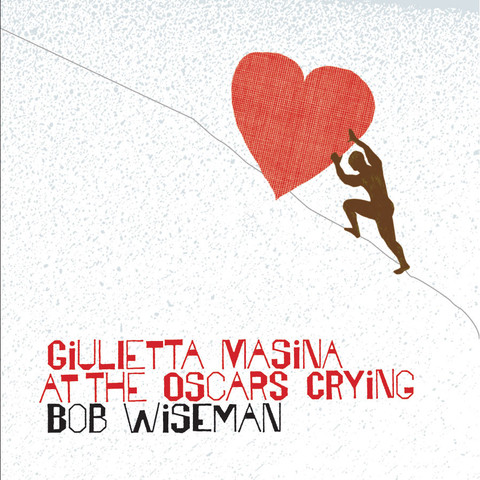
    Bob Wiseman first got my attention in 1993, in the wake of Prince legally changing his name (Prince Rogers Nelson) to a squiggle: Wiseman sent out press releases announcing that henceforth he, Bob Wiseman, would be known as Prince. Former bob_wiseman_giuliettaPrince’s lawyers were extremely aggressive in shutting him down, but I was charmed by Wiseman’s nerve, and picked up his compilation album In By Of. I found it full of quirky, minimalist, lo-fi arrangement ideas and odd-yet-earnest lyrics, and kept the album around. I also found his high, reedy voice incredibly tuneless and incompetent, so I virtually never *listened* to it. But when I read an extremely enthusiastic PopMatters review of his 2013 album Giulietta Masina at the Oscars Crying, I figured “Hey, maybe he’s learned to sing in the last two decades; what the heck”. He had indeed — his voice is still reedy and a bit imprecise, but tunefully gliding and expressive — while he’s also strengthened his arranging skills and lyric-writing, which were his strengths to begin with. And now I’m ready to be enthusiastic about him in my own right, for you.

    All of the song titles form the structure “(person/thing) at (setting)”: these are songs as portraiture. The barbershop quartet-like title track (with exotic violin-and-chanting-and-soldier-drums break) salutes and sadly outlines the life of Federico Fellini’s actress wife: “Crying for her man and the recognition, no pension plans … played the part of a prostitute/ who would not lose her heart, let men lie and loot … 1 baby dead, 3 gravesites, 2 artists wed… 8 and 1/2”. Neil Young at the Junos, expansive and piano-driven like Elton John’s Goodbye Yellow Brick Road era, honors Young’s annual benefits for the Bridge School (for severely handicapped children), his willingness to pick political fights, and, why not?, his model train collection, even while being about the texture of a life where “People want their pictures taken with you, secretly afraid their hairstyle will be wrong” and “You lay down your head in some overpriced fancy hotel bed”. Mothface@yahoo.com, a jaunty yet awkward Broadway tune on brass and drums, is for a deceased performance-artist/ actress ex-girlfriend, but centers on how much he liked a speech at her funeral by someone he’d never expected to empathize with about anything.

    Many of the portraits on Giulietta Masina at the Oscars Crying also double as fierce critiques of the world they occur in. Robert Dziekanski at the Vancouver Airport, driven by percussive piano, tells us the too-easily-forgotten newspaper story of a Polish immigrant murdered by police in a Canadian airport: “People tried to tell them I didn’t speak English/ People tried to tell them I wasn’t stoned/ People tried to tell them I was unarmed and alone./ Took them almost five seconds to decide in their expert opinion to fire./They found themselves not guilty … surprise!” Ruby Bates at Grad School is about the Scottsboro Boys case — nine black boys jailed for decades on false charges of rape — but focuses, with respect, on one of their two accusers, the bob-wiseman (pic by Zachary Houle)one who later recanted her charges and devoted much of her life to civil rights in general and to unsuccessfully trying to free the people she’d doomed. Aristide at the Press Conference summarizes 200 years of Haiti’s history and honors its would-be president: “Democratically inspected, three times re-elected … the puppet turned around and faced the puppeteer:/ ‘You owe me lost wages, am I being clear?’ … Now shocked and afraid, the French and USA, and even their Canadian friends. He’s removed from power, it’s kidnapping hour, because he said ‘This extortion must end’”. It’s not the tale as the New York Times told it — I know this because at the time I would read their foreign policy coverage and assume its general accuracy — and it’s also not particularly subtle. But on its side it has warped and energetic acoustic blues guitar, rousing female backup singers (part gospel, part blues, part playground), sneaky electric solos, and righteousness. I like Bob Wiseman‘s weapons.

    The music on Giulietta Masina is striking for how weirdly hard-to-describe it is, when it’s built from mainstream elements. The ultra-danceable Reform Party at Burning Man has funk, circa-1970 Rolling Stones, jazz piano, James Brown, and Lovely Rita Meter Maid all influencing it somewhere. Lobbyists at Parliament, just as danceable, has Motown, Bo Diddly, exceptionally busy percussion, and a strange little drift that leads into a treble organ solo. Ruby Bates at Grad School is piano ballad and ghostly march, with a distinctive little violin piece, slide guitar, and female torch singing in the background. Portrait of Phil at Various Times in the Closet has the elements of 1970s The Band/ Eagles/ Warren Zevon/ Fleetwood Mac mainstream pop, but it shambles and wobbles and lurches and chants, and builds something memorable and softly dramatic.

    It all supports a set of lyrics determined to look at, and learn from, as much of his hemisphere as he can. The villains in Bob Wiseman‘s songs are the people (the many, many people) who use power to shut down protests, arrest inconveniently-elected officials, or just torment anyone who’s too different. He fights them using, not just stories, but variety, the tunes of every low culture he can find. Makes sense to me.

    – Brian Block

    To see the rest of our favorites, visit our Favorite Albums of 2013 page!

    Technical note: we include an Amazon link for Wiseman’s most recent album *prior* to Giulietta Masina because it’s good too, and we make a tiny but helpful bit of money when you buy albums through our links. That said, to buy the album under review, which might seem more directly on-point, go to his bandcamp page .