web analytics

Blog

  • The most egotistical rock stars…

    The most egotistical rock stars…

    Yesterday, I asked my Facebook friends who they think are the most egotistical rock stars…

    I was inspired to ask this question after reading up on The Eagles, specifically Don Henley and Glenn Frey. I actually like The Eagles’ music, though I stopped listening to them as much when they fired Don Felder. I like Don Henley’s voice and fully admit that he writes great lyrics. I like Glenn Frey’s music, too, though not so much when he plays solo. Anyway, after reading about The Eagles, I went to The Smoking Gun and read some of the hilariously demanding riders performance artists put in their contracts before they do a show. Don Henley’s rider was egregiously demanding.


    My pick for most egotistical rock stars…

    I wondered who else was overly cocky and asked my friends. They came up with the following list of the most egotistical rock stars before we got sidetracked by a discussion about Prince and his many muses.

    Steven Tyler of Aerosmith

    I’m not really an Aerosmith fan, though I do like “Dream On”. Apparently, front man Steven Tyler is egotistical. I guess you’d have to be to pull off that outfit he’s wearing.

    Bono of U2

    It seems that Bono made the list because he’s always preaching about social issues. I quit listening to U2 about twenty years ago, though I have to admit Bono and his band have charisma chops. Is he egotistical? Yeah, probably.

    Kanye West

    I have never really listened to much of Kanye West’s music, but I have seen his antics on TV. The first time I ever heard about Kanye West was when a loopy Anna Nicole Smith declared him a genius. Then I saw him on a Hurricane Katrina benefit talking about how George W. Bush doesn’t care about black people. I will never forget the shocked look on Mike Myer’s face as Kanye took it upon himself to ad-lib and shame W on live TV. Kanye also famously interrupted Taylor Swift’s acceptance speech at the 2009 MTV Video Music Awards to say that Beyonce should have won. Yeah, maybe his music isn’t technically rock, but I think he belongs on the egotistical list.


    Kanye butts in…

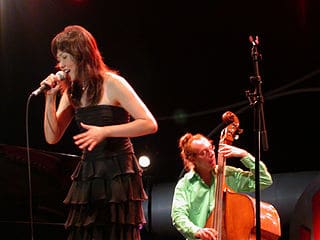
    Madonna


    Performing with Britney Spears and Christina Aguilera.


    Madonna loathes hydrangeas.

    Madonna certainly belongs on this list. I mean, she deserves credit for marketing herself and reinventing her image over and over again. But she is not known for her humility.

    Prince

    I was a big Prince fan back in the day. I still think he’s a musical genius, though my tastes have evolved a bit since his heyday. He’s got an ego to match his talent.


    This is a pretty damn cool video featuring Prince and other guitar legends. I think maybe his egotism is warranted.


    I actually respect him for kicking Kim Kardashian off the stage, though…

    Mick Jagger of The Rolling Stones

    Don’t get me wrong. I love Jagger’s swagger and it’s hard to be a rock star without an ego to match… but he belongs on this list, too!


    You gotta have a big ego and some balls to pull off these dance moves with David Bowie…

    Justin Bieber

    And last but not least, Justin Bieber makes the list. This guy has been all over the news for his antics. Most recently, he got busted for DUI in Miami. His behavior has been so bad that Americans have taken to demanding his deportation to Canada. Given how much we love it when stars engage in attention seeking behavior, I’d say Biebs has a spot on the most egotistical rockstar list.

    Got any to add? Leave me a comment!

    [AMAZONPRODUCTS asin=”B007XHWROK”]
  • #47 album of 2013 – Lento by Youn Sun Nah

    #47 album of 2013 – Lento by Youn Sun Nah

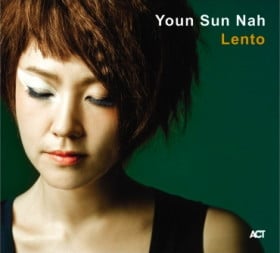
    Artist: Youn Sun Nah

    Album: Lento

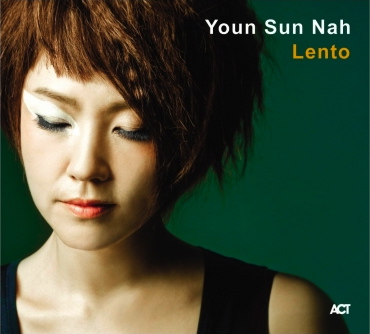
    The song Hurt — which is covered on Youn Sun Nah‘s 8th album (but first for me) Lento, so I’m not being random — began as the final track on Nine Inch Nails’ emotionally draining masterpiece the Downward Spiral. Following 14 tracks in which pretty, minor-key pop tunes were barraged with Lentodozens of layers of aggressive studio effects — and shuttled abruptly between different time signatures, noise levels, and genres — Hurt was fragile and intimate, but every bit as precise. The ragged near-whispered opening vocals, rhythmically in mild defiance of the slow-picked acoustic guitar, is set over a whooshing noise. As the singing tightens up towards the chorus, layers are added, the guitar resounding full-bodied with one chord repeated, a soft droning woodwind-like melody inserted, a simple but lovely piano melody counterpointed. The returning verse is a musical repeat of the beginning, but by the second (final) chorus, the repeating guitar chord is shifting among several harsher new tones. The song ends with three abrupt, dissonant, vastly expressive chords that fade into a mechanical whir. Hurt is an emotionally vulnerable and honest song, but it is, after all, a song about being an unreliable drug-addicted liar who alienates all of his friends: it makes sense that it should be both pretty and a little bit ugly.

    Hurt was a modest hit as the fourth single from Downward Spiral, enough so that NIN’s Trent Reznor reported the discouraging experience of watching strippers obliviously dance and disrobe to it in a strip club; but it may at this point be better known for being covered in 2002 by country singer Johnny Cash. Cash’s video is certainly far superior, as video, to NIN’s. The dude was really old when he recorded it and had been famous for more than four decades: as he sings about what he lost from drug abuse and assholery, the screen is able to show-not-tell photographs and film clips of quite a few examples. The video also lends the song a universality it wasn’t written with, since anyone who lives long enough, no matter what they do, will start to find that “Everyone I know goes away in the end”. As for the *music* on Cash’s cover … actually, it’s a lot better than I remembered. It’s very respectful, with not a hint of country in it. It subtracts the piano counter-melody and the whooshing noises, and it deletes those last three chords, all of which are losses; but replacing the intensifying guitar chord with an intensifying repeated piano note works, and there’s some fine blocky piano chords thudding around the edges. The emotional intensity of the singing is just as strong. I disagree with people who tell me that Cash’s version is *better*, because as mentioned the dude was old, and his voice had picked up croaking and bleating qualities that don’t serve the melody. But the song came through when he performed it.

    Youn Sun Nah’s version on Lento strips the arrangement down further, in a way that fits at least half her album: just her voice and Ulf Wakenius’s acoustic guitar, slower than before and so precise that every note, every drily tapped string comes through. She’s by far the most technically gifted of the three singers, and her voice is the prettiest of the three (and takes occasional jazz-chanteuse liberties with the melody), but Lento is reported to be the starkest,Youn_Sun_Nah most intimate record she’s made, and her performance allows hesitation and tremor and, briefly near the end, a stubborn and deliberate fierceness. Wakenius’s guitar work is subtle, and excellent miking lets us pick up how he intensifies the song, more than anything, by playing in a way that draws out more and more of the guitar’s natural echo. I wrote years ago that I was sure Downward Spiral‘s songs wouldn’t need anything more than voice and one instrument to have power, but it wasn’t Johnny Cash who took up that dare (despite how well he transformed, e.g., Soundgarden’s Rusty Cage in that format). Now it’s a bunch of Koreans, who may not have a clue who Reznor or Cash are, who’ve gotten the first demonstration.

    Most of Lento is this quiet, built around a small acoustic jazz-pop combo. Empty Dream, like several other tracks here, is a-cappella in places, and elsewhere is set to rubbery reverberations of guitar (or perhaps Lars Danielsson’s bass) and flitting accordion. Lament‘s accordion drone and liminal bass back up (and build up behind) busy, slightly military percussion and firm, determined vocals like a deeper-voiced halfway point between Joni Mitchell and Bjork. Full Circle uses similar ingredients in a gentler, more reassuring manner. Then again, Ghost Riders in the Sky sees her twist and strain her voice over harsh drumming and tiny high squalls of accordion and guitar: tensed somewhere between Talking Heads’ Cool Water, Ennio Morricone’s dusty westerns, and Diamanda Galas’s shrieking operatic rock.

    The song that drew me to Youn Sun Nah was Momento Magico, still for me the album’s highlight. Composed by guitarist Wakenius, it’s fast and fluttering and cheerful: his own (superb) playing, the soft accordion and drums, and Nah’s singing, which flutters and bubbles and soars and dives, giddily dispensing nonsense syllables and, a couple of brief times, the best impression of the Big Bopper’s comic bass voice I’ve heard from a woman. As lovely and often haunting as her quiet songs are, I’m normally more drawn to high energy and good cheer. But from what I’m told, she’s already made albums perhaps closer to Momento Magico in spirit; they’re out there for me to find. Lento is more than good enough to pique my interest. And sometimes, when I have more energy than the time of night really warrants, it’s right for me with just the balance it has.

    – Brian Block

    To see the rest of our favorites, visit our Favorite Albums of 2013 page!

    [AMAZONPRODUCTS asin=”B00DIUMIIG”]

  • #48 album of 2013 – All Hail Bright Futures by And So I Watch You From Afar

    Artist: And So I Watch You From Afar

    Album: All Hail Bright Futures

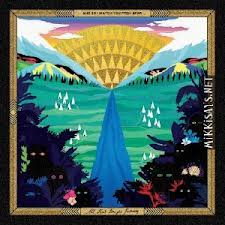
    All Hail Bright Futures, the third album from And So I Watch You From Afar and by most accounts the giddiest, feels less to me like a collection of songs (which, by formal reckoning, it is) than like rock music as a textural abstraction of joy. Guitars overlay each other in resounding major keys behind All Hail Bright Futureslayers of effects. Synthesizers burble and squiggle (or, on Things Amazing, flutter rapidly like Rick Wakeman playing cheesy organ at a minor-league baseball game across the street from you). Several songs have giddy horn sections, pushing to be heard behind the wall of guitars. Rats on Rock even has Hawaiian rhythms and instrumentation, the Stay Golden starts with African percussion, and Mend and Make Safe has a long melodic flute solo, but all are filtered through the omnipresent shimmer and pushed along by the caffeinated rock drumming of Chris Wee, whose last name should properly be Wheeeeeee. Bass and drums often play firm hard-rock rhythms, not always in 4/4, but with plenty of bounce, like if Rush in their early days had provided the soundtracks to toddler playtimes. Songs begin and end because the track player says they do, not because there’s ever a pause in the music.

    Vocals, when they occur, are group-sung (the Wikipedia entry for the band doesn’t even list a vocalist), and usually feel like raggedy chants — “The sun! The sun! The sun! is in our eyes!” or “A! M-B! U! L-A-N! C-E!” — that only move among notes because everyone has too much energy to settle for a monotone. That said, the opening minute of Ka Ba Ta Bo Da Ka proves they can, in fact, use their voices to perform sophisticated melodic and rhythmic counterpoint. In order to convey the message “Ka ba ta bo da ka”. Which I certainly don’t disagree with.

    I should remind readers that my use of the countdown format is deceptive, given the sheer amount of good music people make every year: my listing 47 other albums ahead of All Hail Bright Futures doesn’t even slightly contradict my belief that All Hail Bright Futures is an excellent and delightful record that could well and fairly be someone’s favorite. The closest things to criticism I’ll offer are that the lyrical content is almost nil, and that Rocky O’Reilly’s production makes the songs blend into each other in a way that can — despite the real variety in arrangements — feel redundant. (When string quartet and brass are allowed to carry Trails all by themselves, it’s almost stunning.) The counter to the criticisms is obvious. The production is brilliant for defining the mood, and that joyful mood tells you everything that, for 43 minutes, you could possibly wish to know.

    – Brian Block

    To see the rest of our favorites, visit our Favorite Albums of 2013 page!

    [AMAZONPRODUCTS asin=”B00B3HJMBW”]