web analytics

Category: Reviews

music-and-concert-reviews-you-wont-see-anywhere-else

  • #5 album of 2012 – Eating Chicken by Decomposure

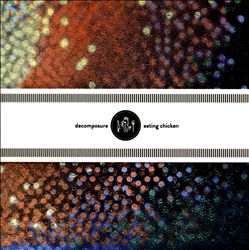
    Artist: Decomposure

    Album: Eating Chicken

    On average, Decomposure‘s Eating Chicken will probably appeal most to fans of at least one of

    * Ben Folds’s solo career

    * The Beach Boys’ Pet Sounds / Smile era

    * Abstract, avant-hip-hop, such as is purveyed by Doseone, El-P, or Aesop Rock.
    decomposure_eating_chickenI say “on average” and “probably” because Caleb Mueller (who is Decomposure, when he’s not earning a living as a graphic designer) is not the same person as Folds, Brian Wilson, Doseone, etc. As a writer he’s both more personal, like a good blogger, and more political than any of them. As a singer, his pleasantly reedy and geeky voice reminds me of Folds, but is less theatrical, not putting on a front, although he is willing to refine his voice into a flexible tool: unguarded here, stacked and counterpointed there, low and cold and percussively firm elsewhere. My prediction is also uncertain because sometimes we like a recipe significantly more or less than we like the ingredients individually. Or if not, the non-existence of Chipotle Cheeseburger Ice Cream — or yeast-eating contests — is an enormous market failure.

    The singles from Eating Chicken are among the most style-blended songs here. Oh Brother is plainly sung over plinky New Wave toy synthesizer until joined by mass harmony and tambourine. The titular brother has joined those who recite in daily life from Fox News and its misinforming anger-by-numbers, a fate that’s befallen parents and uncles and cousins of my various friends. Like my friends, Mueller alternates between love and frustrated attacks on what he hears when “Somebody reaches through your guts to work your mouth”. The falsetto he breaks out for “You’re so vain, you’d never know this song is about you” is delightful; the humble plainness of “Pot and kettle, I know I’m just the same/ I’m supposed to love you, but sometimes I’d rather punch you in the face” is more in character.

    Readymade is peppy but trickier. It’s Afro-pop in its precise non-aligned percussion layers and call-and-response vocals (and many of its intonations), but with Beach Boys lushness and a willingness to march the arrangements into a wall while finishing a lyric. These lyrics, like on Decomposure‘s rap-heavy 2007 masterpiece Vertical Lines A, work on a more implicit level. Some juxtapose allusive images and warped cliches: “Readymade on a paper plate (food for thought is a good trade)/ Where neutral is a smiley face (or your face will freeze that way)”. Others extend a metaphor in poetic but self-subverting directions: “I cut out my heart, inflating it with my last breath/ … It floats into the night, climbing soft, growing a padded halo named color/ … [beating back] knife-blade clouds storing black snow/ slow-rising under a phantom bridge/ pumping ‘Please let me cry, I need to cry, just let me cry’, but instead it sneezes and dies/ and at the end of a block, a truck hits it”. Others literalize a metaphor into a failed inspirational greeting card: “Outside, my naked hopes grew cold/ So I kept them warm at home/ And went to work to buy them clothes”. All but the last sung cheerily.

    Readymade excepted, Mueller saves his dense lyrical associations for his raps. We hear would-be Vertical Lines B in three songs: Black Snow, much of which is pretty synth-and-harmony pop, but some of which he raps ultra-fast into a Vocorder, and all of which clatters along amid whirling robot tap-dancers. Safety Scissors, funky but spooky like Prince fronting the Borg Collective (Now A Time Warner Subsidiary) and no longer promising us all sex in exchange for being absorbed. And Island, an African sing-along at a factory where the boss radios instructions in a clipped voice. The maze-like lyrics of each are worth reading along to.

    Most of Eating Chicken is gentler, more vulnerable. Breaking Up is unsteady vocals over rudimentary acoustic guitar, choosing the nostalgia over the literal sense of “I just saw it for the awesome graphics, wanted to see things explode/ watch some giants stomp through traffic, wave the flag like a burning skunk/ and all the characters talked with each other the way toys did when I was small”. Waiting, equally unsteady over simple piano and echoed percussion, is about three imminent deaths, maintaining the same sad but half-jaunty tone for the end of life of a murder victim, a beloved cancer-ridden husband, and a fallen squirrel. Selah, fragile flute/ piano/ tapping as willfully adorable as any Owl City song, is sung to his baby. “You’ll reach out and grab my finger, though I know that’s just a reflex thing/ You wake up every few hours, and your tired mom gives you milk and sings” ground the song enough to make the love more than generic, until goofy but precise vocal harmonies lift the song skyward.

    We Shall Be Overcome, in implacable polyphony and body-slapping rhythm, is the anthem of defeat its title implies: “They will shut us up, they will have their way/ Our bodies ragdolls dumped in unmarked graves/ They’re free to roll ahead once we’re brushed aside”. Its desultory cheerfulness reminds me of me: fighting the good fight to the degree that sanity allows, remembering that part of what we’re fighting for — even if it saps us of useful fanaticism — is the freedom not to frown about tasks ahead all the time.

    Maybe that’s a real thing; maybe not, I dunno. The 7:24 a Test, employing every style found on Eating Chicken, is about Mueller being offered $10,000 to use his music in an ad campaign. He’s self-effacingly sarcastic about why he didn’t like the idea: “Selling sweatshop sweaters/ seemed antithetical to my precious integrity”. But “Feist counted as Apple’s Chinese workers died” isn’t a joke; Mueller’s songs have always had things to communicate, and they were often nearly the opposite of “let’s go shopping!” A Test is one of the most intimate songs I’ve ever heard, because — having stated heroic goals he doesn’t expect us to understand anyway — he fails them by okaying the ad.

    But as he himself sings on Wide Awake, “What if the apocalypse never comes/ and we have to keep living with all that we’ve done?”. Because he has a wife and a child and musical ideas and, still, those inconvenient morals and beliefs, he does so. Living is what we do. It’s mostly a sweet deal — dead people never get to play catch with 4-year-olds using imaginary balls, or gaze in awe at daredevil squirrels, and they only get to dance during painful-looking rituals in bad zombie movies — so we try to get better at it. Meanwhile, we give it a soundtrack. Ideally, we infuse it as much as possible with our own meanings. And put the commercials on mute.

    – Brian Block

    To see the rest of our favorites, visit our Favorite Albums of 2012 page!
     

  • #7 album of 2012 – Skelethon by Aesop Rock

    #7 album of 2012 – Skelethon by Aesop Rock

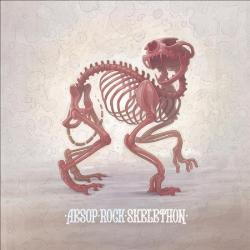
    Artist: Aesop Rock

    Album: Skelethon

    I’ll mostly discuss Aesop Rock‘s Skelethon as a vehicle for Ian Bavitz’s writing. At his best, as a lyricist, he’s operating on a level no one else is attempting, and I would want to have heard this album even in a musical form (bluegrass? reggae?) I find off-putting. But instrumentally, here’s who aesop_rock_skelethonit reminds me of: Wire (once they got into electronics). Nine Inch Nails. Massive Attack / Tricky. This is dark, synthetic music: built of drones, tremolos, nagging unidentified tones, and beats that are both strong and, often, disorienting. These elements are layered, they evolve, they drop out and leave dramatic space; perhaps like a serious-minded Oingo Boingo teaming up with Rage Against the Machine. No, scratch that last one, only brought to mind by the marimbas and horns of Fryerstarter: Skelethon isn’t like a serious-minded Oingo Boingo teaming up with Rage Against the Machine. I’m just asking the universe to make that album happen too. Well, as long as they find a much better rapper than Zack de la Rocha.

    Ian (Aesop Rock) Bavitz is a much better rapper than Zack de la Rocha: articulate, firm, too speedy and agile for his own good, but half the time able despite that to be a talented character actor delivering his lines. Yes, Aesop Rock makes hip-hop, of the smart outsider variety, in a peer group with El-P, Sage Francis, Mr. Lif, Saul Williams, and Subtle. If you’re familiar with him, I can say that the good-natured hippie oddness in the arrangements of Float and Labor Days (’99-01) is long gone, and that the deliberately off-putting weirdness of Bazooka Tooth has been streamlined and professionalized: Skelethon is his hardest-hitting record by far, although it still sounds like him. I think it works: strong by itself, but putting the words front and center where they deserve to be. On my 2012 Tris McCall Critics’ Poll ballot, I nominated ZZZ Top as Single of the Year — even though it’s probably my 3rd-favorite song on here.

    I’ll start discussion of Skelethon‘s lyrics with a typical song from it, say Fryerstarter, the lyrics of which could be summarized in plain English as “There’s a place I like to go to at 1 a.m. that has amazing donuts. Not many people know about it. Those of us who do know it feel a sense of belonging together, even if we have nothing else in common. It’s nifty”. That’s an excellent premise for a song; I haven’t run into it before. For better or worse, here’s how part of it scans when Bavitz writes it:

    “Picture if you will a weak night in the trenches/ where paranoia dead-ends in a bright fluorescent heaven/ with sprinkles. I know, right? Yum./ Whether tummy ache or fever/ Keep the funnel cake, I’m honey-glazed in vitro/ In the company of similar believers/ sleepless, who hear the walls breathe and foam at the facial features./ Now the yeast, a phoenix in the partially hydrogenated/ equal parts flour, faith, healing/ might replace your previously nominated Jesus/ but only if you’re privy to the following of secrets./ Shh! Every night at 12, they would march out from the back/ with a tray of raw dough for the pool of hot fat./ Show up around 1, never get your God back./ If you’re just tuning in? Walk into the light. Walk into the light”.

    I think that’s beautiful. Ridiculous and overblown, yes. But it’s driven by a love that leads to close observation, then loses track of which observations are objective detail, which are free associations from that detail, and which are holy revelation. Racing Stripes salutes a youth’s maturation from ian_bavitzhaving hair cut at home by his parents — I shall now perceive all bowl cuts as “Mega Mom scissoring a topiary Lego Man” — to trying out any of a number of mentioned rebel cuts (“What emerge next in a shaft of light/ is bald on top, long on the back and sides/… He says ‘How do I look?’, I say ‘You look insane’/ He says ‘The haircut comes with a theory I’ll explain’”). ZZZ Top applies the same supportive detail to three different young graffiti artists, the first being: “Somebody in a cultivated moment of distress/ Composed himself enough to artfully carve ZOSO [one name for Led Zep’s 4th album] on his desk/ They was probably thinking ‘Fuck you, fuck you, fuck you’ in their head./ With a hell-bound arm and an acidy wash/ Homemade curfew? A thousand o’clock/… Watch: Capital Zed, slowly maneuver the O/ the S is most difficult to control/ Finally O, into the eye of Goliath you go/ That levee-crushing percussion pull a monkey upright/ Twelve or ghetto blaster/ black or Technicolor Telecaster/… It would appear that you spelled out all the answers”. Bavitz could, if he’d lacked musical skill of his own, have been a record reviewer like Lester Bangs at his most effusive. I don’t normally care for Bangs’s taste in music; donuts rank low on my junk-food totem; graffiti’s usually ugly; and weird hair I only enjoy on people who are not me. But there’s pleasure in half-wishing to try something unlikely out, just because it’s made someone else so happy.

    There’s a few weaker songs here: songs so gnarled in allusions that they take entire online communities to unravel, songs whose lesser hooks remind me this is a 17-song album with very little singing. That’s only why Skelethon isn’t my #1 of the year, though. And despite my above paragraph, my absolute favorite songs here are dark, dark, dark.

    Crows 1, featuring the normally cutesy folk singer Kimya Dawson in a frightening flattened-affect sing-song, is an angry mourning song for Bavitz’s friend Camu Tao; the song’s 2nd-best melodic hook is a pitch-shifted series of Bavitz howling “Noooo!”. Crows are eaters of the dead, and smart creatures with strong memories who “Stick together forever, and they always remember you and all the shit that you do”. Little of the fury is directed at the early death itself, because that’s too hard; it’s diverted to the rituals, like burial, and the feeble attempts by friends to comfort. “Gate of God’s green acre/ Aim to rake the snow off each forsaken name here./ Supposedly closure’ll free the vipers out of the bosom./ Personally, I think that’s a bunch of bullshit…/ The tech support for tragedy’s emphatically horrendous:/ teenage operators explaining what bated breath is”. He and Kimya counter-endorse the scattering of ashes to the wind, instead of the cruel “taxidermy” of imprisoning the body for repeated use (though he admits this much credit to the graveyard: “Either way: dope stone lion”). True, the whole rant is a diversion from greater pain. But coping with horror via tiny truths instead of big white lies is as valid a strategy as any.

    Then at the album’s end, the only place for it, there’s Gopher Guts. The last couple Aesop Rock cd’s didn’t come with printed lyrics or (at the time) easily searchable ones, so I was going to skip this record till my friend Grace posted Gopher Guts on Facebook with lyrics attached. Starting as a post-romantic-breakup song — “Suicide Lane, wide-load looting/ in the wake of an amicable marooning/ My duty go from moving in packs, to sharing food with a cat/ To Mom, ‘It’s me, I accidentally sawed a woman in half’” — it drives at speed limit into big truths — “Apparently we share a common plasma, so the growing disconnection doesn’t matter…/ Who wrote the blood-and-water chapter anyway?/ Probably some surly dad, only child, 30 cats/ Looking to re-connect to an averted past/ Except it doesn’t always work like that” — and crashes on through. The final verse of Gopher Guts — which I won’t quote while I’m trying to get you to say hello to the man — is among the most plain-spoken and precise and damning self-indictments I’ve ever read. Perhaps I believe it; *he* believes it. Perhaps public diagnosis is step one towards a cure, or perhaps steps two and three and four turn out to be fatally harder.

    But “Today I pulled three baby snakes out of moss and dirt/ where the wild strawberry vines toss and turn./ I told them ‘You will grow to be something inventive and electric/ You are healthy, you are special, you are present’/ Then I let them go”. Do magical benedictions to non-English-speaking creatures fix anything? Logically, I guess not. But no one learns to deal better with others by logic alone. And if the blessing won’t work, maybe telling us afterward will.

    – Brian Block

    To see the rest of our favorites, visit our Favorite Albums of 2012 page!

     

  • #9 album of 2012 – In Somniphobia by Sigh

    #9 album of 2012 – In Somniphobia by Sigh

    Artist: Sigh

    Album: In Somniphobia

    It may be me showing my age, but I choose never to hang my reviews on your assumed knowledge of today’s fragmented genres. For one thing, the huge, goofy grins I get playing Sigh‘s In Somniphobia  have nothing to do with, e.g., All Music Guide’s claim that Sigh began in 1993 as a founder of Japanese black metal with thrash leanings, then evolved towards extreme sigh_japanese_metalmetal with avant-garde leanings. But even if that description did feel true, I’d want to start you somewhere more familiar, part of shared culture.

    For Sigh, to me, that’s easy. Thirty years ago, anyone who cared to could keep up with heavy-metal, and millions did: it sounded triumphant, like Deep Purple, Judas Priest, Iron Maiden, Van Halen (wagging their dicks to Eddie’s glorious pseudo-classical riffs), and Andrew Lloyd Webber’s Cats (uh, work with me on this one, k?). Sigh play faster, have a better/ fiercer drummer (Junichi Harashima), and replace the singers with grunting trolls. But they also take those old tropes, and infuse them with endless cascades of melody. Despite the vocals, In Somniphobia is the most tuneful heavy metal album I’ve heard — and quite possibly, despite lyrics about enslavement and eternal torment and “nocturnal visions invad[ing] my sanity”, the most joyous. If Ludwig van Beethoven had composed his symphonies for modern metal bands, Sigh would get the parts marked “vivace” and “allegro con brio”.

    The most traditional circa-1980 riffs and solos here are on Purgatorium, the Transfiguration Fear, and Fall to the Thrall. The textures behind the loud guitar-/bass/drums are varied, though. Purgatorium has violin, elegant enough to play for customers at fancy restaurants; sprinklings of piano; and organ fanfare. Transfiguration Fear features hand-drums, hand-claps, spooky theremin whistling, female Viking backup singers, and a poppy saxophone solo by full-time band member Dr. Mikannibal. Fall to the Thrall also has thrashy Metallica Master of Puppets-style sections, but balances them with passages of romantic lead piano for the guitars to play shiny tunes alongside.

    Stuff like that would already avoid metal’s most frequent failing for me, the part where a band’s songs blend together (an issue even Sigh faced on my prior exposure to them, the darker, heavier, and otherwise quite impressive Scenes from Hell (’10)). But those songs understate how many tricks Sigh have mastered. Somniphobia‘s riffs are meaner, more angular, elevated by singing orcs and hints of saxophone squall, before breaking into a slow-dance for Mexican robots and airport P.A. announcers. L’Excommunication a Minuit has a pulse-racing propulsion that reminds me the “Mission Impossible” theme, peppy sax, and cackling birds. Far Beneath the In-Between, in 3/4 time, is truly dark and howling for much of its length, but can’t resist a glorious melodic refrain that feels like a bar mitzvah band after the part where all the adults have had time to get drunk. (Assuming the adults are old-time Jewish dwarf miner/ warriors, sure.) Amnesia, also in 3/4 time with lots of sax and piano, would be sexy-time music in a movie, at least the kind of movie where the sex scene is intercut with the gathering outside the building of the specialist-team hunting for (or planting) explosives. Amongst the Phantoms of Abandoned Tumbrils — dusky and dramatic, soaring with bells and synth-birdcalls when a lift is needed, with too a decent synthesizer replacement for harmonica — would be perfect for improving for the 55% of Peter Jackson’s “Lord of the Rings” movie trilogy that’s long, long, long shots of characters walking. Equale doesn’t sound to me like Deep Purple, Sting, Dire Straits, and Slayer jamming together with a harpsichordist on variations from baroque sheet music, but only because — as I don’t think that collaboration would — it flows smoothly, like the most obvious thing in the world.

    I review Sigh as a heavy-metal fan (although less of one than my 2012 countdown must imply; 2012 was, for me, an *amazing* year for the genre). Heavy metal fandom is certainly useful for appreciating it: the riffs, the gleaming solos, the blastbeat drums. It’s useful for accepting the shredded vocal croaking as amusingly beside-the-point, for hearing the giddiness in routine lyrics like “Bring out your dead withered skin/ Bring out your dead languid limbs”. Maybe it’s even helpful for appreciating the basic stupid joy of, on separate songs, “I live! You die!”, “You will die tonight!”, “Your fate is on fire, the trap behind you!”, and — for variety — “Kill me now!”.

    But I’m not kidding about Beethoven. In Somniphobia is a huge burst of melody-driven expressionism. It’s a burst that at least seems informed by the classics. Ludwig didn’t live to experience electricity, amplifiers, distortion pedals; he put his grooming into powdered wigs instead of flowing, chest-length natural hair dyed Manic Panic yellow. I think the poor guy missed out. And I think it’s at least 50/50 that he’d agree with me.

    – Brian Block

    To see the rest of our favorites, visit our Favorite Albums of 2012 page!