web analytics

Author: Paul Lorentz

  • I’m Just Not That Into Mumford & Sons

    An album I really should like more… right?
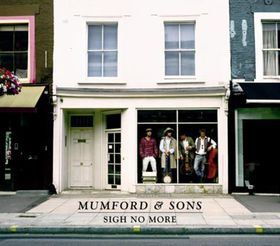
    Okay. It’s been about a year since I first heard Mumford & Sons. I remember seeking out “Little Lion Man” after reading a little blurb about it, and thinking it sounded like a great song. I downloaded it right away, but, to my surprise, it turned a bit stale on repeated listens. Their follow-up “The Cave”, despite its strangely moving video, has only marginally better replay appeal. Despite all that, I did download a copy of the group’s debut full-length Sigh No More when Amazon.com offered it at a steep discount. I have probably played it a couple of times, but… ehh. There’s nothing about the album itself that makes me crave it. What’s worse, when I hear their songs on the radio, they’ve started to grate on my nerves.

    I don’t necessarily hate their music. Hate is such a strong term, best reserved for the truly loathsome, and frankly, once I go on record as “hating” an artist – The Dave Matthews Band, for instance – they inevitably release a single (“Funny The Way It Is”), or even a whole album album (Big Whiskey and the Groo Grux King), that makes me have to eat my words. I don’t love the Dave Matthews Band, but I do love that damn album. And I don’t hate Mumford & Sons. I’m just not that into them.

    Yet?

    I have to admit: this is a band I tried really hard to like. This is a band I feel on some instinctual level I should be in love with. The same way I fell in love with The Avett Brothers a couple years ago. I feel like I may have failed Mumford & Sons as a listener. And the surprised looks on my music-fan-friends’ faces when I express my semi-embarrassing, clearly minority opinion of the band only serves to reinforce that feeling of failure. Where did I go wrong? What am I not hearing in this music that so many of my friends seem to love?

    And then I start to think that maybe it’s not a personal failing. Maybe I’m just not convinced by the band’s “authenticity”. Am I the only one who hears a gimmick – or even a small, made-to-be-charming collection of them – in every Mumford & Sons song? All the various anachronisms in their music and presentation, starting, of course, with the band’s very name, intended to evoke the old family business (are they in music, or haberdashery?), and extending to Marcus Mumford’s faux-Appalachian rasp and the music’s sepia-toned arrangements feel like a dusty collection of folksy figurines lined up behind the glass of an antique shop china closet. But closer inspection reveals that they aren’t really dusty – they’ve just been painted to look that way. Listening to Mumford & Sons feels to me like listening to a cassette tape shoved into the back of one of those replica Victrola turntables you get at Sears.

    Then again, maybe it’s just that the songs aren’t that great, and don’t hold up well.
    This past weekend, while on a family road trip, we stopped for a picnic lunch in a Clinton, Missouri park. There in the park, two Amish teenagers had set up a shelter where they were selling various baked goods. I went over and bought a plate of pecan caramel cinnamon rolls that looked fantastic – it had been so long since I’d had a really fantastic pecan caramel cinnamon roll – and y’know, these particular pecan caramel cinnamon rolls were baked by actual people – Amish people, even. They had to be great, right? But when we actually opened them, they were sort of tough and dry and sad. No question there was a certain level of joy involved in my purchase. But that joy vanished in the actual eating to the point where a QuikTrip donut would have been preferable.

    And so it may be with Mumford & Sons. Maybe, with pop music sounding more and more automated and computerized, less melodic and more rhythmic, we crave the sound of actual human fingers plucking the actual strings of actual musical instruments – especially those indigenous to our pioneering forefathers – and we crave the sound of genuine imperfect human voices singing actual verses and choruses so much that we’re willing to pretend that replica Victrola is the real deal, and that the cassette we’re listening to is really an old-timey 78 we dug out of the bins at St. Vinnie’s.
  • Amy Winehouse and the Myth of the 27 Club (Hint: It’s BS)

    Saturday afternoon, I was busy doing something or other in the kitchen when my partner, browsing at his computer, asked rather non-urgently, “So, who’s Amy Winehouse?” “Why,” I asked him, “Is she dead?” “Yup,” he replied. The singer’s tragic but not terribly surprising death was the “duh” heard ‘round the world over the weekend. Even as authorities try to tamp out the rampant speculation over the cause of her demise, her signature tune – the one she’ll be most remembered for by our kids – was ringing like a grim YouTube joke that had finally found its punchline. As I saw in one poster’s bio line Saturday night: “They tried to make me go to rehab, and now I’m dead, dead, dead.”

    And so the career of this strangely beautiful singer came to its depressingly predictable end. But not without one last stupid nod to the clichés of gone-too-soon rock stardom: Amy Winehouse is the latest dues-paid member to join the 27 Club, that legendary pantheon of self-destruction – Janis, Jimi, Jim, and most recently (albeit a full generation ago) Kurt – all reluctant “voices of their [respective] generation” who martyred themselves to the gods of image-licensing, who gave their lives to become black velvet posters to be won at county fair midway games.

    But here’s the thing about the 27 Club: it’s a bullshit club. And in the case of Amy Winehouse, it confers a level of artistic legitimacy and importance to a career that had scarcely earned it.

    It’s true, I’m no Amy Winehouse fan; but let’s be clear: I’m no hater either. While Winehouse had a distinctive image and delivery, the best thing about her 2006 breakout album “Back to Black” was its defiant sense of deep pop history, most evident in the Northern Soul revival production by Mark Ronson. It was a sound that stood in stark opposition to the Autotune-heavy radio fodder it shared the airwaves with.

    All that said, Winehouse’s unique talent was not so much as a singer, but as a disaster in progress. She left a decidedly scant (and spotty) recorded legacy, and her live performances in recent years have ranged from harrowing to pathetic. Yes, a few of her songs may have gotten play on the radio, but what’s really fascinated us most about Winehouse (right or wrong) for as long as we’ve known her, has been her long, relatively fruitless march to an early grave.

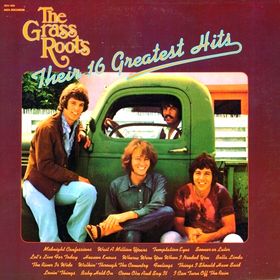
    Rob Grill (in the cab of the truck) 1943-2011: My parents had this record when I was little and I played the hell out of it.
    Frankly, that’s not a legacy I care to celebrate. Why revere the 27 Club?

    Leaving aside the fact that there have been only two new members of the 27 Club in my lifetime, why such reverence for 27, when surely, you can pick any age and find some arbitrarily linked contingent of musical greats who kicked the bucket there? Why not the 67 Club? Or the 57 Club, latest inductee Doug Fieger of The Knack, the guy behind “My Sharona”, a song that feels infinitely more joyful than anything Winehouse had on offer.

    Why not the 47 Club with its cross-generational triumvirate of gay icons – Edith Piaf, Laura Branigan, and of course, Judy Garland? Or the 37 Club, home of the tragic male sex-symbol who died (often violently) at the cusp of middle age: Sal Mineo, Bobby Darin, Michael Hutchence.

    Why even bother with the number 7? How about the 32 Club for dead rock drummers like Keith Moon, John Bonham, and, y’know, Karen Carpenter. Or the 40 Club for John Lennon, John Coltrane, and Johnny Thunders; the 50 Club for dead punk rockers Joe Strummer and Dee Dee Ramone (Joey just missed it). And speaking of just missing it, what about those icons of the 26 Club? Baby Huey? Gram Parsons? Nick Drake? What’s so magical about the number 27? Nothing. It’s bullshit.

    Now, take, for instance, the death a couple weeks ago of singer Rob Grill, at the age of 67, following a head injury. Grill was the lead singer of The Grass Roots, a band whose songs became a staple of AM radio from 1965 to 1975, right around the time the so-called 27 Club was first “established”. True enough, Grill was more singer than songwriter. The Grass Roots were the very definition of a singles group, and his band’s longtime producer Steve Barri was largely responsible for the group’s success. But it’s Grill’s voice you hear on more than 20 great Top 40 hits – songs like “Let’s Live for Today” and “I’d Wait a Million Years” that did as much to define their era as those by his contemporaries, the 27 Club’s charter members.


    I grew up listening to my parents’ Grass Roots records right alongside my own Duran Duran and Culture Club 45s, and I’ve spent countless hours singing along with Grill: in my bedroom growing up, in my Grunge-era college dorm room, and in my car this morning. His voice was not especially distinctive. But he looked good. And his singing was straightforward, and at its best, conveyed a powerful sense of urgency and purpose. He lived long enough to see his band’s rise and fall, make a few modest comeback attempts, and to tour the oldies circuit. As an artist Rob Grill was never terribly fascinating. As a musician and as a human being, he probably accomplished more than Amy Winehouse ever aspired to. But his death warrants only a small blurb in the latest issue of Rolling Stone. R.I.P., Rob Grill, distinguished member of the 67 Club.

    At 27 years old, Amy Winehouse coulda been a contender. Then again, after 5 years and no follow-up record, it’s conceivable that, had she lived to join the 67 Club, she coulda been merely somebody who had once, briefly, been somebody. Not unlike a lot of the now anonymous, aging and/or dead girl group singers she herself revered as signified by that signature beehive. That, more than anything – more than any of her records, which, in their best moments do hint at some kind of forever unrealized greatness – will be her legacy. Forget the 27 Club. It’s so 40 years ago.

  • Awesome Free Download! The Postelles “Summer Undercovers”

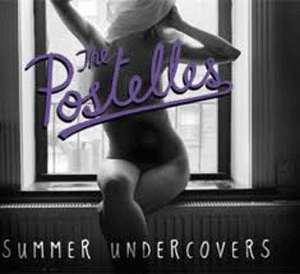
    The Postelles ''Summer Undercovers''
    The Postelles are one of my favorite new bands – a New York City quartet who play great little three minute rock ‘n’ roll tunes that sound like they were made to be heard on 45s. They have all the big beats and melodic guitar lines of a Ventures instrumental, circa ’63; and in lead singer Daniel Balk’s vocals, all the boyish sweetness and vulnerability of the 1910 Fruitgum Co., that illustrious Kama Sutra Records bubblegum group who had a huge hit in ’68 with a song called “1,2,3, Red Light”. The latest single by The Postelles is called “123 Stop”. I don’t think that’s purely coincidental.

    Just weeks after the long-anticipated release of The Postelles’ self-titled debut album, the band has released a new EP called “Summer Undercovers” for free download via their website. And it’s exactly what the title would suggest: four covers that together sound like a ten-minute day at the beach with Frankie and Annette(‘s grandkids).

    It starts with a surfed-up version of The Smiths’ “Ask”, a song that Morrissey first sang in a languid moan 25 years ago (probably before these guys were born) – spending warm summer days indoors writing frightening verse to a bucktoothed girl in Luxembourg. The Postelles play it like a teen idol love letter, and follow it up with an appropriately rawkin’ take on Joe Jones’ (by way of The Rivieras) “California Sun” (an actual surf-rock classic), and UK pub-rocker Wreckless Eric’s yearning “Whole Wild World”. Capping it all off is a live version of The Ramones’ “Beat on the Brat”. Not only is it great to hear these songs given such a fresh treatment, it’s a nice taste of what the band does on their originals, which sound like covers of classic surf-bubblegum-punk-new-wave songs from an alternate universe.