The new ad campaign for the roll-out of BlackBerry’s PlayBook tablet is based around a long-forgotten song – a flop upon its release – by a vocal group who, while regarded as legendary today, was generally (and sort of accurately) considered a bunch of has-beens when they recorded it all of 31 years ago. First of all: Thank You, BlackBerry! Your taste in music is awesome. Secondly: Good luck with that.
When we think of The Temptations, there are two different incarnations that come to mind. There’s the early-mid-60s Smokey Robinson-produced Temptations, who, after toiling away fairly fruitlessly in Motown’s gold (record) mines for nearly three years, finally hit the motherlode with ebullient pop ditties like “The Way You Do The Things You Do” and the lovely, beaming “My Girl”.
Then there’s the darker, funkier Norman Whitfield Temptations of the late 60s and early 70s, defined by its flights of social commentary set to increasingly elaborate and psychedelic orchestrations. These were songs that sounded spacey and felt spacious, draped in echoes and strings and deep, almost subliminal basslines, culminating in the twin peaks of “Just My Imagination (Running Away With Me)”, a lushly harmonized, string-bedded, ballad of wishful thinking so beautifully and precisely realized it’s almost physically painful (in the best possible way) to hear, and the 1973 epic “Papa Was a Rolling Stone”, a song The Temptations didn’t even get the first stab at (Whitfield had recorded it with The Undisputed Truth a year earlier), but which remains one of the group’s most iconic hits.
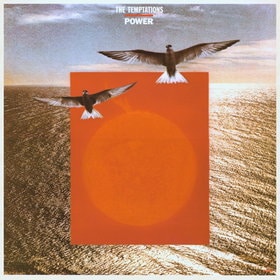
But The Temptations discography gets a little fuzzy after that. In fact, though The Temptations, amidst myriad personnel changes, continued recording on a fairly regular basis well into the 90s (they still pop out an album every now and then), they’ve never come close to their earlier successes, and virtually everything they’ve recorded since, say, 1975, has gone largely forgotten, even by many Temptations anthologies. Which makes hearing their 1980 single “Power” on a new commercial for BlackBerry’s PlayBook tablet such a great surprise.
Anchored by the late great Melvin Franklin’s distinctive “po-ower, poom, poom” vocal bassline, “Power” is a fire-and-brimstone gospel sermon delivered over a just-past-disco groove by Dennis Edwards in full-on revival preacher mode: “All you poor!” Edwards declaims, “All you needy! All you’re doin’ is givin’ to the greedy!” The song clearly spoke to its own end-of-the-Carter-era moment although its prescription for salvation pointedly disincludes anything about, say, electing Republican candidates to national office. It’s more about giving glory to God than giving glory to people who pay God lip service. 30-plus years later, it feels utterly true to the weird conflation of religious zeal and the mightily propagandized fiscal policy panic of 2011. Go, BlackBerry!
The song was to have been the group’s great comeback single: Like The Spinners before them, The Temptations left Motown in the mid-70s to record for Ahmet Ertegun’s Atlantic label. They were one of the last of the classic Motown acts to either disband or defect from Motown. But unlike the Spinners who found their greatest success on Atlantic with an enviable string of hits between 1972 to 1980, The Temptations’ Atlantic tenure was brief and depressingly hitless. PlayBook! Yes!
It was Berry Gordy himself who’d wooed the The Temptations back to the fold with “Power”, a song he’d co-written, which he’d claimed to have been sitting on because he didn’t have anyone like The Temptations to record it. Gordy produced the track with a hearty nod to the group’s Norman Whitfield heyday, and it became the title track of the group’s 1980 homecoming album.
But even though “Power” became the group’s biggest hit in 5 years (and, sadly, it remains the group’s best charting single since their return to Motown), it stalled just outside of Billboard’s Top 40. The hedonistic days of disco weren’t yet a distant memory, and the song’s fate seems to speak more to pop radio’s BeeGees hangover than the song’s quality: people just weren’t ready to hear something this sincerely angry just yet – not on Top 40 radio at least. Which makes the song’s Age of AutoTune resurrection in the form of a national ad campaign for a semi-snazzy (although somewhat late-to-the-party, it seems) new tech gadget one of the sweeter, most out-of-nowhere musical surprises of this year. Hear the song in all its righteous fury here:
”Feel Your Heart Beat” Eurovision DusseldorfAfter months of watching the finalists compete, after watching the votes come in, and watching the losers get eliminated, the competition has ended, the votes are in, and a winner – cue the confetti – has been announced. And the winner is… Azerbaijan. Yes, yes, I know, this week was the final week of the American Idol competition, but last weekend marked the finale (or rather Grand Final) of a much bigger, far cheesier affair: the annual Eurovision Song Contest.
When I was a kid and first heard about Eurovision, I was terribly jealous of Europe. It sounded wonderful: a sort of Miss Universe, only instead of women competing in swimwear, it was pop songs competing in foreign languages. Unlike American Idol, it’s not the singer that counts in Eurovision so much as the nation represented by a single 180 second pop song.
I’ve long been familiar with some of Eurovision’s more notable success stories (of which, despite a 50-plus-year history, there are startlingly few). There’s ABBA, of course, who won for Sweden in 1974 with their song “Waterloo”. Later on, Switzerland recruited a 19-year-old French-Canadian former child star name Celine Dion to represent them in 1988. After she won that year’s contest with the song “Ne partez pas sans moi” (“Don’t Leave Without Me”), she came back to perform her winning song for the opening of the 1989 Grand Final, taking the opportunity to debut her first English language single “Where Does My Heart Beat Now” which became her first U.S. hit. And though Gina G didn’t win Eurovision, her Eurovision song for the UK “Ooh… Ahh… Just a Little Bit” became one of the great dance hits of the 90s.
But I’d never actually seen the contest, which culminates annually in one marathon live broadcast seen by an international audience that would make the Super Bowl cry. That is until I found out last year that you can actually watch the show on the Eurovision website. So last weekend, I spent some quality time with the internet, and by extension, the kerjillion people packed into a Dusseldorf stadium to watch the finalists perform, to experience my first ever Eurovision.
While I learned that I really have nothing to be jealous of Europe over – the Grand Final is a long, cheesy slog that should be enjoyed after much alcohol and preferably in the company of Graham Norton (who does the commentary for the British broadcast) – it was still everything I’d always dreamed it would be. Like Miss Universe, the competitors of Eurovision have been done up for maximum immediate impact – big costumes, big fog machines, big inspirational messages and more bright-eyed and earnestly delivered gibberish singalong choruses than a three day marathon of Wiggles episodes – but nothing with much of a shelf-life. That said, last year’s winner, a song called “Satellite” by Lena Meyer-Landrutt (she’s just Lena now), was actually a credible pop song that became a pretty huge summer hit in Europe.
With Germany turning to Lena once again for this year’s competition (with a darker, and even cooler song called “Taken by a Stranger”), one of the ceremony’s hosts, Stefan Raab (a German mash-up of Seacrest, Fallon, and Gervais, who also co-wrote both of Lena’s entries) took to the stage to perform a Brian Setzer-ized arrangement of “Satellite” as the evening’s opening number, proving that some Eurovision songs can actually have a life after Eurovision. It does happen.
This year, 43 countries entered songs into competition. 25 songs made it to the Grand Final (10 each from 2 Semi-Final rounds, plus entries from permanent finalists Spain, Italy, France, Germany and the UK). And following are my ten favorite performances from this year’s Grand Final. But first, an honorable mention that didn’t make it to this year’s Grand Final. From Portugal, here’s the group Homens da Luta (People of the Struggle) doing “Luta e Alegria” (“The Struggle Is Joy”). I’m not sure how ironic this performance is (apparently, the group first appeared on a Portuguese comedy/variety show – but they seem awfully earnest), but I imagine that if the city of Madison were able to enter the Eurovision contest, our 2011 entry would look a little like this – the Village People as a folk protest act:
#10 – Serbia: “Caroban” by Nina
For a long time, there was a rule that competitors had to perform their entries in their native language, but this rule handicapped a lot of countries in a couple of ways. One: pop music just sounds better in English. Two: there are more people who speak, say, English, or French, or German than speak Romansch or Magyar, thus more people who might more easily relate to (and consequently vote for) England or Ireland’s entry by default over Hungary’s. Since the native language rule was repealed in the late 90s, the contest has seen an increasing number of Eastern Bloc finalists and winners. Typically, each country has its own contest to determine their Eurovision entry, and for these contests, the songs will usually be performed in their native language – and then get translated to English for the Eurovision Semi-Finals and Finals.
Serbia was one of the few countries who dared to go native into the Semi-Finals, and why not? The song itself isn’t necessarily all that memorable, but the staging of it, like a Balkan Dusty Springfield on the Ed Sullivjanka show, easily transcends any language barrier.
#9 – Russia: “Get You” by Alexej Vorobjov
One of the most common (and boring) gripes about Eurovision is that, musically, it’s hopelessly out of touch with whatever’s going on in the moment; that it’s like the Grammy’s favoring Jethro Tull over Metallica in 1992 or Steely Dan over Eminem in 2001. But Russia’s 2011 entry is very 2011 for being a Eurovision song, having been produced by none other than Lady GaGa cohort RedOne, and nodding with GaGa-esque 80s nostalgia to George Michael’s early 80s street-tough phase. Of course, maybe Eurovision just feels more current right now because Lady GaGa has made some of the hallmarks of Eurovision – gibberish chants, polylingual singalong hooks, outlandish costumes and epic stagings – cool.
#8 – Slovenia: “No One” by Maja Keuc
Did you know that there’s a TV show called Slovenia’s Got Talent? There is. Seriously. And last year, Maja Keuc took second place on the show, winning comparisons to Christina Aguilera in the process. As songs go, this gothic ballad is far better than anything Aguilera put out on Bionic.
#7 – Iceland: “Coming Home” by Sigurjon’s Friends
There’s a sad story behind Iceland’s entry. 36-year-old singer-songwriter Sigurjon Brink was in competition with a song called “Aftur Heim” to become Iceland’s representative in this year’s Eurovision when he died suddenly of a stroke in January. A group of his musician friends formed a tribute band in his honor, and with the blessing of Brink’s family won the chance to take Brink’s song to Eurovision. But there’s more to the song that the sad story behind it – it’s a sweet old-fashioned tavern singalong given a loving performance by a band of brothers in harmonies (and horns). (My 11-year-old son says it sounds like it could be a holiday song. I think he’s right.)
#6 – Georgia: “One More Day” by Eldrine
Turkey may have placed 2nd last year with an awesome Linkin Park-ish rocker called “We Could Be the Same” by the band maNga. But generally speaking, you don’t see much rock on the Eurovision stage. This year’s nu-metal number came courtesy of the former Soviet Republic of Georgia.
#5 – United Kingdom: “I Can” by Blue
The last time the United Kingdom won Eurovision was with a comeback hit by Katrina and the Waves (they of “Walking on Sunshine”) in 1996. This year’s entry is another comeback story. Americans have no reason to know the British boy band Blue, but between 2001 and 2005, they charted a dozen singles to the British Top 20 including three #1s before splitting (at Elton John’s recommendation) to pursue solo careers. The group reunited last year, and are currently working on a new album, reportedly working on songs with Bruno Mars and Ne-Yo. “I Can” is their first new single in 5 years.
#4 – Bosnia & Herzegovina: “Love in Rewind” by Dino Merlin
While Russia may have gone for pop currency in recruiting producer RedOne for their entry, Bosnia & Herzegovina’s entry boldly eschews the new. In a competition overflowing with early-twenty-somethings, the 48-year-old Edin Dervishalidovic, better known (or at least more easily pronounced) as Dino Merlin looks positively ancient. His plaid jacket and folklorical presentation don’t help either. But this song is a grower, and proved to be one of this year’s crowd favorites.
#3 – Ireland: “Lipstick” by Jedward
Another crowd favorite: These two Irish brothers scored their first hit with a cover of “Ice Ice Baby”. They gave a wildly kinetic performance of this song at the Grand Final wearing looking like a white Kid N Play after having looted Lady GaGa’s costume shop. The song itself is techno-bubblegum of a most durable grade. These hooks have titanium barbs.
#2 – Moldova: “So Lucky” by Zdob si Zdub
For those who love to hate Eurovision, the country of Moldova (it’s not fictional, I swear!) gave a gift that keeps giving. Although it looks like a joke at Eurovision’s expense, Zdob si Zdub have really just given their stock-in-trade – Devo meets the Red Hot Chili Peppers in a Transylvanian night club absurdist gypsy folk-punk-funk – an English translation. The band has been around for nearly twenty years and have, in fact, opened shows for American acts like the Red Hot Chili Peppers. All of which, I think, makes “So Lucky” that much more fun. It’s jokey and outlandish, but the outlandish joke isn’t really about Eurovision specifically, but about the widespread culture of consumer narcissism – “You see! It’s all about me!” Cue the fairy unicyclist.
#1 – Azerbaijan: “Running Scared” by Eldar & Nigar (Ell & Nikki)
One of those rare cases where I actually agree with the winner in what is essentially a popularity contest. “Running Scared” is a shimmery, cosmic duet of young love on the verge of something wonderful (and also scary).
While pop music may sound better in English, it’s also true that pop music is best when written and/or produced by Swedes (see also the Blue and Alexej Vorobjov entries here). Ironically, Sweden’s entry this year – the massively, um, popular song “Popular” by Eric Saade – was one of this year’s biggest pop turds in the competition. (Sample lyric: “Stop. Don’t tell me it’s impossible. Because I know it’s possible.” Makes Ke$ha sound like Joni Mitchell.) But Sweden still managed to win this year. Azerbaijan’s winning entry was written by Swedes Stefan Orn and Sandra Bjurman. Like last year’s winner, “Running Scared” actually comes across as a song with international crossover potential. It sounds more like a song you might here on a U.S. Top 40 radio station than anything from Azerbaijan really has a right to (witness the strategic Anglicization of the duo’s names).
Though I’m sure he’s done okay for himself as a novelist, I’ve always believed that deep down inside, Stephen King really always dreamed of being a rock star. Or barring that – there is, after all, the matter of his looks – a rockin’ rollin’ DJ in the 50s mode, when local DJs were bigger rock stars than the rock stars themselves. When I was in junior high and high school, I spent a lot of time reading Stephen King’s books and one of the things I remember loving – in fact, the one thing that drew me to his books long after the stories themselves ceased to interest me was the way he worked music into them. (I loved a lot of Robert Cormier’s books for the same reason – he introduced me to the Stones’ “19th Nervous Breakdown” via his novel I Am the Cheese, at a time when those old British fogies were bogged down in crud like “One Hit to the Body” and nothing could seem less cool than a Rolling Stones song to a 10-year-old whose musical memory ended somewhere between Andy Gibb and Captain & Tennille.)
A lot of times, King’s inner DJ came out in the epigram (or three) at the beginning of each book (and maybe each chapter of the book too) – a stanza from Dylan, a couplet from CCR, etc. But Stephen King was also never above letting his characters give his inner record critic a voice. And it was a critic of the old school “rockist” variety. I can’t remember exactly which book it is (The Tommyknockers?), but I remember feeling awfully put out when one of his characters thought to himself, upon hearing T. Rex’s “Bang A Gong”, that Marc Bolan was better off dead in a world where the Power Station could cover his glam rock anthem.
GoodYesterday, the Syfy Channel devoted its entire programming schedule to movies (or rather, made-for-TV miniseries) adapted from Stephen King stories, and I am sad to report that I spent very nearly 8 hours (interrupted only by a quick trip to Pizza Hut) watching “The Stand”, an epic in four two-hour parts starring Rob Lowe as a deaf mute, Gary Sinise as a reluctant prophet, and Molly Ringwald as a Mary figure – hers is not a virgin pregnancy, but the baby’s father was killed in a massive superflu plague that wiped out most all of humanity. Like the massive 1978 novel it was based on (made even massiver when a “complete and uncut edition” was published 12 years later), the miniseries is a pulpy vision of an apocalyptic showdown between good and evil in the Great American West, with the devil (incarnate as a man called Randall Flagg) setting up shop in Las Vegas (surprise!) and the righteous, led by a mystical, 106-year-old black woman who plays guitar and sings hymns on her porch (didn’t see that one coming, did you?) flocking to a land of milk and honey called Boulder, Colorado.
Stephen King wrote the tele-play for the series and there are times when I wonder if he was being intentionally unintentionally hilarious with the dialog. Bill Fagerbakke (better known to folks my age as that big dimwitted Dauber from Coach, and to the kids of folks my age as the voice of Patrick Star) gets the best worst line when, playing to type as simpleton-with-a-heart-of-gold Tom Cullen, he laments (I’m paraphrasing), “I hate being a retard.” Several times, I got the feeling that this movie would be so much more fun if I could watch it in the same room with Sarah Palin. Stephen King even makes a cameo!
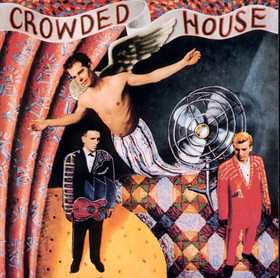
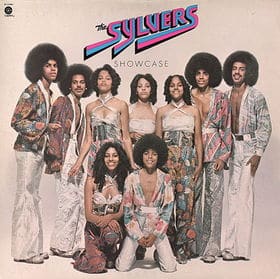
EvilAnd then I noticed that Stephen King’s inner rock critic also makes a cameo. In the opening scene of the second part, we see Mother Molly Ringwald listening to Crowded House’s “Don’t Dream It’s Over” on a turntable. Meanwhile, another one of his heroes is Larry Underwood, an aspiring musician who carries a guitar on his back. In one scene, he sits on the hood of a car singing 60s folkie Barry McGuire’s “Eve of Destruction” while Des Moines burns in the background. On the other hand, here’s one Harold Lauder, an insecure nerd (and unwitting minion of Satan – you can tell by his studded leather jacket) who’s never recovered from high school, plotting a terrorist attack on the “Free Zone” to exact revenge on Molly Ringwald for rejecting his affections in favor of Gary Sinise. And what’s Harold playing (on a cassette, no less!) while he’s building his bomb in the basement? The Sylvers’ “Boogie Fever”. The message of the movie couldn’t be clearer! Acoustic folk rock singer-songwriters, good. Disco: evil. Whoever said that rock n’ roll is the devil’s music?
Then again, the message gets muddy during the climactic final battle between the forces of good and evil. Larry Underwood, one of three emissaries from the Free Zone sent to represent in the final battle against Randall Flagg in Las Vegas, is first arrested, and then besieged by a bloodthirsty mob. At one point, one of Flagg’s henchman confiscates Larry’s guitar and smashes it to bits, shouting “Disco is dead!”