web analytics

Author: brian

  • #21 album of 2012 – Transcendental Youth by Mountain Goats

    Artist: Mountain Goats

    Album: Transcendental Youth

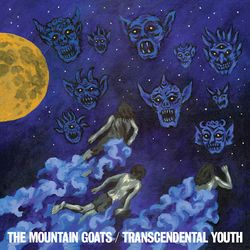
    John Darnielle (who alone or accompanied is the Mountain Goats) is my favorite folk songwriter of the current century, releasing a good-to-great new album every year and a half. He was an excellent lyricist as far back as the 1990s, declaiming away in a reedy voice over a hundred mountain_goats_transcendental_youthscratchy-sounding voice-and-guitar variants on the John Darnielle Fast Song and the John Darnielle Slow Song (Now With New Words [™]); kudos to you if you feel like listening to them. In 2000, with the Coroner’s Gambit (still the best representation of his younger more aggressive self), he began a process of making his records sound good: each album adding cleaner production, less-reluctant use of a supporting piano or cello here and there, more interestingly textured guitar lines, and eventually even a band, and melodies that didn’t all sound the same. The first Mountain Goats album I’d enjoy even if the lyrics were generic was probably We Shall All Be Healed (2004). The first two Mountain Goats albums *in a row* that I’d expect to enjoy that way were All Eternals Deck (2011) and, now, Transcendental Youth. There’s horns here, for the first time, on several songs, peppy or solemn or decorative or insistent. Piano-based songs mix with fervent guitar ones; sometimes there’s lead and rhythm guitar both; the drums wait their turn patiently, knowing they will get called on, and be permitted to serve. Sometimes, as on Amy a.k.a. Spent Gladiator 1, Darnielle’s vocals lead the charge; other times, as on White Cedar, his voice steps carefully, refusing to tread on fragile arrangements and risk crushing them.
    His songs are scenarios; pugnacious character studies. I was going to say “stories”, but that’s wrong; they’re part snapshot, part expressionist painting.  We get little details of the drug trade engaged in by the narrator of the lovely, atypically piano-and-VH1-atmospherics-driven Lakeside View Apartment Suite, but “Downtown north past the airport/ a dream in switchgrass and concrete/ Three grey floors of smoky windows/ facing the street” makes no distinction between newspaper reportage and imagery. Neither does “Just before I leave, I throw up in the sink/ One whole life recorded in disappearing ink/ and Ray left a message, thumbtacked to the door/ I don’t even bother trying to read them anymore”. But “You can’t judge us, you’re not the judge/ Lakeside View, for my whole crew”: it is his narrators’ right to mislay their lives.

    They usually do. Transcendental Youth, like all Mountain Goats albums, allies itself with misfits: the “sad and angry… who don’t slow down at all, and there’s nobody to catch us when we fall”. Some, like rock-n-roll singer Frankie Lymon (right before his fatal 1968 heroin overdose) in the jangle-folk anthem Harlem Roulette, have success and fame, and are isolated that way. Some, like the inmate of White Cedar, are isolated by mental illness — or at least self-perceptions radically at odds with a consensus view. Some are isolated by love — many past Darnielle songs focused on mutually destructive married couples, but here instead we’re given the ominous rocker Night Light, driven by organ feedback and drum fills, where the love has become one way (“I was a red dot blinking on a screen overhead/ and then the room went dark/ Dream of maybe waking up someday/ wanting you less than I do/ This is a dream, though/ it’s never gonna come true”). Several times, frustratingly, it’s not really clear. The Diaz Brothers is a rock song in the style of circa-1980 Billy Joel, which I’m afraid I think is pretty neat, but why we should have “mercy for the Diaz brothers” is unknown. Except, sure, one should normally have mercy: a worthy notion, just not much of a story.

    Amy a.k.a. Spent Gladiator 1 is mostly 2nd-person (to the late young blues-rocker Amy Winehouse) instead of first, and the purest rallying call of his career. “Play with matches if you think you need to play with matches/ Seek out hidden places where the fire burns hot and bright/ Find where the heat’s unbearable, and stay there if you have to/ Don’t hurt anybody on your way up to the light/ And stay alive”. In case her ghost prefers more specificity, “People might laugh at your tattoos/ When they do, get new ones in completely garish hues”. But “just stay alive”. Which is probably easier if you don’t, like Ms. Winehouse, or many Darnielle narrators, court alcohol poisoning on a daily basis.

    My favorite Mountain Goats album is still We Shall All Be Healed, the only one with a narrative arc pointing to redemption (peculiar, pugnacious redemption). It was followed with two albums of autobiography (the Sunset Tree and Get Lonely) that — while slower and less interesting as music to my tastes — shared his childhood enough to clarify his attraction to scars, and his first marriage enough to explain his couplehood songs. As well as letting us admire, all the more, his sympathy for the scars of all the people who *aren’t* him.

    I’m told his current marriage is happy. I know he has a baby now for the first time, and refused as a point of pride to soften Transcendental Youth‘s songwriting by suddenly pointing to bright spots in the world now. I get that; the timing would be too convenient, intellectually dubious in the extreme. What I’d’ve liked is if he’d tried already something like that two albums ago, just for variety. His blog proves he can, at minimum, burst with happy and funny enthusiasm about other people’s music (extreme metal, slick R&B, Radiohead, nothing you’d guess). Touches of that could help answer the question “Stay alive for what?”. But three billion years of evolution haven’t asked stupid questions like that; sometimes, maybe, we need to reach out to each other before anyone has time to give a good reason.

    – Brian Block

    To see the rest of our favorites, visit our Favorite Albums of 2012 page!
     

  • #22 album of 2012 – Who’s a Fuzzy Buddy? by Bastards of Fate

    #22 album of 2012 – Who’s a Fuzzy Buddy? by Bastards of Fate

    Artist: Bastards of Fate

    Album: Who’s a Fuzzy Buddy?

    Who’s a Fuzzy Buddy?, by Bastards of Fate, is loud, weird, and goofy. It’s also one of those albums that can be accurately summed up, at least for consumer purposes, in one of those (A + B) / 2 equations that bad reviewers like to use as a crutch. A month ago, reviewing Jonny
    fuzzy_buddyPolonsky
    ‘s Intergalactic Messenger of Divine Light and Love, I said the album was halfway between Rubber Soul and Siamese Dream, which should be enough said; but I didn’t have much of a track record here, so I nattered on for a few paragraphs just to reassure you I’d really listened (a lot) to the darned thing. You should trust me by now, so let’s keep this simple: Who’s a Fuzzy Buddy? sounds like an inspired teaming of Animal Collective with Tub Ring. Thanks for reading! Bye!

    Okay, so an annoying part of my brain is pointing out that, Animal Collective’s own niche status aside, well under 1 in 10,000 Americans own any Tub Ring albums (I’m not even able to track down how *I* heard of them). I could substitute, for them, Faith No More/ Mr. Bungle era Mike Patton, with the hostility removed from his sense of humor, but … I’d better just write a review. Animal Collective I referenced for the percussive grooves, the amount of weird sound concentrated at high (treble) frequencies, hints of a certain strange soulfulness, and the general aura of good times. Tub Ring or Mike Patton I mentioned in honor of the wildly theatrical lead singing, a class-clown sort of disrespectful-but-not-unfriendly whimsy, short bursts of noise or industrial-metal in the middle of songs, and the willingness to throw out a good groove to chase a 4-second-long inspiration. People who prefer to trace all pop music back to the Beatles will have no problem classifying Bastards of Fate as pop music: just pretend the Beatles’ legacy was built mostly on Being for the Benefit of Mr. Kite, Got to Get You Into My Life, Helter Skelter, and Revolution 9.

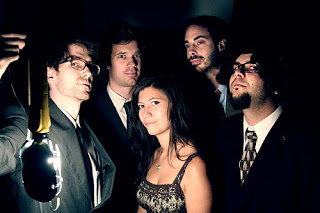
    Which would be a fine legacy. Bastards of Fate don’t delve into deep important feelings — “Clankity, clankity, clankity-clank, ankylosaurus is BastardsOfFatebuilt like a tank” is a typical chorus here — but they’re a genuinely excellent band, and these songs are crafted. Digging Up Dinosaurs blends campfire harmonica-folk with arena-rock thump; mutated a dozen-plus ways (Daleks and Munchkins and pianos fed through trash compactors all enjoy seeming musical nods), it keeps its populist shape. Impossible Feelings never stops being gracefully catchy funk-pop no matter how many robot squirrels or robot dolphins try to savage it or summon windstorms against it. Police 2000 is sleek early Cars pop dragged through train tunnels, Doctor Who synthesizers, demented barbershop quartet, acoustic guitar musings (the Beatles also did Julia, right), and an expert violin arrangement without losing its basic catchiness. Huge Magic generates potent group sing-alongs (“There’s power in your words when you sing them, there’s power in your words when it’s the truth” could center a hit song exactly the way it is), then keeps the momentum as Doug Cheatwood spirals into more individualized territory (“If magic cures the hurt/ when my ice cream hits the dirt/ I can wipe my nose on someone else’s shirt”). It balances beautiful harmonies against agonized background screams, builds through massive drums, and unravels into a call-and-response where both Cheatwood’s strained “My magic is huger than your boyfriend” and the sweet “The magic is you” (cooed by keyboardist Camellia Delk) beg for listener accompaniment even while strafed by rapidly-changing instruments.

    As both mass and critical audiences reward introspection and/or seduction, Bastards of Fate will remain a minor band as long as they build up to choruses of “Feels like a toaster oven in here”. But I’ve thought those words more often than I’ve thought whatever emotions Phil Collins is usually going on about, and it’s about time, say I, that they be represented the way they deserve.

    – Brian Block

    To see the rest of our favorites, visit our Favorite Albums of 2012 page!
     

  • #23 album of 2012 – Summer Wilderness Program by Jon Lindsay

    Artist: Jon Lindsay

    Album: Summer Wilderness Program

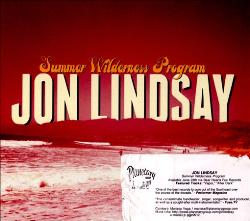
    Jon Lindsay makes power-pop music, a la the definition I started my Jukebox the Ghost review with. Where Jukebox the Ghost’s tunes remind me of young, flamboyant Elton John, Jon Lindsay — a smooth, graceful singer, and an imaginative user of synthesizers and percussion as well jon_lindsay_summeras pianos, strummed guitars, and violins — reminds me more of the occasional They Might Be Giants songs where they prove they could be a calm, respectable pop band if they felt like it (although you’re more likely to only know Birdhouse in Your Soul and maybe Ana Ng or Don’t Let’s Start; slow ’em down, delete the wacky bits, prettify the arrangements, transition into and out of minor-key, and you’re left with excellent Lindsay-esque tunes).

    While all the songs are melody-centered, there’s good song-to-song variety in the delivery. Tiny Violins is piano-based, with pizzicato strings and shiny keyboard lines, but has an undergrowth of skittering drums from IDM electronica. Margot is folk/country, except for the fast, flashy keyboard solo. Where Love Goes to Die is blaring and futuristically funky, with buzzy synthesizers and hints of falsetto singing. Marcoda is hollow and haunted, with a hissing ambience. Little Fool is a 3/4-time slow dance that would almost fit American Graffiti‘s glory-days-of-early-rock’n’roll soundtrack. Vapor has a light, spindly arrangement, but when the synth hook kicks in it has the cheesily adorable drive of a Cars single. Biography is built on piano, organ, and lots of echo.

    His topics are mostly conventional and relationship-based, but well-written (though I’ve had to transcribe them myself, with errors and question marks, and really wish he’d just printed them). Margot‘s yearning for past love includes “In my car seat, I would hit this tree, if I thought I could see you right away … School is out, it’s summer for someone, but I’m stuck inside your highlight reel”. It gets bonus points for “You had the keys to my heart, made of jokes and companionship”, which is a fine thing for heart keys to be made of. King of the Offseason is the self-aware song of an “average anti-hero”: “Let me play the lurker at your formal./ Trust me, I’ve been practicing my lines/ and I’ll be the English teacher who gets you high this semester/ I’ve been waiting for this picture all my life”. Tiny Violins are what he promises to “play for girls in my wake”, in a song about “survival at the standard cost/ speed trials in the last of the lost”: either Jon Lindsay isn’t singing to woo women, or he trusts their faith in his ability to sing in character.

    He has, too, songs about people whom he isn’t there to romance. Marcoda is sung to a dead girl: “I remember you to your father when I see him, at garden parties and on wedding days … and we share a secret sadness and the sense that/ there ain’t nothing on the other side/ Then we take attendance of the folks who knew you/ our number getting smaller, smaller all the time”. Princess Street is sung for an alive girl he’s observing, and starts out bleak:  “She was a piece of driftwood floating over Princess Street/ when she woke up with those mystery bruises, black and bottom feet/ when the bluebird in her heart was saying ‘Just one more whiskey, please’”. But it’s build on hope and an interesting moral claim: “She doesn’t want to hear the story of one more prodigal son/ she’s looking for an allegory so much different from that one/ no religion, no one loses and the daughter may not ever come around/ But still the father chooses that, no matter where she cruises to/ he’ll be proud and lay his expectations down”.

    Summer Wilderness Program is an album of excellent tunes, modestly inventive arrangements, and words worth singing along to: not the easiest thing to make. It’s Jon Lindsay‘s second album; debut Escape from Plaza-Midwood has 16 songs instead of 12, but thinner production and about the same number of *good* songs, so I’ll call Summer Wilderness Program further progress from a strong beginning. I’d probably rank it higher with all the lyrics in front of me waiting to read. You’ve been warned, record company: do better next time, or I’ll write another positive review with another small complaint lodged inside. Or something.

    – Brian Block

    To see the rest of our favorites, visit our Favorite Albums of 2012 page!