web analytics

Author: brian

  • #3 album of 2012 – Harakiri by Serj Tankian

    #3 album of 2012 – Harakiri by Serj Tankian

     Artist: Serj Tankian

    Album: Harakiri

    I’m not sure how famous Serj Tankian is on his own, but through 2006 he spent a decade as lead singer, rhythm guitarist, and occasional keyboardist for System of a Down, who scored the flat-out weirdest series of major hit songs (Chop Suey, Toxicity, B.Y.O.B.) of any band since the serj_tankian_harakiri1970s. I’d only recommend three of their five albums, but those include Toxicity (’01) and Mezmerize (’05), each a fair candidate for my favorite heavy-metal album — or do I mean favorite punk album? — of all time. Their songs were smart, well-constructed, and well-played, but their sound also fit well the pleasure center of my brain. Theatrical vocals that switched from soaring and melodic, to fierce, to raspy, to cartoonish? Loud, choppy riffs? Israeli folk-dance tunes and propulsion (actually Armenian, but I can’t tell the difference)? Righteous semi-coherent political fury? An attention span that was happy to develop an idea for four minutes, but only if you agreed to spend at least one of them madly dashing with them after something that suddenly caught their eye? I have no idea how this combination sold millions of copies, but it was perfect for me.

    When System of a Down broke up, Serj Tankian had no trouble finding talented new band-mates. But the majority of his old band’s lightness and humor had come from co-writer / second vocalist Daron Malakian, so at first it wasn’t clear what Tankian had to offer besides slightly clumsy, earnest imitations of System of a Down. Although I put his solo debut Elect the Dead in my Top 10 of 2007, I then kind of ignored and dismissed it for years, especially when Imperfect Harmonies was his rather leaden follow-up. I was almost stunned to rediscover Elect the Dead last summer and fall hard for it again: why the heck *shouldn’t* I enjoy a slightly inferior sequel to maybe my favorite punk/metal albums ever, after all? But that discovery was made easier by his release of solo album #3, Harakiri, which for the first time provided answers to the question of “Where else can Serj go from here?”.

    A few songs on Harakiri disproportionately shape my reaction. Two are unexpectedly beautiful. Deafening Silence opens with glittering note-by-note acoustic guitar, but that becomes a soft backdrop to gorgeous synth-pop, in which several different sound patches at a time each provide their wobbling melodies and rhythmic variations like quantized electric birds. Tankian croons most of the song in a heartfelt if not-completely-steady baritone, though he sings the bridge in a rap cadence. Forget Me Knot builds its verses — each with new arrangement touches — on rippling piano, aided by ticking drum machine, soft synth, and wordless female backing vox; it smoothly transitions into a chorus of soaring heavy rock and a bridge with female-sung operatics. The lyrics on both are evocative rather than clear, but seemingly the narrator of each is addressing a former close friend or lover who’s become a public figure. “You speak to millions, but talk to no one/ Home is the place you can’t walk away from/ You seek opinions, but listen to no one/ You throw up your hands and tell me it’s all done…/ I want you, I need you/ I pray that God absolves you/ Can’t live this life without you/ I’ve cleared this coffin for two…/ Sheath your swords, and take the eagle’s peace”.

    Ching Chime is a different triumph. It has a great groove — over snake-charmer guitar, it builds layers of subtle synthesizer and drum machine, then loudens the guitar and kicks in the beats — and another soaring heavy rock chorus, a core strength of Tankian’s, after which he breaks out in Middle serj_tankian_graffitiEastern prayer-style ululations. But it’s also, on the verses, the silliest he’s been since his old band broke up, and silly in a way he never tried before: imagine Speedy Gonzalez and the Tasmanian Devil of the old Bugs Bunny cartoons as a melodic-rap duo making sure 25% of their syllables rhyme with “chime”, and you’re not far from his delivery. It is a new thing unto this world.

    Cornucopia isn’t, but it’s a rock song that doesn’t sound like System of a Down: leaner, sleeker, more radio-catchy and very good at it. It’s at once a eco-political song, old territory for him, and a relationship song. He’s talking, this time, of the destruction of both Eden and early, easy romantic love when he sings — with his usual weakness for too-violent metaphor — “Sever the head of cornucopia/ We rape the earth and don’t know why it strikes/ Do you believe in stormy weather, stormy weather?/ Hurricanes play musical chairs with homes and chateau”. Yet he also means both when he sings “Don’t you think we’re extraordinary?/ Believing and seeing, realizing the imaginary”. I do, and we’d better be; the earth is much more interesting for having us modern humanfolk around, and we’ll need to invent extraordinary solutions to still happily be here in a few decades. I’m not used to Serj Tankian talking up our chances.

    The rest of Harakiri sounds like System of a Down. But he’s proven he doesn’t *need* to, allowing me 100% guilt-free enjoyment thereof. Figure It Out  is a particularly intriguing musical mix of the brutishly blunt, the rapid-fire, and the anthemic. Uneducated Democracy has the largest number of really catchy riffs. Reality TV stars several of Tankian’s most entertaining singing voices, and while I think it may be trying, in a bout of neo-Andy Rooney crankiness, to imply some criticism of body piercing, the relish with which he chants “Nipples! Tongues! Testicles! Cheeks!” makes it clear he’s far too much a naughty 10-year-old to ever carry it off. A smart, gifted, spazzy, naughty 10-year-old. Why wouldn’t I adore an album of that?

    – Brian Block

    To see the rest of our favorites, visit our Favorite Albums of 2012 page!
     

  • #4 album of 2012 – Theatre is Evil by Amanda Palmer

    Artist: Amanda Palmer and the Grand Theft Orchestra

    Album: Theatre is Evil

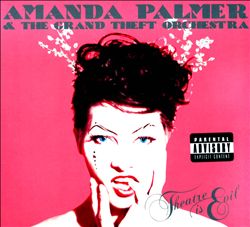
    Amanda Palmer exists in that odd demi-celebrity where most people haven’t heard of her, but many who *have* heard of her, and formed opinions, have done so without ever hearing her music. Skip down to the asterisks if you don’t care, cuz I want to speak of those issues. I think she and novelist amanda_palmer_theatre_evilNeil Gaiman make an adorable couple. I don’t think it was her job to maintain the health of Mr. Gaiman’s first marriage. I think she had every right in the world to raise $1.2 million on Kickstarter rather than asking her husband to finance her like a kept woman. It does seem clear that she’s an utterly incompetent money-manager, a trait I disapprove of; but if she offers her next album on a pick-your-price-from-$1-to-$20 basis like she offered Theatre is Evil, I’ll at least match the $10 I spent this time, because her music’s worth it. As for the controversy that roused Steve Albini, I’ll quote the end of my critics’ poll ballot entry labeled Best Live Show: “And sure, it would’ve been nice if her town-by-town rented clarinetist and flautist (I think?) were paid in money along with drinks and company; I’m a unionist, I get it. But those two guest musicians never looked anything other than thrilled to be there; and I, in their place, would have felt the same”. (She went back and paid everyone once the controversy took off. I truly think no harm was meant.)

    I also hear complaints that she’s an extreme self-promoter, via Twitter and/or strategic public nudity. I am unable to object to the latter. As for Twitter, I ignore it because the 140-character limit offends the depths of my innermost thoughts. Sure, *some* of my Facebook statuses could fit: “There are two kinds of people in this world: those who can enjoy a well-constructed dichotomy, and justice for all by Metallica”, or “Why is it that when a girl sleeps with a ton of guys, she’s a slut, but if a guy does it, all of a sudden he’s gay?”, or “Why did Heraclitus cross the river? To find out whether, when he double-crossed it later, it would know to feel betrayed”. But there’s no room to tell a story on Twitter — “Two roads diverged in a wood, and I: I took the one less traveled by. It was hard to dig up, unwieldy to carry; the forest rangers caught up to me, and charged me with felony larceny. I pointed out that folks were hardly using the damn thing, and that made not the slightest difference” — or even to pass on life advice as basic as “Give a fish a smaller fish, and he’ll eat for a minute. Teach a fish to support expanded offshore drilling rights, and he might luck out and become a giant mutant sea-monster fish with 11 eyes and savage teeth”. A man has a right to choose his editorial limits. As does Amanda, so more power to her if she works well with hers.

    *******

    Her music: that’s why I care. Back when she led a piano-and-drums cabaret-punk duo, the Dresden Dolls was my favorite album of 2003 and Yes, Virginia was my favorite album of 2006. Her solo debut Who Killed Amanda Palmer?, produced by Ben Folds, sounded like Dresden Dolls songs being produced by Ben Folds (so, pretty great for me). Her quality control then slipped, I think: Evelyn Evelyn was a fluffy conceptual cabaret duo without Brian Viglione’s magnificent drumming or Palmer’s usual intensity to ground it, and I found her live album Goes Down Under more a cute display of her charisma and between-songs storytelling than a good collection of songs.

    But with her Grand Theft Orchestra, she’s a rock star, with a 1980s New Wave pop/rock band. The guitarist and bassist essay the sleek, steady chugging pace of the Cars, the more unsettling jangle of the Cure, or occasional hair-metal power chords. The drummer’s normally steady too, but masters the abrupt clangor of Do It with a Rockstar. The keyboardist (herself) is loud, fond of Depeche Mode moodiness, perfectly quantized 8th- and 16th-notes, and the odd sprightly Buggles-style solo. As a singer, Amanda Palmer has a rich, versatile contralto that can domineer, sigh, tease, encourage, mourn, rabble-rouse, or breathlessly overthink things at hyperspeed. And I find the songs to be incredibly hooky: if Theatre is Evil is in some ways her least innovative record, it’s a pastiche of terrific old ideas.

    (She also has seven slow piano-centric numbers among the 18 real songs, but except for the Bed Song, they’re not why I love this record. Trout Heart Replica‘s minor-key piano and classy yet unnerving strings would be a marvelous Tori Amos song if it didn’t drag on for seven minutes; Berlin is also seven minutes, and deleting the first three would leave an interestingly percussive piano-drums song with detuned, obtrusive horns and power chords. Bottomfeeder synthesizes the piano and arpeggiates it and covers it in echo and is pretty. And lasts six minutes. It’s not their fault I like faster better.)

    amanda_palmer_grand_theftBesides, Dresden Dolls fans will recognize some tricks in the rock-song majority here. Want It Back brings back bouncy piano and tricky syncopation from her Dresden Dolls days, and fugue-style backing vocals like a Row Row Row Your Boat interplay from an especially skilled but very drunk 3rd-grade class. Lost is mostly a loud, excitingly choppy drummer’s showcase, with dodgy sprinklings of piano. Melody Dean has some of Palmer’s best breathlessly fast singing, and the Come On Eileen horns are a change of pace. All those songs also sound like the Cars in places; good thing I like the Cars.

    I should touch on her lyrics, which are often superb. I may doubt that Amanda Palmer can tell a story in 140 characters, but for the Bed Song she summarizes 60 years in five verses plus three different iterations of the chorus: from “We are friends in a sleeping bag splitting the heat/ we have one filthy pillow to share, and your lips are in my hair”, through “We found an apartment, it’s not much to look at/ a futon on a floor, torn-off desktop for a door/ all the decor’s made of milk crates and duct tape/ and if we have sex, they can hear us through the floor/ but we don’t do that any more”, to (once they’re wealthier and have a new place) “You walked right past  me and straightened the covers/ but I would still love you if you wanted a lover/ and you said ‘All the money in the world wouldn’t buy a bed so big and wide/ to guarantee you wouldn’t accidentally touch me in the night’”. She agonizes and wonders why in the first two choruses; only at the end does he get to say “I would have told you if only you’d asked me”. As clear a moral as any Aesop fable, and more important than most.

    Grown Man Cry, a musical tribute to the Cure’s languid, lavish downer Disintegration, is another bad-relationship song, as she gives up on an at-first-fascinating Sensitive Man (“We are standing on a corner, you are throwing down the gauntlet/ This is not a life decision, we just need to pick a restaurant… / For a while it was touching, for a while it was challenging, before it became typical, and now it really isn’t interesting/ to see a grown man cry”).The Killing Type is proudly pacifist — even when “I once stepped on a dying bird/ It was a mercy killing/ I couldn’t sleep for a week/ I kept feeling its breaking bones” — but mainly as context so you don’t worry *too* hard about thoughts like “I would kill to make you feel/ I’d kill to move your face an inch”. Lost hypothesizes that if her wallet and keys are actually still here somewhere, stuck behind couch cushions, so are people she’s lost to death or distance … then lets the whimsy evolve into “No one’s ever lost forever, they are caught inside your heart/ if you water them and garden them, they make you what you are”. Which is the sort of truth I find hits harder when you get there by the loopiest of logic.

    Which finally leads me to Ukelele Anthem, just voice and ukelele: a proud, inclusive urging that we should all make our own music. “It tales about an hour to teach someone to play the ukelele/ about the same to teach someone to build a pipe bomb, you do the math…/ You can play the ukelele, too/ in London and Down Under/ Play Joan Jett and play Jacques Brel/ play Eminem and Neutral Milk Ho-/ Tell the children, crush the hatred/ play the ukelele naked”. Amanda Palmer can write exquisitely depressing songs, but she’s not a downer; she’s a rock star, and she’s happily famous, and she wants you and me to be happily famous too. I’m not convinced about that ukelele, but I have a 6-year-old whose piano lessons I’m trying to keep ahead of, and a drum set I played well until I had the second kid and ran out of practice time. I’m 2/3 convinced that I should record *something*. Palmer wouldn’t want to hear the results, exactly, since they’ll be terrible. But I bet she’d be distantly proud of me.

    – Brian Block

    To see the rest of our favorites, visit our Favorite Albums of 2012 page!


  • #5 album of 2012 – Eating Chicken by Decomposure

    Artist: Decomposure

    Album: Eating Chicken

    On average, Decomposure‘s Eating Chicken will probably appeal most to fans of at least one of

    * Ben Folds’s solo career

    * The Beach Boys’ Pet Sounds / Smile era

    * Abstract, avant-hip-hop, such as is purveyed by Doseone, El-P, or Aesop Rock.

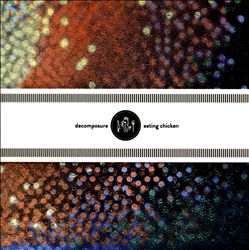
    decomposure_eating_chickenI say “on average” and “probably” because Caleb Mueller (who is Decomposure, when he’s not earning a living as a graphic designer) is not the same person as Folds, Brian Wilson, Doseone, etc. As a writer he’s both more personal, like a good blogger, and more political than any of them. As a singer, his pleasantly reedy and geeky voice reminds me of Folds, but is less theatrical, not putting on a front, although he is willing to refine his voice into a flexible tool: unguarded here, stacked and counterpointed there, low and cold and percussively firm elsewhere. My prediction is also uncertain because sometimes we like a recipe significantly more or less than we like the ingredients individually. Or if not, the non-existence of Chipotle Cheeseburger Ice Cream — or yeast-eating contests — is an enormous market failure.

    The singles from Eating Chicken are among the most style-blended songs here. Oh Brother is plainly sung over plinky New Wave toy synthesizer until joined by mass harmony and tambourine. The titular brother has joined those who recite in daily life from Fox News and its misinforming anger-by-numbers, a fate that’s befallen parents and uncles and cousins of my various friends. Like my friends, Mueller alternates between love and frustrated attacks on what he hears when “Somebody reaches through your guts to work your mouth”. The falsetto he breaks out for “You’re so vain, you’d never know this song is about you” is delightful; the humble plainness of “Pot and kettle, I know I’m just the same/ I’m supposed to love you, but sometimes I’d rather punch you in the face” is more in character.

    Readymade is peppy but trickier. It’s Afro-pop in its precise non-aligned percussion layers and call-and-response vocals (and many of its intonations), but with Beach Boys lushness and a willingness to march the arrangements into a wall while finishing a lyric. These lyrics, like on Decomposure‘s rap-heavy 2007 masterpiece Vertical Lines A, work on a more implicit level. Some juxtapose allusive images and warped cliches: “Readymade on a paper plate (food for thought is a good trade)/ Where neutral is a smiley face (or your face will freeze that way)”. Others extend a metaphor in poetic but self-subverting directions: “I cut out my heart, inflating it with my last breath/ … It floats into the night, climbing soft, growing a padded halo named color/ … [beating back] knife-blade clouds storing black snow/ slow-rising under a phantom bridge/ pumping ‘Please let me cry, I need to cry, just let me cry’, but instead it sneezes and dies/ and at the end of a block, a truck hits it”. Others literalize a metaphor into a failed inspirational greeting card: “Outside, my naked hopes grew cold/ So I kept them warm at home/ And went to work to buy them clothes”. All but the last sung cheerily.

    Readymade excepted, Mueller saves his dense lyrical associations for his raps. We hear would-be Vertical Lines B in three songs: Black Snow, much of which is pretty synth-and-harmony pop, but some of which he raps ultra-fast into a Vocorder, and all of which clatters along amid whirling robot tap-dancers. Safety Scissors, funky but spooky like Prince fronting the Borg Collective (Now A Time Warner Subsidiary) and no longer promising us all sex in exchange for being absorbed. And Island, an African sing-along at a factory where the boss radios instructions in a clipped voice. The maze-like lyrics of each are worth reading along to.

    Most of Eating Chicken is gentler, more vulnerable. Breaking Up is unsteady vocals over rudimentary acoustic guitar, choosing the nostalgia over the literal sense of “I just saw it for the awesome graphics, wanted to see things explode/ watch some giants stomp through traffic, wave the flag like a burning skunk/ and all the characters talked with each other the way toys did when I was small”. Waiting, equally unsteady over simple piano and echoed percussion, is about three imminent deaths, maintaining the same sad but half-jaunty tone for the end of life of a murder victim, a beloved cancer-ridden husband, and a fallen squirrel. Selah, fragile flute/ piano/ tapping as willfully adorable as any Owl City song, is sung to his baby. “You’ll reach out and grab my finger, though I know that’s just a reflex thing/ You wake up every few hours, and your tired mom gives you milk and sings” ground the song enough to make the love more than generic, until goofy but precise vocal harmonies lift the song skyward.

    We Shall Be Overcome, in implacable polyphony and body-slapping rhythm, is the anthem of defeat its title implies: “They will shut us up, they will have their way/ Our bodies ragdolls dumped in unmarked graves/ They’re free to roll ahead once we’re brushed aside”. Its desultory cheerfulness reminds me of me: fighting the good fight to the degree that sanity allows, remembering that part of what we’re fighting for — even if it saps us of useful fanaticism — is the freedom not to frown about tasks ahead all the time.

    Maybe that’s a real thing; maybe not, I dunno. The 7:24 a Test, employing every style found on Eating Chicken, is about Mueller being offered $10,000 to use his music in an ad campaign. He’s self-effacingly sarcastic about why he didn’t like the idea: “Selling sweatshop sweaters/ seemed antithetical to my precious integrity”. But “Feist counted as Apple’s Chinese workers died” isn’t a joke; Mueller’s songs have always had things to communicate, and they were often nearly the opposite of “let’s go shopping!” A Test is one of the most intimate songs I’ve ever heard, because — having stated heroic goals he doesn’t expect us to understand anyway — he fails them by okaying the ad.

    But as he himself sings on Wide Awake, “What if the apocalypse never comes/ and we have to keep living with all that we’ve done?”. Because he has a wife and a child and musical ideas and, still, those inconvenient morals and beliefs, he does so. Living is what we do. It’s mostly a sweet deal — dead people never get to play catch with 4-year-olds using imaginary balls, or gaze in awe at daredevil squirrels, and they only get to dance during painful-looking rituals in bad zombie movies — so we try to get better at it. Meanwhile, we give it a soundtrack. Ideally, we infuse it as much as possible with our own meanings. And put the commercials on mute.

    – Brian Block

    To see the rest of our favorites, visit our Favorite Albums of 2012 page!