In the early months of 2013, I wrote for Pop Rock Nation detailed reviews of my 50 Favorite Albums of 2012, covering what I think was a nice range of indie pop/rock, metal, hip-hop, progressive rock, cabaret, avant-rock, and world music. My tastes haven’t suddenly changed; those are excellent albums I’m happy to have written about. But they all had the advantage of being albums I’d already heard when I made the list — an advantage which was not universal. If I were doing the list now, there’s a minimum of nine late-discoveries I’d have chosen to squeeze in. In 200 words or less each, they are:
David Byrne & St. Vincent, Love This Giant
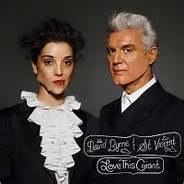 Avant-pop songs from the cross-generation pairing of the former Talking Heads singer with the creator (Annie Clark/ St. Vincent) of some of the more unnerving guitar and synthesizer solos (and sung lyrics) of the past decade, a set of skills she continues here. Together and with their percussionists, they make steady but uncomfortable dance rhythms; they also make the heaviest pop-album use I’ve heard in years of horn charts, which are firm, bright, trained in classical counterpoint, and melodically weird and off-kilter. Byrne’s songs make good use of both his croon and his strained chirp; Clark’s sometimes show off the pop enthusiasm of a Jenny Lewis or a Neko Case, especially when harmonizing, and sometimes the pretty melisma of sultry R + B, but are more often hard-edged and insistent. As lyricists, both build out from small observed and/or lived details into broader reflections. David Byrne‘s lessons may perhaps be nerdier and more idealistic, Clark’s more determined to recover from wounds, but they blend in ways that fit and enhance each other’s strengths; I like this better than any album either has made in 20 years.
Diablo Swing Orchestra, Pandora’s Pinata
The band name tries to give the game away. This is classical-inflected heavy metal, infused, to varying degrees, with big band swing jazz (Voodoo 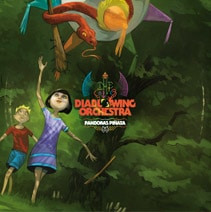 Mon Amour and Honey Trap Aftermath being the swingingest, while the percussive metal riffs of Kevlar Sweethearts support instead sweet gypsy folk music). The lead singer almost certainly had opera training, and while I doubt she did especially well, she adds a fine wailing-of-the-damned touch that can turn, when the band prefers, into an appealingly bizarre mis-imitation of a pop jazz seductress. Pandora’s Pinata is their third album and is, I think, their most successful and ambitious by heavy metal standards. But be it the swinging chorus of Exit Strategy of a Wrecking Ball, the snake charms and guttural chants of Mass Rapture, the clamorous march on Of Kali Ma Calibre, or the solemn acoustic buildup of Justice for Saint Mary, Diablo Swing Orchestra always remember to find strength in impurity.
Flobots, the Circle in the Square
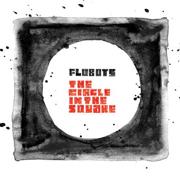 A talented and versatile rock band, with cello, supporting two rappers (one white, one black) who also sort of sing. Flobots are known, if at all, for their fluke 2008 alterna-hit Handlebars. It’s a cute, taunting song that, while I enjoy it very much — I’d’ve chosen it for a single too — misrepresents the band and undersells their ability. Even the rowdiest songs on Circle in the Square (the title track, Sides) are fine, tight displays of guitar/ cello/ drums interplay – especially drums – and intensification over time. Other songs learn ethnic folk dances (Run), build hypnotic spells (Stop the Apocalypse), build obliquely to massive sung choruses (On Loss and Having), or transform from ultra-fluent old school rap into something calm, detailed and gorgeous (Wrestling Israel). Flobots are an earnest band: political and religious (Sermon-on-the-Mount Christianity, the version I like best), but also self-examining and questioning (my favorite lyric: “Lord, protect me from people who take me literally”). Earnestness in music can be good or obnoxious; at minimum, I think it requires a band to work harder, meet a higher standard. Flobots work hard; of the very fine 2012 albums I’ve found since I finished the top 50 countdown, this, to my tastes, is the great one.
Future of the Left, the Plot Against Common Sense
The sixth album helmed by Andy Falkous (three with McLusky, three with his current band), and his second classic (after McLusky Do 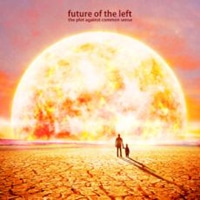 Dallas). Falkous specializes in the charismatically spiteful shout-singing of lyrics that combine bravado, social satire, and what Tourette’s sounds like when even the repressed thoughts that pop out as nonsensically as Jacks-in-boxes are well-educated. The lyrics on Plot Against Common Sense are a little more aimed than usual; an effort that was due, I think, and so far not one that impedes his style or sense of humor. The music is swift, barbed, cleanly arranged, tightly-wound riff-rock — with, new for Falkous projects, an imaginative and aggressive use of keyboards, somewhere between Pere Ubu’s Allen Ravenstine and a drunk, pissed-off young Keith Emerson. Punk rock’s association of “fury” with “guitar” was always a little rigid for my tastes; I welcome clever antidotes.
iamthemorning, ~
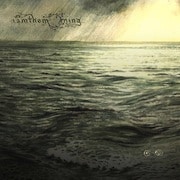 Lovely austere female-fronted piano-vocals plus drums-cello band from Russia. At home in the minor keys. Their plausible influences include romantic composers of the early 1800s (Beethoven, Schubert, Liszt); the tone poems of Satie and Debussy; small-group church choral music; the knottier works of Tori Amos; the modernist counterpoint quasi-pop of Liam Singer and Gabriel Kahane; and any makers of surging/ aggressive, but still mostly acoustic, goth-pop that you care to name. (Name them to me too, please: I know they’re out there but am struggling for examples.) Even when they get loud, iamthemorning never get populist: this is listening music, or music for formal dancing, with no sing-alongs. But it is, for all its reserve, pretty and easy to like.
James Rabbit, the Vision of Fury That Sings in My Head
Spindly, bouncing piano- and guitar-pop songs, often with electric organ and horn sections, or just a good flute or saxophone solo. Over them, 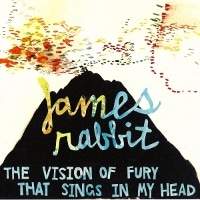 John Tyler Martin either sings in a pleasant thin voice, or talks conversationally, until he decides it’s time to lead the gang in a sing-along chorus. The lyrics, like the title, often tend to darkness: “Light slices through her shades like a scimitar to a sultan’s neck”, or “Millions of microbes, rotoscoping rhizomes, try to call it up to talk, can’t even get a dial tone … I’m trying to express myself – bang goes the light bulb, shattered glass, all my ideas coming fast. I’m in the middle of a drought, how about a flood?”. Or with more balance, “Rides up the hill to a job she hates in a town she loves”; or with more determination, “Just warn me before you shut me out; tell me before you change the locks … Ask me, I will fight you cause I need this. Ask me, I wake up for this every morning. Ask me, my shirt, my matching colors”. But aside from it being illegal, it would be unimaginably rude to obey his chorus that goes “Kill me, kill me now”, because the music calls him on the lie; it is joy. Deceptively amateurish-seeming joy, perhaps (though the structures fall tightly into place when you examine them). But joy.
Jed Davis, Small Sacrifices Must Be Made!
 Classic words-and-melody power-pop with a versatility that can sneak up on you: as subtle as how Babysitter slides sideways into its pre-chorus, as show-offish as the 7/8 groove of Symbiosis, or as straightforward as the genre detours into hair metal (Ride the Party Bus), Sting/Enya atmospherics (Two-Thirds), and standup-comedy-over-Rush-doing-funk (Secret Prestrictions from the Past). I discovered Jed Davis via his also-excellent 2010 album the Cutting Room Floor, which I maybe suspected, or maybe just hoped, was a concept album about self-pity and bitterness (because in that case it would be clever and well-done, not frighteningly self-pitying and bitter). I feel vindicated now: by the admiration and gratitude that drive the Knowing Ones, the mix of sappiness and caution in Rosie and Symbiosis, the bruised, anthemic romanticism of Aftermath, and the empathy of Emilies. Also by the way that the different self-pities of Babysitter, Ride the Party Bus, and I Hear an Echo are obviously three different narrators’ short stories: all tragicomic, all well-told, none about Jed. I’m sure he really does wish his flair for songwriting was more widely appreciated. But he seems like can get by.
Jim’s Big Ego, Stay
Clever folk-pop and piano-pop songs, mellow and midtempo, infused here with cello and vocal processing (In My Cult), there with acoustic funk (15 Seconds of Fame) or warped blues (Big Old Dark Green Car), over there with boogie-woogie and call-and-response (404 Blues, Can’t Stop Fooling Around). Jim Infantino is a liberal/ slacker idealist, capable of spinning for example an intelligent anti-capitalist song like Where the Money is, but above that he’s a goofball and conceptualist: someone who decides “this is my complaint about how easy it is to Google everything” or “this is me being an adorable zombie” or “this is my stream of consciousness about Internet fame” or “this is my song about goofing off” and develops the idea as thoroughly as he can until the song is over. It’s not that he’s insincere; he’s just most sincere about us all having a good time, and that can overrule lesser things.
Macklemore & Ryan Lewis, the Heist
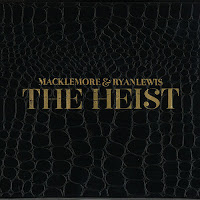 An unexpected smash hit for a more than decade-long veteran of Seattle’s rap underground (no, I’d never heard of him either), the Heist has largely been defined for public consumption by one goofy novelty hit (Thrift Shop, sadly an outlier here) and one detailed, personal, thoughtful piece about the equality of homosexuals (Same Love) that’s much more representative. Indeed, what singles out Macklemore‘s songs about cars, bars, and his rap career is precisely that set of qualities. His stories are vivid – actions closely observed, hesitations explained, dialogue relayed or invented – and even the more cinematic stories are often, though not always, subverted by intrusive little day-to-day mundanities, or just linked to ideas he got from Malcolm Gladwell books. (Plus, bar stories are different when you are, as he is, a recovering alcoholic.) The music is, as far as I can tell, traditional rap assemblage of looped samples and synthetic beats, but it’s quite well-done: the songs move too much to feel repetitive, and the few ear-catchingly strange samples are quite pretty. Mainstream mass appeal: it’s worth doing right.
– Brian Block
-