web analytics

Tag: review

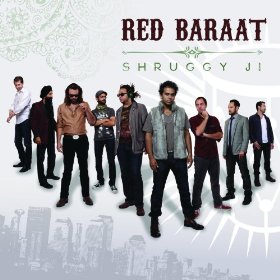
  • #50 album of 2013 – Shruggy Ji by Red Baraat

    Artist: Red Baraat

    Album: Shruggy Ji

    Before I digress for two paragraphs, let me tell you that the Brooklyn-based, half-Asian-immigrant band Red Baraat claim to center their sound on “hard driving North Indian bhangra rhythms with elements of jazz, go-go, brass funk, and hip-hop”. (They also Red Baraat - Shruggy Jiwinkingly adopt the genre name “dhol-and-bass”.) I don’t know anything about bhangra or go-go, but I can’t see what they’d gain by lying, so I take this assessment as true.
    As I’m starting my 50 Favorite Albums countdown here, I wanted to make a couple of public notes about the composition of this list. I’m happy with the fifty I chose, but I could certainly have made other choices. Most notably, I could have included some better-known records near the bottom of this list. David Bowie had a 2013 record; so did Nine Inch Nails; so did Camper Van Beethoven; they’re good records. I didn’t get much out of the new OMD album, but maybe if I’d worked at it harder I’d’ve loved it, like I do their 2010 comeback History of Modern. More likely, though, I’d’ve felt the way I do about the others I just mentioned: that while they’re fine, I haven’t found any reason why I, personally, would want to listen to them when the Man Who Sold the World or the Downward Spiral or Key Lime Pie (or the gallivanting Goblin King from Labyrinth) are still waiting in my collection for a fresh dose of ardor.

    I don’t mean to be unfair. There’s a dozen-plus artists on my list here who are also operating below the level of what I feel was their peak; it’s a basic statistical principle that the more you enjoy an album, the more likely it is that you won’t enjoy any of the artist’s other albums as much, and that’s fine. Many of my old loves this year still made albums that — regression to the mean aside — don’t need from me the benefit of any doubt. But all else being equal? I’m less likely to return to my 5th-favorite Camper Van Beethoven album than to the best album of blazingly modern Central Asian folk-dance music I’ve ever heard. Even if “best” is a near-synonym to “only”.

    **********

    Genre labels aside, then: what does Shruggy Ji sound like? Lots of clattering percussion, played by three of the eight band members, including band-leader Sunny Jain. Lots of cheerful assertive brass – the trombonist, Ernest Stuart, plays with a far snazzier personality than his instrument normally allows – and trickier, more oblique tunes played by (I think) saxophonist Mike Bomwell, who’s also a superb soloist. Lyrics that are rarely in English (and never in Spanish, the only other language I can occasionally fight to a draw), but — when they are — imply the kind of depth and political instincts we first encountered in Fight for Your Right to Party. (This may, obviously, be unfair.)

    The lead vocals, loud and gliding, sing melodies that may suggest, if you’re as ignorant as I am, snake-charmer music or Islamic summonings to prayer (what’s a couple thousand miles and a religious difference between friends?). The lead vocals are supplemented with jock-like backup grunts, “I’m too sexy for my shirt”-style low murmurs, and various noises I can best duplicate by vibrating my tongue really, really fast.

    Red BaraatThe review that drew my attention to Red Baraat was, of course, favorable, but criticized the songs for all sounding alike. I’ll first say this needn’t be bad if true: I think the Sex Pistols’ Never Mind the Bollocks and U2’s Boy and Metallica’s And Justice for All and the Cure’s Disintegration are great records, and they’re all variety-impaired. Then I’ll say that I’m not convinced it’s true of Shruggy Ji anyway. The songs certainly mix from similar ingredients, but Halla Bol has a bouncy, dancing-under-the-influence feel that reminds me of “gypsy-punk” bands like Gogol Bordello; Burning Instinct, on the other hand, starts from gleaming precision — like a top high school marching band dressed up for a guest appearance on Miami Vice — then piles on layers of dissonance and a steadily more march-like harshness without ever breaking stride. Dama Dam Mast Qalandar feels solemn, pensive, without needing to clear away the percussion or slow down the hyperspeed sax solo. Shruggy Ji itself is a methodical slow-building juggernaut, several cycling drum lines giving it a fantastically assertive yet swaying groove as the horn section swaggers forward. Sialkot is a particularly strong drum showcase; Private Dancers, rhythmic as Morse Code, somehow manages to be funk, klezmer, and hip-hop all at the same time. Azad Azad has the sneaky propulsion of a nighttime chase scene in an old movie.

    Red Baraat is only #50 on my list, for now, because I don’t understand the words, and I don’t really understand the musical traditions either. I can easily tell (some of) the songs apart by concentrating, but no matter how varied Shruggy Ji may be, it kind of all sounds like “oh hey, here’s more Red Baraat” to me because I have only a few other even remotely similar albums. (I can triangulate, badly, from Kultur Shock, Gogol Bordello, the Klezmatics, and the Debo Band, all of whom are strange to me in their own right). In other words, it’s only #50 on my list due to *my* weaknesses; ones I’m surely capable of fixing. And since it’s kinetic and jolly and exciting — well, as long as my stamina holds — it makes me wish to do so.

    – Brian Block

    To see the rest of our favorites, visit our Favorite Albums of 2013 page!


  • Robert Randolph & The Family Band’s Lickety Split!

    Robert Randolph & The Family Band’s Lickety Split!

    Get ’em while they’re hot! Robert Randolph & The Family Band’s new album, Lickety Split, hits the shelves today!

    Today, Robert Randolph & The Family Band have a new album out, called Lickety Split. I remember the very first time I heard Robert Randolph & The Family Band’s music. It was June 20, 2004, my 32nd birthday. My husband, Bill, had surprised me with tickets to see Eric Clapton at Washington DC’s MCI Center. We had nosebleed seats. But then, the opening band came out and freakin’ blew our doors off.

    I had never heard of Robert Randolph & The Family Band before that night, but they quickly indoctrinated me. I liked their part of the show much better than Clapton’s. When I think of that night, I think of Robert Randolph’s virtuoso pedal steel guitar playing, not Eric Clapton’s much more sedate performance. I remember how Randolph’s bandmates played round robin with their instruments, taking over for each other. These guys are saturated with musical talent and just enthralled me with their performance. I went home and ordered the two CDs they had out at the time, Live At The Wetlands and Unclassified.

    Years later, when I joined Facebook, I “liked” Robert Randolph & The Family Band’s page. I get regular updates about the band and– I’m ashamed to say it– that’s how I found out that they have a new album coming out today. Lickety Split has just hit the shelves and I downloaded my copy first thing this morning. I thought I’d dedicate today’s post to my thoughts on the new album as I listen to it for the very first time. So here goes… or should I say, “Hear goes?”.

    First impressions of Lickety Split…

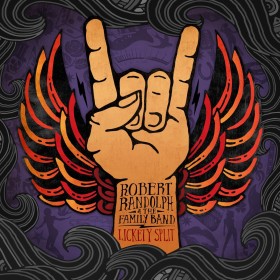
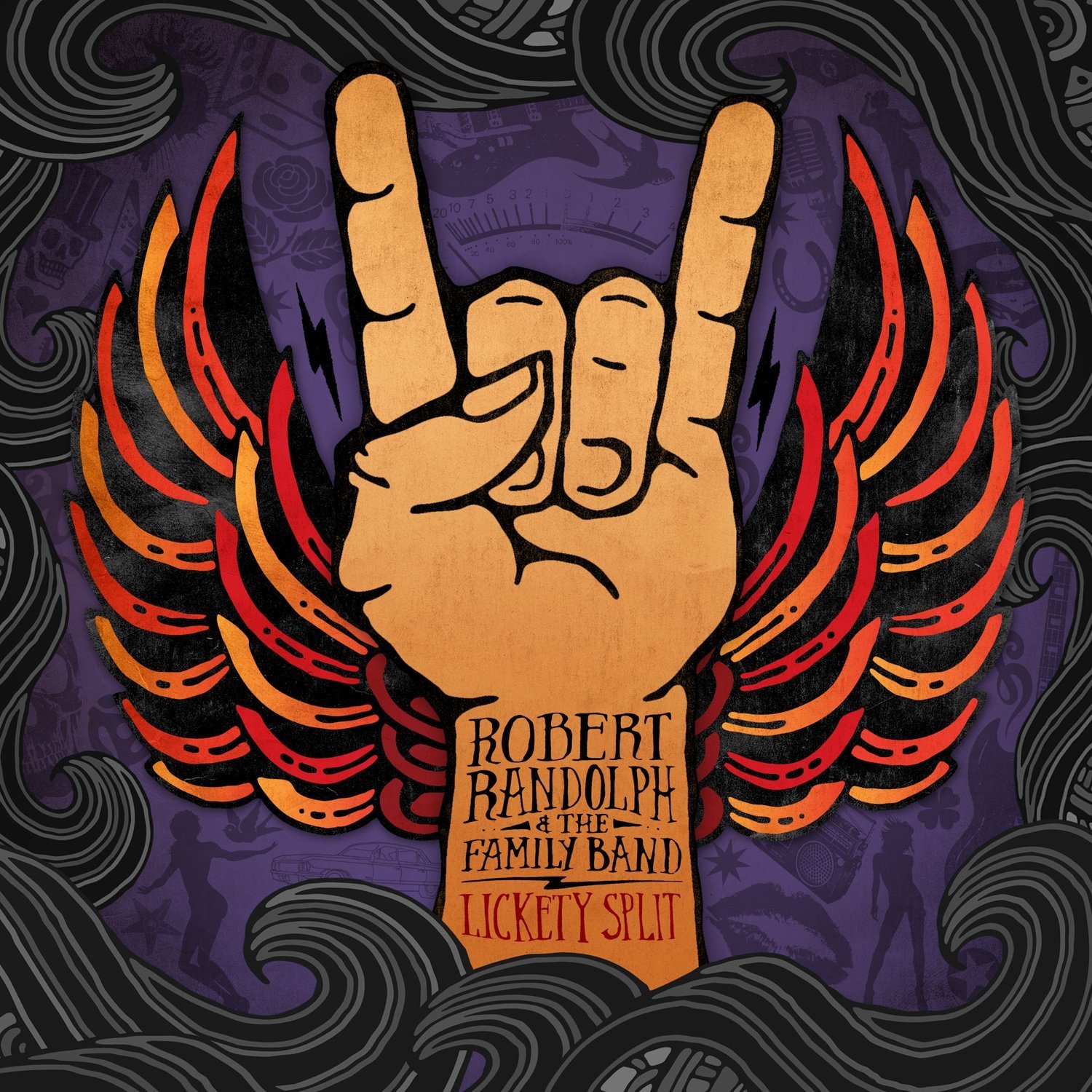
    Cover of Robert Randolph & The Family Band's latest album, Lickety Split.
    Cover of Robert Randolph & The Family Band’s latest album, Lickety Split.

    This album kicks off with the high energy track, “Amped Up”. With a discordant crash of Robert Randolph’s pedal steel, the song cranks up. My first thought is that it reminds me a lot of a mix of 2006’s “Ain’t Nothing Wrong With That” from the album, Colorblind. The hook is similar and so is the tempo. This song is about getting up and getting going, which makes it a great song for first thing in the morning… maybe after your first cup of coffee? I think it’s obvious Robert Randolph meant for this to be a morning song. At the end, he says “Now have a good day!”

    The energy continues with “Born Again”, a song that instantly makes me think it was inspired by Robert Randolph’s spiritual background. The lyrics are vague enough that they could be romantic, but I have a sneaking suspicion that this is about God. I love it. It has backing vocals that are reminiscent of a church choir in a holy roller church. The rhythm is infectious, while the melody is joyful… and joyfully played. The lyrics borrow a bit from well known spirituals. You’ll hear a little “Amazing Grace” in there, but in a way you’ve never heard it before. This song gets my blood pumping.

    I’m somewhat less impressed by “New Orleans”, which is a slower song sung by Lanesha Randolph. It’s kind of a pretty ballad about New Orleans, but the melody and lyrics are somewhat pedestrian compared to the energy of the first two songs. It’s not a bad song at all, but it doesn’t move me like “Amped Up” and “Born Again” do. On the other hand, maybe listeners want a short breather after those first two numbers. Lanesha Randolph has a lovely voice… it kind of reminds me of Jennifer Hudson’s. The end of this song is kind of cool, whimsical and creative.

    The next song is “Take the Party”. It features Trombone Shorty and is yet another high energy track. I dare you to sit still during this song, which has an infectious tempo. As I listen to this song this morning, I’m bobbing my head, tapping my toes, and really digging the trombone. “Take the party wherever you go”… It’s not a bad way to live.

    You’ll continue the festivities with the next song, “Brand New Wayo”, which features Carlos Santana. What a cool song! It has sort of a retro disco/funk feel to it. On this song, Robert Randolph shows off his awesome bandleading skills as he lets his bandmates shine, then joins in himself. “Brand New Wayo” makes me wish I were more into exercise. I might have to take up zumba now, because this song makes me want to MOVE. It sort of channels “Pick Up The Pieces” by Average White Band.

    The energy doesn’t decrease with “Lickety Split”, though instead of disco and funk, I hear rockabilly. Even the lyrics suggest rockabilly, as Randolph sings about family life. As I listen to this, I’m dumbfounded by the breadth of Randolph’s repertoire. This is a man who loves music and is influenced by everything. The lyrics are uplifting and positive; they promote love, which is a great message for the first thing in the morning.

    Carlos Santana also guests on the next song, “Blacky Joe”. The tempo comes down a few notches and we get to hear some fine percussion, bass guitar, pedal steel, and Santana’s unmistakable guitar. I’m not sure who inspired this song, but the lyrics suggest a devoted friend of the band who’s no longer around and is missed. At the end, Carlos Santana contributes some wicked guitar.

    Next comes a fun cover of “Love Rollercoaster”, a song that was made famous by the Ohio Players in 1975. I like how Robert Randolph & The Family Band played this, though it really doesn’t sound that different than the original. It’s in the same key and basically has the same funky mood, just dressed up a bit with pedal steel.

    “All American” has more of a straightforward rock sound, with a savage beat and stabbing guitar riffs. At the bridge, the beat turns into a thumping heartbeat. The lyrics are kind of simple, extolling the virtues of an American girl. I like the melody better than the words.

    The next song is “Get Ready”, again very funky, high energy, and letting Randolph show everybody how much of a genius he is with the pedal steel guitar. The band chants “Get Ready” repeatedly, while Randolph jams, making his instrument squeal and shriek, then bubble over with music.

    “Welcome Home” is another ballad, slowing down the tempo just a bit with a pretty melody and nice piano accents. Randolph welcomes back the troops with this surreal anti war song. I appreciate Randolph’s sentiments. He remembers those who made the ultimate sacrifice and those who made it back alive, but are no longer mentally or physically whole. As the wife of a service member, I like that Randolph’s attitude is one of gratitude, rather than shaming. This song is very profound in its own way, from the challenging melody to the lyrics.

    The last song is a cover of “Good Lovin’”, which was a song made popular by The Young Rascals. This is done in the same key as the original, but Randolph has spiced it up with some modern embellishments. He had a lot of fun with this and it ends the album on a good note.

    My Thoughts

    This was my very first listen to Lickety Split, so today’s post is based entirely on my first impressions of this brand new album. I think it’s damn good. There are a few songs that are really awesome, while a few others aren’t as impressive to me, but are still quite solid. For instance, I wish Robert Randolph & The Family Band had done a little more with their tale on “Love Rollercoaster”. On the other hand, what they did do is definitely not bad at all. I will have to listen to this a few more times, but at this point I think it’s a keeper and well worth the $10 I paid for it.

  • #7 album of 2012 – Skelethon by Aesop Rock

    #7 album of 2012 – Skelethon by Aesop Rock

    Artist: Aesop Rock

    Album: Skelethon

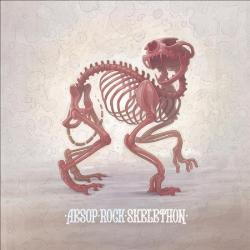
    I’ll mostly discuss Aesop Rock‘s Skelethon as a vehicle for Ian Bavitz’s writing. At his best, as a lyricist, he’s operating on a level no one else is attempting, and I would want to have heard this album even in a musical form (bluegrass? reggae?) I find off-putting. But instrumentally, here’s who aesop_rock_skelethonit reminds me of: Wire (once they got into electronics). Nine Inch Nails. Massive Attack / Tricky. This is dark, synthetic music: built of drones, tremolos, nagging unidentified tones, and beats that are both strong and, often, disorienting. These elements are layered, they evolve, they drop out and leave dramatic space; perhaps like a serious-minded Oingo Boingo teaming up with Rage Against the Machine. No, scratch that last one, only brought to mind by the marimbas and horns of Fryerstarter: Skelethon isn’t like a serious-minded Oingo Boingo teaming up with Rage Against the Machine. I’m just asking the universe to make that album happen too. Well, as long as they find a much better rapper than Zack de la Rocha.

    Ian (Aesop Rock) Bavitz is a much better rapper than Zack de la Rocha: articulate, firm, too speedy and agile for his own good, but half the time able despite that to be a talented character actor delivering his lines. Yes, Aesop Rock makes hip-hop, of the smart outsider variety, in a peer group with El-P, Sage Francis, Mr. Lif, Saul Williams, and Subtle. If you’re familiar with him, I can say that the good-natured hippie oddness in the arrangements of Float and Labor Days (’99-01) is long gone, and that the deliberately off-putting weirdness of Bazooka Tooth has been streamlined and professionalized: Skelethon is his hardest-hitting record by far, although it still sounds like him. I think it works: strong by itself, but putting the words front and center where they deserve to be. On my 2012 Tris McCall Critics’ Poll ballot, I nominated ZZZ Top as Single of the Year — even though it’s probably my 3rd-favorite song on here.

    I’ll start discussion of Skelethon‘s lyrics with a typical song from it, say Fryerstarter, the lyrics of which could be summarized in plain English as “There’s a place I like to go to at 1 a.m. that has amazing donuts. Not many people know about it. Those of us who do know it feel a sense of belonging together, even if we have nothing else in common. It’s nifty”. That’s an excellent premise for a song; I haven’t run into it before. For better or worse, here’s how part of it scans when Bavitz writes it:

    “Picture if you will a weak night in the trenches/ where paranoia dead-ends in a bright fluorescent heaven/ with sprinkles. I know, right? Yum./ Whether tummy ache or fever/ Keep the funnel cake, I’m honey-glazed in vitro/ In the company of similar believers/ sleepless, who hear the walls breathe and foam at the facial features./ Now the yeast, a phoenix in the partially hydrogenated/ equal parts flour, faith, healing/ might replace your previously nominated Jesus/ but only if you’re privy to the following of secrets./ Shh! Every night at 12, they would march out from the back/ with a tray of raw dough for the pool of hot fat./ Show up around 1, never get your God back./ If you’re just tuning in? Walk into the light. Walk into the light”.

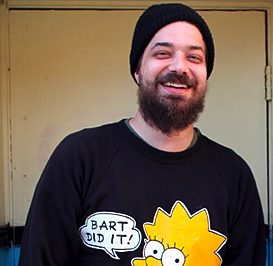
    I think that’s beautiful. Ridiculous and overblown, yes. But it’s driven by a love that leads to close observation, then loses track of which observations are objective detail, which are free associations from that detail, and which are holy revelation. Racing Stripes salutes a youth’s maturation from ian_bavitzhaving hair cut at home by his parents — I shall now perceive all bowl cuts as “Mega Mom scissoring a topiary Lego Man” — to trying out any of a number of mentioned rebel cuts (“What emerge next in a shaft of light/ is bald on top, long on the back and sides/… He says ‘How do I look?’, I say ‘You look insane’/ He says ‘The haircut comes with a theory I’ll explain’”). ZZZ Top applies the same supportive detail to three different young graffiti artists, the first being: “Somebody in a cultivated moment of distress/ Composed himself enough to artfully carve ZOSO [one name for Led Zep’s 4th album] on his desk/ They was probably thinking ‘Fuck you, fuck you, fuck you’ in their head./ With a hell-bound arm and an acidy wash/ Homemade curfew? A thousand o’clock/… Watch: Capital Zed, slowly maneuver the O/ the S is most difficult to control/ Finally O, into the eye of Goliath you go/ That levee-crushing percussion pull a monkey upright/ Twelve or ghetto blaster/ black or Technicolor Telecaster/… It would appear that you spelled out all the answers”. Bavitz could, if he’d lacked musical skill of his own, have been a record reviewer like Lester Bangs at his most effusive. I don’t normally care for Bangs’s taste in music; donuts rank low on my junk-food totem; graffiti’s usually ugly; and weird hair I only enjoy on people who are not me. But there’s pleasure in half-wishing to try something unlikely out, just because it’s made someone else so happy.

    There’s a few weaker songs here: songs so gnarled in allusions that they take entire online communities to unravel, songs whose lesser hooks remind me this is a 17-song album with very little singing. That’s only why Skelethon isn’t my #1 of the year, though. And despite my above paragraph, my absolute favorite songs here are dark, dark, dark.

    Crows 1, featuring the normally cutesy folk singer Kimya Dawson in a frightening flattened-affect sing-song, is an angry mourning song for Bavitz’s friend Camu Tao; the song’s 2nd-best melodic hook is a pitch-shifted series of Bavitz howling “Noooo!”. Crows are eaters of the dead, and smart creatures with strong memories who “Stick together forever, and they always remember you and all the shit that you do”. Little of the fury is directed at the early death itself, because that’s too hard; it’s diverted to the rituals, like burial, and the feeble attempts by friends to comfort. “Gate of God’s green acre/ Aim to rake the snow off each forsaken name here./ Supposedly closure’ll free the vipers out of the bosom./ Personally, I think that’s a bunch of bullshit…/ The tech support for tragedy’s emphatically horrendous:/ teenage operators explaining what bated breath is”. He and Kimya counter-endorse the scattering of ashes to the wind, instead of the cruel “taxidermy” of imprisoning the body for repeated use (though he admits this much credit to the graveyard: “Either way: dope stone lion”). True, the whole rant is a diversion from greater pain. But coping with horror via tiny truths instead of big white lies is as valid a strategy as any.

    Then at the album’s end, the only place for it, there’s Gopher Guts. The last couple Aesop Rock cd’s didn’t come with printed lyrics or (at the time) easily searchable ones, so I was going to skip this record till my friend Grace posted Gopher Guts on Facebook with lyrics attached. Starting as a post-romantic-breakup song — “Suicide Lane, wide-load looting/ in the wake of an amicable marooning/ My duty go from moving in packs, to sharing food with a cat/ To Mom, ‘It’s me, I accidentally sawed a woman in half’” — it drives at speed limit into big truths — “Apparently we share a common plasma, so the growing disconnection doesn’t matter…/ Who wrote the blood-and-water chapter anyway?/ Probably some surly dad, only child, 30 cats/ Looking to re-connect to an averted past/ Except it doesn’t always work like that” — and crashes on through. The final verse of Gopher Guts — which I won’t quote while I’m trying to get you to say hello to the man — is among the most plain-spoken and precise and damning self-indictments I’ve ever read. Perhaps I believe it; *he* believes it. Perhaps public diagnosis is step one towards a cure, or perhaps steps two and three and four turn out to be fatally harder.

    But “Today I pulled three baby snakes out of moss and dirt/ where the wild strawberry vines toss and turn./ I told them ‘You will grow to be something inventive and electric/ You are healthy, you are special, you are present’/ Then I let them go”. Do magical benedictions to non-English-speaking creatures fix anything? Logically, I guess not. But no one learns to deal better with others by logic alone. And if the blessing won’t work, maybe telling us afterward will.

    – Brian Block

    To see the rest of our favorites, visit our Favorite Albums of 2012 page!