web analytics

Tag: review

  • #13 album of 2013 – Weeeeeeeeee!!! by Polysics

    Artist: Polysics

    Album: Weeeeeeeeee!!!

    Weeeeeeeeee!, by Polysics— that’s ten “e”s — is almost the most perfectly-titled album in my collection. It’s not *quite*, of course — there should be an “h” after that “W” — but Polysics are Japanese, and their command of English is ahead of my command of their language (which consists of “Domo arigato, Mister Roboto”). The title Weeeeeeeeee! sounds like it should be the most enthusiastic record in the whole world. And it is.
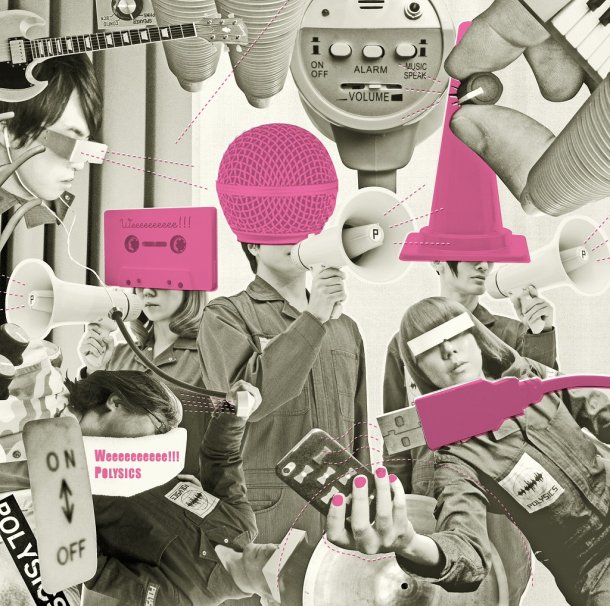
    Polysics_Weeeeeeeeee!!!Its ingredients are straightforward enough: electric guitar, electric bass, drums, keyboards like early video games, shouty male and sweet (or sometimes shouty) female singers. Speed, volume, riffs. Unrelenting energy. That, and a subtle intelligence disguising itself as a 15-second attention span. Sparkling Water opens the record, and in under three hyper-caffeinated minutes has presented us with a heavy 6/8 riff; a dissolution into abstract toy electronics; a heavy but surf-rock-like 4/4 riff; a different, heavier 4/4 riff; funky, playful uses of momentary silence; singing, squealing, gibbering, declamation, and dialogue with a young robot. Lucky Star follows it up in a much more straightforward “pop” mode, with sweetly catchy sing-song vocals and a conventional backbeat; but it’s still quite fast, full of bubbly electronics, and has a semi-dissonant pre-chorus. It also has a short outro that introduces a (speeded-up) classic-rock styled riff a different band might have hung an entire song on.

    And basically, if you like those two songs, you should like the whole album. Sure, there’s enough to tell the songs apart: Steam Pack is sparer, with an abruptness like Fugazi collaborating with the early Beastie Boys, but like the latter is clearly vocalized by cartoon characters. Quiet Smith buzzes in places like a swarm of synthetic tuned mosquitos that, in other places, decide to simply tear your house down so you can’t swat them against walls anymore. Lightning Express has a mosh pit’s concept of anthemic arena-rock uplift  (in which your spirit’s rise is matched by your body being bruited into the air by all the fellow enthusiasts slamming into your thighs). Everybody Say No is as commercial as Lucky Star, except all the vocals are robotic, and have the meta insight to urge everyone in the audience to refuse to do what the Polysics ask.

    But basically, Weeeeeeeeee! is what synth-pop and hardcore punk and the Who sound like when they agree to hold hands, love one another, and sprint until they fall down, which, for 41 minutes they don’t, because they replaced their weakest body parts and became very happy cyborgs. This probably should have happened in the early 1980s, but my understanding is that the necessary participants were all too busy resenting each other and pushing each other into lockers. Now they’ve grown up. For very specific and narrow definitions of “grown up”, but, y’know: enough to practice, record, and master an album together. Which is adulthood at its best anyway.

    – Brian Block

    To see the rest of our favorites, visit our Favorite Albums of 2013 page!

  • #48 album of 2013 – All Hail Bright Futures by And So I Watch You From Afar

    Artist: And So I Watch You From Afar

    Album: All Hail Bright Futures

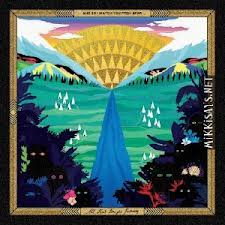
    All Hail Bright Futures, the third album from And So I Watch You From Afar and by most accounts the giddiest, feels less to me like a collection of songs (which, by formal reckoning, it is) than like rock music as a textural abstraction of joy. Guitars overlay each other in resounding major keys behind All Hail Bright Futureslayers of effects. Synthesizers burble and squiggle (or, on Things Amazing, flutter rapidly like Rick Wakeman playing cheesy organ at a minor-league baseball game across the street from you). Several songs have giddy horn sections, pushing to be heard behind the wall of guitars. Rats on Rock even has Hawaiian rhythms and instrumentation, the Stay Golden starts with African percussion, and Mend and Make Safe has a long melodic flute solo, but all are filtered through the omnipresent shimmer and pushed along by the caffeinated rock drumming of Chris Wee, whose last name should properly be Wheeeeeee. Bass and drums often play firm hard-rock rhythms, not always in 4/4, but with plenty of bounce, like if Rush in their early days had provided the soundtracks to toddler playtimes. Songs begin and end because the track player says they do, not because there’s ever a pause in the music.

    Vocals, when they occur, are group-sung (the Wikipedia entry for the band doesn’t even list a vocalist), and usually feel like raggedy chants — “The sun! The sun! The sun! is in our eyes!” or “A! M-B! U! L-A-N! C-E!” — that only move among notes because everyone has too much energy to settle for a monotone. That said, the opening minute of Ka Ba Ta Bo Da Ka proves they can, in fact, use their voices to perform sophisticated melodic and rhythmic counterpoint. In order to convey the message “Ka ba ta bo da ka”. Which I certainly don’t disagree with.

    I should remind readers that my use of the countdown format is deceptive, given the sheer amount of good music people make every year: my listing 47 other albums ahead of All Hail Bright Futures doesn’t even slightly contradict my belief that All Hail Bright Futures is an excellent and delightful record that could well and fairly be someone’s favorite. The closest things to criticism I’ll offer are that the lyrical content is almost nil, and that Rocky O’Reilly’s production makes the songs blend into each other in a way that can — despite the real variety in arrangements — feel redundant. (When string quartet and brass are allowed to carry Trails all by themselves, it’s almost stunning.) The counter to the criticisms is obvious. The production is brilliant for defining the mood, and that joyful mood tells you everything that, for 43 minutes, you could possibly wish to know.

    – Brian Block

    To see the rest of our favorites, visit our Favorite Albums of 2013 page!

  • #49 album of 2013 – Lousy with Sylvanbriar by Of Montreal

    #49 album of 2013 – Lousy with Sylvanbriar by Of Montreal

    Artist: Of Montreal

    Album: Lousy with Sylvanbriar

    Last year, when writing about Of Montreal‘s 2012 album Paralytic Stalks, I gave the outline of their career progression, and how they’d come to pile so many layers of disco, funk, and modern orchestral music onto a framework of Sgt. Pepper pop stylings. I thought Paralytic Stalks was their masterpiece; neither the critical nor the marketplace consensus agreed with me, so anyway, that’s not what they’re doing now.

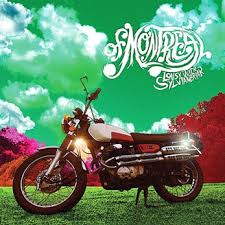
    On Lousy with Sylvanbriar, Of Montreal haven’t merely backed up a step or three to where they were better loved. They’ve made … well, something Lousy with Sylvanbriarinstrumentally like an Eagles album, or maybe The Band in their more country-ish, non-epic modes. Languid rock riffs, acoustic guitar, pedal-steel, sometimes old-fashioned rock organ in the background. I don’t approve, exactly — it’s too close for my comfort to what the Decemberists did in 2011 with the King is Dead, quitting what had been their own excellent progression towards the riffs and energy and willfully mockable ambitions of Aqualung-era Jethro Tull. Also, steel guitar makes me shudder. But! Lousy with Sylvanbriar succeeds in setting Kevin Barnes’s songwriting in a context he hadn’t risked before: it puts his words, his melodies, and the band’s vocal harmonies more upfront than they’ve ever been. They prove worthy of the spotlight.

    As a melodist, he’s fairly Beatles-classicist, by which I mean you could arrive at most of them by writing a familiar catchy melody (or chord progression), then grabbing one or two notes (or chords) per extended phrase and yanking them somewhere else that’s not obvious at all, but works. His vocals are clear and articulate, but nonetheless give off — in this country-ish context — a weird drawling vibe of laziness, as if Barnes couldn’t possibly deign to care what notes they tread on next. It’s a vibe that disguises both the stranger-than-average wanderings of his verses (which normally fit inside half an octave, but not in the same way anyone else’s would), and the occasional choruses where he’s leaping improbable routes across an octave or more. The harmony vox from Rebecca Cash can be sweet, but when they’re both joined by the voice of drummer Clayton Rylchik, they invariably sound strange, distorted, disorienting.

    It is the lyrics that remain Lousy with Sylvanbriar‘s most distinctive feature. Of Montreal songs are always literate and precise, but have rarely been nice: Kevin Barnes displays positive feelings only about his favorite drugs and sex acts, while his relationship songs have tended to be some mix of demanding, spiteful, and desperate. Paralytic Stalks put the emphasis on “desperate”; Lousy with Sylvanbriar is *mean*. Now, even in grade school, when I did other sorts of things that I remember and cringe at, I was never once a bully, never once cheered a bully on. But the meanness of Lousy with Sylvanbriar … well, in its nerdishly insistent, amateur-psychoanalyst way, and its refusal to give an inch, I guess it feels like a chance to imagine for 40 minutes what sorts of pleasures being a total asshole a might bring.

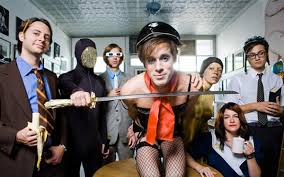
    I mean, look at how I write. *If* I was going to be hateful to my friends, I’d have to find friends I hated first, but then I’d totally teach myself to say things like “You like to think you can live beyond good and evil/ amputated from humanity on some lifelong intellectual retreat./ When everything is conceptual and all is rhetorical, you can feel so Of Montrealpowerful/ but when forced to face the physical world you scurry like an insect”. Or “Well you post naked GIFs of your epileptic fits/ and keep track of your hits, and your friends don’t give a shit/ and view your fugues with amusement”. Or “Your addictions and shiftiness inherited from your father/ I know you struggle to keep them in check, but at this point why even bother?/ What friendships you have left, they’re not derived from love, they’re just some warped form of charity”. Or “Your mother hung herself in the National Theater when she was four months pregnant/ with your sister who would’ve been thirteen years old today./ Does that make you feel any less alone in the world?” Or, and the irony here is dripping, “How could you allow these people whom you don’t even respect to rape your self concept and make your inner world an ugliness?”. As opposed to letting Kevin do it.

    Each quote was from consecutive songs; I could keep going. He does. I’m not actively proud of enjoying it, but the fun of escapism is that it commits us to nothing, like deciding whose blood I’d drink if I became a vampire (which, honestly, wouldn’t you rather have a plan than not?). On my iTunes, Lousy with Sylvanbriar is followed at once by Paralytic Stalks, and I’m happier as soon as the pedal steel is gone and the flutes and booming timpanis are back, and Kevin is sounding more vocally passionate about his jibes. But they’re two different artworks, each unique, and, y’know. They’re both good.

    – Brian Block

    To see the rest of our favorites, visit our Favorite Albums of 2013 page!