After two weeks, it’s is so clear that the girls run this mutha that a blind man can see it. The only male who has performed even close to the best females is Burnell and you know, I know, and my dad who doesn’t even watch the show knows that he’s not winning this show. I do hope he makes it into the top four though.
My prediction from last night was that Paul Jolley would be going home. Devin Vasquez could go home too, but he may have saved himself with his performance Wednesday. Lazaro is the one who deserves it, but I think America spares him one more week.
Who rocked the stage?
Casey Abrams who looked like a homeless samurai, rocked the house with the most horrendous beard you’ve ever seen.
Then Jessica Sanchez performed her first single with Ne-Yo called Tonight. The fact that Ne-Yo’s on it should push it a little, but it’s not necessarily the kind of song you expect from her. It’s not a bad first try.
Who were in the bottom three?
After telling him that he his city was going to declare a day for him, Ryno Seacrest told Paul Jolley he was also in the bottom three. Cold world. Devin Vasquez was as well, even though he did a much better job this week than last. Lazaro was safe. Of course he was. I think even Nicki thought that was interesting.
Via http://rihanna-vs-nicki-minaj.tumblr.com/.
Amber was the third piece of that bottom three. That’s the Lazaro tax.
Who went home?
Well, I’m two for two. Paul Jolley has been eliminated. Phillip Phillips told him he was gone, gone gone.
Based on the way this thing is working out, more than likely, Vasquez is next unless he has another really good week. But the fact that Amber was in the bottom three shows that the least interesting girl is also on the chopping block. I do hope that the fans stop voting for Lazaro as he’s absolutely overwhelmed.
Rush — singer/ bassist Geddy Lee, guitarist Alex Lifeson, and lyricist/ drum collector Neal Peart — have made albums since 1974, which I think warrants a bit of background for newcomers, until that set of asterisks below. There’s a constant element of Rushness to their sound, but they’ve gone through some large stylistic changes. They began as a shrieky hard-rock band. At first ripping off Led Zeppelin and Black Sabbath stomps, they quickly evolved towards 13/8 time signatures, drum solos, album-long stories, and Ayn Randist political fables delivered with the cockiness of defiant 15-year-olds. Keyboards and glossier guitar production entered their sound with 1980’s Permanent Waves, and for three years they had a series of massive (in my opinion terrific) hits. The Spirit of Radio stitched twiddly slow-evolving synth intros from the Who, lyrics modified from Simon & Garfunkel, and a bridge from 3rd-hand rumors of reggae into a grand anthem. Free Will, Red Barchetta, Limelight, and Subdivisions made classic-rock staples out of shifting time signatures. Tom Sawyer made 4/4 towering and novel.
1982-87 saw their songs getting icier, more synthetic and abstract. But Lee’s voice started to deepen and refine, and by Presto (’89) and Roll the Bones (’91) Rush were a pop band: capable of dazzling riffs, capable of out-playing your favorite band and proud of it, but a pop band, melodic and graceful. Peart, the former lyricist of such lecture-like fantasies as the Temples of Syrinx and By-Tor and the Snow Dog, wrote sensitively about teenage insecurity, a suicidal friend, the improbable events involved in any two lovers finding each other, and how “I’m not one with a sense of proportion … I’m just improvising … I radiate more heat than light”.
Then they gave up the synthesizers and became, I would argue, a sort of heavy metal band. Metal or not, they made two albums of thundering, riff-intensive, densely layered pop songs: most notably Counterparts (’93), almost a theme album about the challenges of learning empathy, an apology for youthful Ayn Rand worship without naming her. But then came a multi-year hiatus when Neal Peart’s wife and daughter died within a year’s span. On his return (for Vapor Trails (’02)), his lyrics were vaguer, more evasive — for which I blame him not at all. The band’s music was leaner and fiercer: the riffs aggressive, the solos rare, the “tunes” more like bluesy meandering.
******
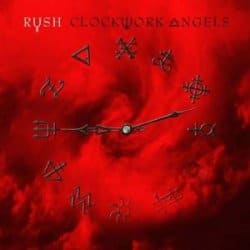
In 2012, following two albums of that, came Clockwork Angels. It has been widely hailed as their best record since their glory days, usually meaning 1977-81. I’ll agree, if I’m allowed to define their glory days as 1989-93. Produced by Nick Raskulinecz — a Grammy winner known for work with modern-rock radio bands like the Foo Fighters, Evanescence, and the Deftones — it’s 66 minutes of loud, impeccably polished and up-to-date power-trio rock songs that, if rather uniform in the grand scheme of things, do an excellent job calling attention to the details of individual performances. (Vapor Trails fought awful, blurry production: professionalism has its uses.) Atmospheric synthesizer and delay-pedaled, tremolo-pedaled guitars set dramatic openings for many songs, and those synths (and perhaps actual bowed strings a couple of times?) do more background service during the songs proper than in any Rush album for 20 years. All attention, however, is centered on guitar/ bass/ drums. Lifeson’s solos are back; they’re tuneful enough. Geddy Lee’s bass playing — his agile quick-fingered runs, his little turns towards funk or spaciness, and his sheer attempts to crush you — may be the most impressive it’s ever been, which means it’s pretty near as impressive as *anyone* has ever been. Neal Peart still takes, and talks about, his drum lessons, and while he’s omnipresent here, he finds a wide if subtle variety of ways to push the songs along.
Most of the vocal melodies still seem, to me, wandering and interchangeable, but the many-segmented Clockwork Angels itself puts together several soaring ones, and both Brought Up to Believe and the Wreckers are quite hummable. As for a more typical track here like the Anarchist, I hum the bass and guitar parts, and those synthesized-strings faux-snake-charmer bits. I’ve learned that while melody is central for me, and the vocals are where I first turn for it, I’m happy to find good wordless ones; Rush‘s Clockwork Angels strews ’em throughout. Lee’s bass playing can be foreground for me; his singing can be background, in which context it’s strong, flexible, and pleasant.
Which will be a “Wait? What?” claim for many fans, because Clockwork Angels is a story album. It’s a philosophical quest in a steampunk universe, in the course of which our narrator leaves his childhood small-town still half-believing in a planned, properly-slotted order for everyone. He experiences awe at his capitol city’s (yes) clockwork angels, “Celestial machinery” that “Span the sky in clockwork arcs, hint at more than we can see”; but he’s restless. He joins a carnival, falls in love, loses love, searches for gold, is captured by pirates. He disdains pre-destination and has failed at individual glory; his final conclusions are in favor of forgiveness and trying to lead a small, kind, worthy life focused on the personal choices he can control. It’s a far better story than Peart was writing in the 1970s, certainly.
If he was a good enough writer for it, who knows how high I’d’ve ranked this record? But if you’re going to create a different world, teach us what it’s like to believe in it. William Kotzwinkle’s wonderful the Ants Who Took Away Time, a picture-heavy book that my 6- and 4-year-olds adore, conjures a clockwork universe with humor and absurdity but utter commitment. Ray Bradbury and Dean Koontz and Genevieve Valentine and Erin Morgenstern and even Doctor Who have made carnivals seductive, magical, and spooky. Treasure hunts and pirates have been fantasy staples for centuries. Peart’s narrator gives us little sense of the appeal of any of this. In particular, since you and I and everyone around us believes it’s our job to find our own way — even the fundamentalist Christian browsing the self-help section and paying a dating site to help “find God’s match for you” does — I would love to have a song from *inside* the belief that wisely-programmed machines will put us on our correct course. Instead we just get the rejection of it. We’re told it’s a journey for the narrator, but it’s sure as heck easy for us.
So I’m not here, ultimately, for the words (though they’re well above average, don’t get me wrong). Clockwork Angels is, to me, 2012’s most potent demonstration of the power and melody a guitar, bass, and drum set can bring. I write about rock music; you can assume I appreciate that sort of thing.
SingSnap is an online karaoke service that I rediscovered yesterday after a long absence…
Several years ago, my husband Bill and I lived on an Army post in northern Virginia. Back then, I was more social than I am today. I used to clamor for Friday night karaoke at the officer’s club. We’d go; I’d get drunk; and I’d sing for about four hours straight because it wasn’t always a particularly well-attended activity. I got really hooked on karaoke. There was a group that met every Friday and we’d socialize and sing for hours. The Vietnamese bartender who worked at the club, Tieng, loved it. When Bill was deployed to Iraq, she’d call me every Friday to “invite” me to karaoke! It was a great source of support at a time when I was alone a lot.
Sometime around 2005 or so, a karaoke Web site called kSolo.com was launched. kSolo.com was affiliated with Sound Choice, a karaoke manufacturer based in Charlotte, North Carolina. kSolo.com is now defunct, but it was a site where people all over the Internet could sing karaoke songs and upload them for the world to hear. For awhile, it was quite a diversion for me and a great place to practice and get feedback from other would-be superstars. Of course, people weren’t always nice, but it was fun while it lasted.
The following year, a competing site called SingSnap was created. I was one of the first people to join SingSnap. I liked it better than kSolo.com, mainly because the people who ran it had a broader selection of songs and used a variety of karaoke tracks. Anyone who has done karaoke regularly knows that karaoke songs can vary widely in quality. The best songs tend to be made by Sound Choice or Chartbuster, a label that recently went out of business but made some great karaoke tracks, particularly for those of us who like bluegrass music! But sometimes even those two labels put out clunkers that another label did a better job with. SingSnap seemed to recognize this fact and offered a wider variety and better quality songs that appealed to broader tastes. SingSnap also allowed people to change the key and use their Web cams for the whole performance, something kSolo.com never did.
For several years, I sang quite faithfully on SingSnap.com. I became a “gold member”, which means I was a paid member of the site and got full access to all its songs and features. It was a fun way to pass particularly boring afternoons. Then in 2009, I quit hanging out on SingSnap because my subscription ran out and SingSnap dramatically raised their prices to the point at which I didn’t think it was worth it anymore. After all, I have my own karaoke player at home and a large collection of discs. I don’t make a habit of promoting my performances, either.
Then yesterday, I wrote on my personal blog about my prior career plans and how they led me to where I am today. I explained that if I had to do it over again, I might have considered studying music. It’s something that comes easily to me and I enjoy it immensely. I have a regular reader from Ireland who was curious about my voice. I was feeling a bit bashful, but he persisted and promised that he would keep nagging until I gave in and uploaded a video of me singing on YouTube. So then I tried to figure out how I was going to appease my new Irish friend. I didn’t mind letting him hear a recording of me, but I really didn’t want to film myself singing. And then I remembered SingSnap.com.
I logged into my long forgotten account and looked at the free songs they had available. I wondered if my computer would work well with SingSnap. Since the last time I “performed” on SingSnap, I had switched from a PC to a Mac, which doesn’t have an external microphone. I needn’t have worried. After a few easy adjustments, my computer was able to record my voice somewhat decently. Finally, I decided to give it a go and sang the one free version of “Danny Boy”. It was okay… basically, it was the Elvis Presley version. Since I was no longer a gold member, I couldn’t try a different version or change the key. Of course, being a total karaoke junkie, my addiction was quickly reignited and I found myself checking out SingSnap’s prices for their gold subscription. They had come down significantly since I last checked, so I re-subscribed and made a couple of new recordings. I opted for the year subscription, which is $80 payable by credit card or PayPal. Monthly subscriptions run $15.
Here is one of the recordings I made yesterday on SingSnap.
You will notice there is a fixed image on the video. That’s because I don’t usually wear makeup and don’t want to subject people to what I look like on a regular day! Before I uploaded that picture, I had a photo of one of my beagles on my recordings.
One of the cool things about SingSnap is that the system allows paying users to make duets, harmonize, and create groups. In that sense, it kind of allows regular people to get a very rudimentary experience of recording their own music. You are free to listen or not listen to other peoples’ songs. You can make your recordings public, restrict them, or make them totally private. You can allow people to rate or make comments on your recordings, or you can disable those features. SingSnap also has contests. I haven’t entered any of them, but for those who like that sort of thing, contests are available and seem to be quite popular.
I had so much fun playing with SingSnap yesterday that I imagine I’ll experiment more with it today. It’s just one more thing to prevent me from mowing the lawn.
Edited to add…. I just plugged in a real mic. BIG difference in how it sounds!
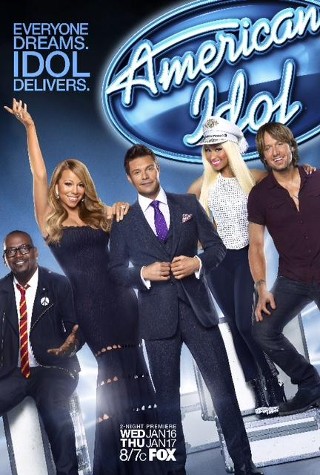 After two weeks, it’s is so clear that the girls run this mutha that a blind man can see it. The only male who has performed even close to the best females is Burnell and you know, I know, and my dad who doesn’t even watch the show knows that he’s not winning this show. I do hope he makes it into the top four though.