Broadside Ballads
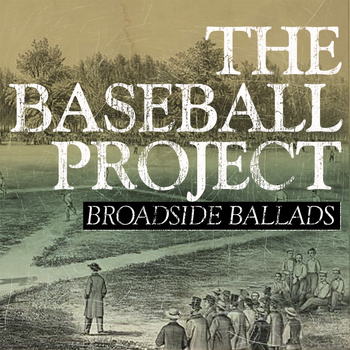
D’ya like baseball? D’ya like story songs? How about story songs about baseball? How about story songs about baseball written by a supergroup of alterna-cool elder statesmen including the Dream Syndicate’s Steve Wynn, drummer Linda Pitmon, R.E.M.’s Peter Buck and Scott McCaughey of the Young Fresh Fellows, The Minus 5 and, well, a zillion other side projects. These four got together last year and formed a band that specializes in baseball songs. They call their band – duh – The Baseball Project and they released their debut full-length album Vol. One: Frozen Ropes and Dying Quails in 2009. While they’re working on Volume Two (due out next year), they’ve partnered with ESPN’s The Life this summer to provide running baseball commentary in song. And those songs – six of ’em so far – are being made available for free dowload at the Baseball Project’s label home, the always awesome Yep Roc Records. No small feat: these songs have actually given me a reason to care about baseball this year.
I mean, seriously, with the exception of my sons’ little league games and the occasional excursion to Warner Park to watch the Madison Mallards play (and eat a few brats), I like stories and movies about baseball a lot more than I like baseball itself. I never miss a chance to watch Major League II when it comes on the TV. But when the guys in the Baseball Project start singing about “Lima Time”, the references are pretty much lost on me in the same way that that punchline in Modern Family about Diana Ross’s RCA period was mostly lost on the majority of the network prime time viewing audience. But it doesn’t matter that much: the band plays a handsome variety of laid back folk rock – think The Traveling Wilburys at a Miller Park tailgate party – that sounds great even when I don’t know the relevant background of the song’s lyrics.
Moreover, songs like “Phenom”, in which a 21-year-old ponders his ability to live up to his own hype – “Man of the hour, and that’s 400 percent of your 15 minutes of fame, and they say that I’m the most in the Washington Post… I just want to stick around for a while” – resonate outside of the sport they pay tribute to on an allegorial/metaphorical level. I love the relentless (and hopeless) optimism of “Cubs 2010”, the jangly, swinging, Woodie Guthie-ish singalong of “30 Doc”. And I’ve never been to or even cared about a baseball season opening day, but I can, nevertheless relate to the sense of excitement and expectation of “All Future and No Past” – Before a game is played! Before an out is made! – especially when the song sounds like They Might Be Giants fronting the Byrds on a Bob Dylan cover.
Mumbo Jumbo (2010)
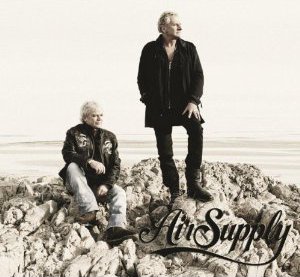
A while back, I wrote here of my initial excitement over the reappearance of Australian soft-popsters Air Supply both in stores (with their new album Mumbo Jumbo) and on the U.S. charts (with the song “Dance With Me”), and then of my serious disappointment with the music itself. It had been nearly 25 years since I’d been excited about Air Supply, but it only took a moment for that hot air balloon to deflate. But it got me to thinking about all the Air Supply I’d been missing, all the music they recorded in the 1990s, that I’d made a conscious decision (maybe several conscious decisions) to blow off. Air Supply are best known for a string of hits they’d put out in the early 80s on the Arista label. After releasing a greatest hits record in 1983, which came with their last mega-hit in the form of the Jim Steinman-penned-and-produced “Making Love Out of Nothing All”, the band’s career sputtered and faded. They’d release two more studio albums for Arista and a holiday record for good measure, but all to diminishing returns. That seemed to be that.
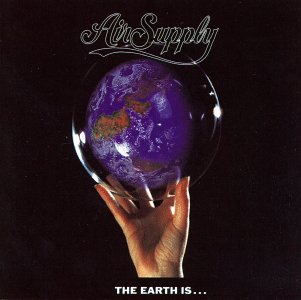
But then, the autumn of my freshman year in college (that would be 1991), I noticed, probably while shopping for the CD by that new band Nirvana, that Air Supply had released a new album called The Earth Is… on Giant Records, label home to one of my favorite bands of the time Too Much Joy. The title turned me off immediately, but the cover art – a photo of a hand holding up what looked like a garden gazing ball of the earth against a celestial blue background – was pretty terrible too. Not that the generic portraiture of the Air Supply (1985) and Hearts In Motion (1986) albums were all that great. But the whole thing seemed to suggest a collection of cheesy, preachy songs about saving the environment – and seriously, the whole “saving the environment” thing? So 1989. It was neither the first nor the last time I would judge an album by its cover, and I was okay with it.
But hearing how awful the new Air Supply single was nevertheless made me wonder about this neglected phase in Air Supply’s career. That said, it’s not like I was going to rush out and buy all their albums. Unless, that is, my 10-year-old son might convince me to take him to Pre-Played (a local used CD/DVD/video game store), and while there, I just happened to notice that the store currently had copies of all four of Air Supply’s studio albums from the 1990s, all priced at $2.99, making the 2010 price for the four CDs roughly the 1991 price of the first one. That, to me, was an acceptable price for the satisfaction of a morbid curiosity. I bought ‘em. And now I’ve listened to them. And here’s what I think.The Earth Is… (1991)
The Earth Is… (1991): Well, I judged wrong. If there’s a pro-environment message here, it’s written in the code of the 80s style power ballads that made Air Supply famous. The thing that’s most immediately striking about Air Supply’s 1991 “re-debut” on the Giant label is how much it sounds exactly like, y’know, Air Supply, which could very well be chalked up to the band’s reunion with Harry Maslin, the producer behind their biggest early 80s hits. Had the opening song “Stronger Than the Night” been issued in 1984, it might have been huge. As it is, it’s just another great Air Supply ballad that’s just begging to be discovered by old fans who have no idea it exists. “Stop the Tears” (which was released as a single in some territories), the slow-building “Love Conquers Time”, and the lovely midtempo “Speaking of Love” are nearly as good even if the guys stumble a bit with an overwrought reworking of the Badfinger/Harry Nilsson classic “Without You”. Mariah Carey would soon prove that American audiences wanted that song back on the radio, but not the way Air Supply delivers it. Hitchcock’s upper register, which had dazzled me as a youngster ten years earlier, is almost comical at the song’s climax, and this otherwise stiff take on the 70s pop perennial simply goes on too long (literally twice as long as Nilsson’s version – which, admittedly, was a profile in pop economy).
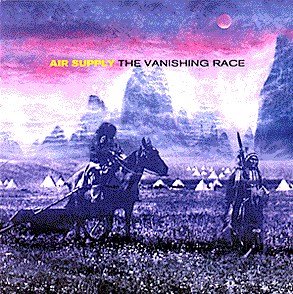
In general, the songs are longer here than they had been on the band’s previous records, as Graham Russell’s songwriting – which was never not ambitious, even though the hits were always silly love songs – here, occasionally, gets proggish and arty, especially with the mildly exotic rhythms and layered vocal harmony parts of “Dancing With the Mountain”. They lose me a bit with the six-and-a-half minute “Dame Amor”, not because the song is sung entirely in Spanish, but because so much of the song is given over an exploration of the song’s minimalist faux-Latin textures, which, to me, sound like the audio equivalent of a leopard print fabric. It’s not necessarily offensive, but it sure sounds cheesy. Still, despite the occasional mis-steps, Russell’s ambitions result in some truly enjoyable, sophisticated pop. Sure, they never quite reach Peter Gabriel country, but they often land fairly credibly among the Martin Pages, the Mr. Misters, and the late 80s Simple Minds. The Vanishing Race (1993): If The Earth Is… found Air Supply simply re-asserting its existence with a reminder of everything everyone had always loved (and/or made fun of) about the group’s music – and this, even as Graham Russell flexed his art-pop songwriting chops a bit – their 1993 album actually marks a pretty significant artistic leap forward. Once again, the album comes packaged in an aura of social consciousness that is largely missing/separate/irrelevant to the music contained within, although the title track is a haunting epic inspired by a Native American prayer and incorporating a chanted vocal on the chorus to stirring effect.
Produced by David Foster associate Humberto Gatica (see also Chicago 17), the album is full of the kind of smooth jazz and R&B rhythms and arrangements you might expect to hear on a contemporaneous record by Anita Baker or Peabo Bryson. But Air Supply’s songs prove a surprisingly great match. Listening to songs like “Don’t Tell Me” and “Too Sentimental”, it’s no surprise that Air Supply was able to make some modest inroads back onto the pop charts with this record – what’s surprising, in hindsight, is that the record didn’t become an adult-contemporary juggernaut and that its songs haven’t become perennials on par with their earlier hits.
The Vanishing Race contains, what are to my mind, two of the group’s greatest singles – not just of the 90s, but of their entire career. “Goodbye” is vintage Air Supply with the two guys delivering a fantastic tag-team performance, Graham Russell doing his best Art Garfunkel in the quiet opening verse, before Russell Hitchcock swoops in with the emotional catharsis on the verse. When you hear him say, “though it’s gonna hurt us both”, you can hear him bracing with anticipatory pain, like watching a kid brace for a vaccination at the doctor’s office.
Air Supply “Goodbye”
Even better though, is the spare, soulful, and largely acoustic “Evidence of Love”, which sounds absolutely nothing like what you expect from an Air Supply single. Graham Russell handles the bulk of the vocals on this song about a flagging relationship, reaching up into a vulnerable falsetto on the chorus just in time for Hitchcock to sweep in with a powerful affirmation and statement of purpose – “I still believe we can see this through”. The album’s not without its sore spots. “Faith” finds the whipping up a frothy merengue out of every possible faux-gospel gimmick, tactic, and cliche. But generally speaking, I don’t think I’m being overly charitable in saying that The Vanishing Race is an honest-to-goodness keeper. News From Nowhere (1995) News from Nowhere (1995): Urgh. How depressing. The group’s third Giant album, produced by Graham Russell himself, is a great leap forward… off a cliff into the adult contemporary void. News From Nowhere, as its title might suggest, is a meticulously crafted snooze. (The cover art’s pretty though.) Following The Vanishing Race‘s more radio-friendly (however radio-rejected) collection of slightly more pithy (i.e. 4 minutes instead of 5 or 6) R&B-tinged pop songs for grown-ups, the songs of New From Nowhere boasts the most grandiose arrangements of the band’s career to date with enough oceanic washes of breathy vocal harmonies to make even Enya cry uncle.
The album-opener “Someone” is probably the closest thing to memorable, but its sprawling length works against it. When the CD player goes to Track 2, it’s hard to believe you’ve only made it through one song. And mostly these songs just bask in their own gratuitous orchestral gorgeousness leaving the listener with absolutely nothing to hold onto or engage with. It would be bad enough that the songs aren’t up to snuff, or that they didn’t offer much for the listener to return to. But, in addition, they offer a few things the listener might actually want to avoid in the future. For instance, a sloshy cover of (ugh, it makes me puke a little just typing it) “Unchained Melody”. Moreover, Russell Hitchcock, for whatever reason, feels marginalized on this record. It’s not just the he seems to be singing fewer leads (although the aforementioned cover is all his) – the parts that he does sing feel like the John Oates parts of Hall & Oates songs. Even worse, after delivering some very powerful vocal performances on the previous record, here he seems to be struggling to hit the notes that seemed to once come so effortlessly. The whole thing is just… really, really sad. Now and Forever – Greatest Hits Live (1995)
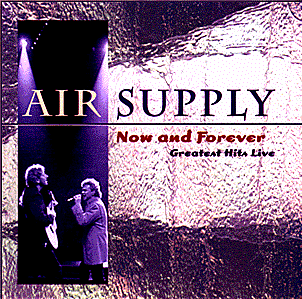
Three albums into their contract with no real American hit to show for it (the group’s popularity never flagged in South American and Southeast Asian markets), Giant Records rushed out Greatest Hits Live… Now and Forever during the ’95 Christmas shopping season, which was, if nothing else, a way for the company to vicariously reap the benefits of the band’s back-catalogue. It appears to be the one Air Supply record on Giant that remains in print today. With that out of the way…
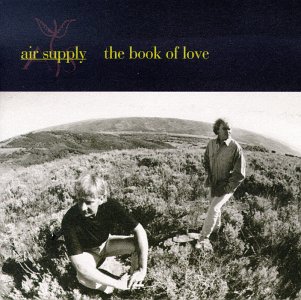
The Book of Love (1997): Maybe this is the record that News From Nowhere wanted, but failed, to be: something pretty miraculous happens on the band’s fourth Giant studio album. It’s as if they’ve completely stopped trying to make hit singles and in so doing, embraced their roots in musical theater (Russell and Hitchcock met during a 1975 Australian production of Jesus Christ Superstar). While previous albums were made to look like socially conscious concept records, The Book of Love actually holds up as a structured, musically coherent, soft-rock opera about love, longing and loss. There’s no “story” necessarily, or if there is, it’s sufficiently hidden in the spaces between the songs; but the songs do create a very satisfying dramatic arc, beginning with the title track – a stunningly beautiful preamble to the songs that follow, delivered in understated choral harmonies over synth washes, delicate nylon guitar melodies, and a quietly soulful beat (okay, so the spoken intro is a bit much, but somehow it still works) – to the meditative closer “All That You Want”.
Despite the record’s heavy reliance on ballads, it’s perfectly paced. It’s also beautifully arranged. Gone are the previous record’s overzealous orchestrations in favor of more spare, organic, and tasteful treatments. Yes, of course, there are still strings – there must always be strings – but here, the strings support the drama on songs like the fairytale gothic “Mother Said” (which I’d love to hear Glee‘s Lea Michele and Chris Colfer sing a duet on) instead of trying to be the songs’ drama. Where the songs of News From Nowhere wooshed one into the other with none really standing out, the songs of The Book of Love mostly stand well individually, but also – and more importantly – add narrative strength and emotional depth to each other as a collection, from intimate confessionals like “When I Say” to the almost religiously inspirational “We the People”, which sounds like it could have been a number in Godspell, had Godspell been written by Johnny Clegg or someone. The Book of Love (1997)
The centerpiece of it all is the 8 minute (!) “Let’s Stay Together Tonight”, a gorgeous attempt at end-of-the-night persuasion that builds to an emotional crescendo around the 6 minute mark before dissolving slowly into instrumental uncertainty. Though it’s probably my favorite song on the record (and, heck, one of my favorite Air Supply songs ever), it’s got a couple of strange flaws. For one thing, Hitchcock is almost absent from the song, but when he does chime in on the chorus, his voice feels louder and starker than its soft focus surroundings. The effect is off-putting and feels wrong. There’s also that instrumental passage at the end, which certainly sounds lovely enough, except there’s this continuous discordant bit of feedback that hovers over it all that makes it hard to listen to. Again, it clearly seems intentional, but it also feels unsettling and, well, wrong.
But the next track “Daybreak” sort of explains and resolves those wrongs – as if to say that the gorgeous, angelic persuasions of the previous track didn’t work – they didn’t stay together that night. In the context of “Daybreak”, a stirring Hitchcock solo from start to finish with one of his most powerfully vulnerable latter-day vocals, Graham Russell’s whispery verses on “Let’s Stay Together Tonight” sound like words unspoken in a moment of intimate longing. Both songs are great on their own, but they’re even greater – and they make more sense – together.
While it should be noted that Hitchcock’s voice here is not what it once was – whether due to age or illness – that roughness around the edges and at the top of the range adds a sense of urgency and emotional gravity to the songs he sings; as with the previous album, his role here seems somewhat diminished, but the strength of the material he’s given (what? no Barry Manilow cover this time around?) more than compensates for his relative absence elsewhere. The album’s one misstep is “Once”, an instrumental that sounds like an audition tape for a job scoring the next “Based on a novel by Nicholas Sparks” romantic drama. But it’s pretty enough and it makes a fine intermission before the album’s powerful second act. The unexpected truth is that The Book of Love is a dazzlingly great record from start to finish, even if, by its own design, it yielded no hit single.
The Book of Love would be Air Supply’s last record of the 90s, but not their last for Giant. That would be Yours Truly, released in 2001. Sadly, my local Pre-Played didn’t have that one in stock, but I’m keeping an eye out for it. (Or hey, if you own a copy and you’re desperate to get rid of it, let me know! I’ll be happy to take it off your hands and review it here.)
Hey! Remember this show? Remember the band who won it? Maybe not. It was three years ago, after all, and unlike the American Idol which all but guarantees an annual outlet for its past winners and finalists to remind their fickle-by-design audience that they still exist, the Next Great American Band has not since returned to the airwaves. (I’m actually still holding out hope for Season 2 of Bands on the Run! Flickerstick Rulz!!!)
Moreover, where Idol winners often have an album assembled and rushed out to the market in time for Christmas shopping, Next Great American Band winners The Clark Brothers seemed to drop off the face of the earth, leaving the few of us who watched the show and fell in love -err mild infatuation with the Appalachian trio’s thrilling (for prime time) acoustic conflagrations of bluegrass, pop, and classic rock to wonder, y’know, wha’happen?
The Clark Brothers “Gimme Shelter”
Sometime between then and now, the Clark Brothers – Adam, Ashley, and Austin – were signed to a major label, and then got dropped by the label in a bit of corporate re-shuffling. At which point, they changed their name to Sons of Sylvia, signed with 19 Entertainment and Interscope, and showed up on a duet with Carrie Underwood called “What Can I Say”. Now, the band is on tour with Underwood in support of their long delayed debut album Revelation.
Carrie Underwood with Sons of Sylvia “What Can I Say”
Though the Sons of Sylvia had previously, along with three more of their brothers, recorded and even charted a Top 20 Country hit 10 years ago as the Clark Family Experience; and though the instruments they play (fiddle, mandolin, slide guitar) look and sound a little, y’know, bluegrassy; and though they are touring with Carrie Underwood, it becomes clear listening to Revelation that Sons of Sylvia are no more a country music band at this point than OneRepublic, whose lead singer-songwriter (and one of 19 Entertainment’s favorite go-to hit-writers) Ryan Tedder co-wrote and produced the group’s debut single “Love Left to Lose”. As with many of Tedder’s other hits, the song boasts a big, open-air sound with a full-throated campfire folk sing-along of a chorus, making it an immediate winner when you hear it on the radio.
The band carries that bigness with them throughout Revelation, almost to the point where it becomes a little too much of a pretty good thing, both in the record’s anthemic sound, but also in lyrics (see the title track) that seem to be reaching for the spiritual profundity of Bono, circa 1984. The album opens with “John Wayne”, a gorgeous statement of devotion that gets oversold by Ashley’s trying-too-hard shouty high vocals on the chorus, and ends with a strange assemblage of sounds (is there a song in this?) called “The War Within”.
There’s no question these guys are talented, and that they’re passionate music-makers. But the fire and brimstone they brought to that cover of “Gimme Shelter” on TV a couple years ago seems to have been compromised in the band’s quest to come up with a great pop/rock record. I’m not one of those people who believes that the words “greatness” and “pop/rock” are mutually exclusive; I think what Sons of Sylvia have attempted with Revelation is admirable, promising, and totally listenable. (I mean, seriously: pop music with actual stringed instruments, people! How awesome is that in 2010?) But listening to Revelation is like watching someone trying to start a fire by rubbing sticks together, generating occasionally thrilling puffs of smoke, but never quite acheiving something we might be able roast marshmallows over.