web analytics

Category: Reviews

music-and-concert-reviews-you-wont-see-anywhere-else

  • #42 album of 2012 – Beyul by Yakuza

    #42 album of 2012 – Beyul by Yakuza

    Artist: Yakuza

    Album: Beyul

    Yakuza, from Chicago, are a heavy metal band, and Beyul is a heavy metal album. Encyclopedia Metallum, normally a definitive web source, disagrees, which I’m told was an active, debated decision. I’m not quite sure what *else* they make, then, of Oil and Water, which barrels along yakuza_beyulat a quadruple-speed attack of distorted bass, drums, and squalling clarinet, before a commanding Rob Halford (Judas Priest)-like singer (= tuneful wailer) enters. The fierce trebly guitar solo is metal; the frantic background vocal screeches are metal. The Last Day is part tempo-shifting speed-metal, part more like Metallica’s dark atmospheric trudges, with reflective lead guitar and near-crooning and smooth-jazz sax over the bass that ominously tolls (for whom?). Man is Machine sets off Iron Maiden riffing — and later a more assertive Rage Against the Machine-ish barking rhythm — with long, loud reverberating chords and (tuned) howls and big echoing drums, plus the usual anti-humanity pro-apocalypse lyrics.

    And free-jazz sax.  Bruce Lamont, when not being a classic heavy metal singer, plays saxophone and clarinet, and as far as I can tell this makes Yakuza’s Beyul“avant-garde”. Which I gather is metalhead for “These guys are too interesting WAAH”.

    Someone is wrong on the Internet. Yakuza deliver much of what I want from heavy metal: the heaviness and power (duh). The bursts of insane energy. The mysterious pleasure of partly detuned bass chords (Korn’s grand innovation), or occasional Middle Eastern tunings. The grandeur. The stumbling into elementally right-on melodies, played several times rapidly with force and then abandoned. The atmosphere: aside from Oil and Water and the 1:26 grindcore-for-fun outburst Species, most of this album rings out with plenty of long-held notes and chords, even when there’s furious drum rolls. Beyul is an album to which I can lie down, put my headphones on, and let the music pummel me as my mind drifts.

    Saxophone and clarinet? They fill the same frequency range as the human voice. They’re also a break from literal communication, instead sliding over the notes faster, more smoothly, and perhaps more intuitively than we can sing. Metal fans aren’t always into notes; perhaps that’s the objection. I overrule.

    – Brian Block

    To see the rest of our favorites, visit our Favorite Albums of 2012 page!
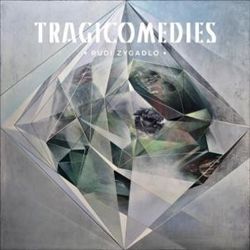
  • #43 album of 2012 – Tragicomedies by Rudi Zygadlo

    #43 album of 2012 – Tragicomedies by Rudi Zygadlo

    Artist: Rudi Zygadlo

    Album: Tragicomedies

    Scotland’s Rudi Zygadlo was introduced to me, for his 2010 debut the Great Western Layman, as a maker of something electronic called “dubstep”. He does do clever things with electro-sonic manipulation, about which more shortly, but that label slowed my recognition of what on zygadlo_tragicomediesTragicomedies is at least as important: he writes excellent, distinctive vocal melodies. They’re graceful, and modest in scope, but full of odd intervals, sharps or flats where none would be expected. They have a composery feel, and at first the only comparisons I thought of — once my brain had caught up — were hopelessly obscure: Liam Singer, Chris Letcher, Stars in Battledress, William D. Drake. But no, by Russian Dolls I’d realized his tunes might pass as slowed-down fragments from Broadway’s Stephen Sondheim (Into the Woods, Sweeney Todd, Assassins). By Tragicomedies itself, aided by the arrangement, I’d recognized Zygadlo‘s sometime kinship as a tunesmith with Steely Dan (or Francis and the Lights). By the Domino Quivers I’d picked up on the resemblance to some of XTC’s slower, more pastoral songs. Sometimes even Crowded House recorded songs that were a little evasive in their prettiness. There, now you have starting points.

    So about that electronic tomfoolery. First of all, Zygadlo‘s voice seems mild and pleasant – like Roddy Frame of Aztec Camera, or Paddy McAloon of Prefab Sprout – but we don’t hear it untampered. There’s often several of him, pitch-corrected in harmony, or sent through a vocoder (a la Laurie Anderson on O Superman), or chipmunked, or deepened into a robotic Big Bopper (especially on the doo-wop Waltz for Daphnis), or sent through a dozen other forms of distortion. Instrumentally, many songs are based in classically-trained piano, but electronics will wobble the pitch, fade the notes artificially in and out, slow down or briefly warp-speed the playing. Some shiny keyboard lines are purely artificial, such as Catharine‘s synthesizer insisting a grin while it tries to  distract you from its machine indigestion; I guess that’s dubstep, though without Skrillex’s abrasiveness. Some sound like ’70s Wurlitzer organs; Tragicomedy sounds, specifically, like Steely Dan mixed on a computer while my 4-year-old jabbed at the keys and tried to swipe the mouse. The Deaf School could even play in goth or ’80s dance clubs, though not without inspiring questions.

    By final tracks On and Variously Made Men, it feels entirely natural that people have electronic filters attached to their vocal cords; that notes sound louder half-a-second *after* they’re played; that instruments rebuild themselves from scratch from one measure to another. Tragicomedies creates its own world of pop elegance.

    – Brian Block

    To see the rest of our favorites, visit our Favorite Albums of 2012 page!

     

  • #44 album of 2012 – Sonik Kicks by Paul Weller

    #44 album of 2012 – Sonik Kicks by Paul Weller

    Artist: Paul Weller

    Album: Sonik Kicks

    Paul Weller is a major star in England; has been since 1977. First he led the Jam, the most articulate and cautious of the first-wave punk stars. Then he led the Style Council, who made smooth soul/ R+B/ swing jazz musics. Then, under his own name, he spent two decades making paul_wellerrootsier soul-rock: brand new Classic Rock for the Adult Contemporary stations. I’ve never really been a fan. But suddenly, in 2012, at 54 years old, he essentially made his own Super Furry Animals album: flashy, groove-based, eclectic, ultra-modern, and above all, playful. (As Pooh observed, you never can tell with Top of the Pops stars.) Sonik Kicks he called it, presumably misspelling it to avoid licensing hassles from Sonic the Hedgehog; it went to #1 on the U.K. albums chart.

    There’s a lot of kinds of music here, and you just need to wait a bit if you don’t like one, since most of the tracks range from 2:00 to 3:41 in length. Kling I Klang rushes by as a punk polka strafed by “futuristic” synth music from ’70s concept albums, and also by autoharp. By the Waters is soft, plaintive, and violin-centered. That Dangerous Age is peppy neo-Motown decorated with prog-rock organ and hip-hop/ techno beatwork. Study in Blue, the one long track here, is like Blondie’s Call Me reworked into drifting and exploratory jazz-pop that wanders towards ambient techno; it works far better for me than stuff like that generally does. Perhaps because it feeds into Dragonfly (heavy psychedelic pop that reminds me of Babylon Zoo), then When Your Garden’s Overgrown (upbeat psychedelic power-pop full of bright-eyed keyboard lines), then Around the Lake (a high-speed 2:11 of menacing two-chord bass, alien twittering, echoed vocals, and echoed everything else). Etc.

    Paul Weller‘s lyrics on Sonik Kicks are sketchy and mostly play on mood, although songs like That Dangerous Age show a continued talent for personality profiles. The song structures are straight-ahead and mostly play on mood, although a few — the slower ones, mostly — have nicely imaginative melodies. There are a lot of moods here, but the overriding one, to me, seems to be creative play. No wonder I’m warming to the guy.

    – Brian Block

    To see the rest of our favorites, visit our Favorite Albums of 2012 page!