web analytics

Category: Reviews

music-and-concert-reviews-you-wont-see-anywhere-else

  • #24 album of 2012 – Centipede Hz by Animal Collective

    Artist: Animal Collective

    Album: Centipede Hz

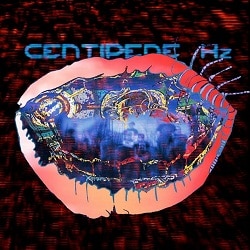
    Animal Collective‘s overall musical style has centered from the start on trebly, percussive yet wibbly-wobbly songs with a powerful hippie vibe. If I played Centipede Hz for fifty random newcomers, telling them sincerely that it’s happy-sounding music, I’d expect a little argument about centipede_hz“happy-sounding” (there can be an anxious undertow, sure), but more argument about “music”. They’ve been a critical favorite since their 2000 debut Spirit They’ve Gone, Spirit They’ve Vanished was adopted by the folks at Pitchfork, who called it “a masterful piece of electro-acoustic fairy-tale music [with] squalling electronics and vitrified rhythms”. They referenced “space-pop”, “free-noise”, “insect electronics and demented piano”, Piper at the Gates of Dawn, krautrock, and Lucy in the Sky with Diamonds in their review — all of which sound like plausible things to mention about the band to this day. The reviews stayed compelling enough for me to keep me trying out new Animal Collective albums even though my reaction to each didn’t rise much above semi-intrigued bafflement; and compelling enough to the rock critic community that the band rose steadily up the year-end polls. Until, at the end of 2009, their Merriweather Post Pavilion easily won the grand Pazz & Jop Critics’ Poll as the year’s best album, and sold over 200,000 copies.
    I liked Merriweather Post Pavilion. I’m not sure it would’ve made my Top 50 if I’d done one that year, but I liked it. It benefitted from some obvious changes. One was more expensive production: it remained a strange record (especially with so much going on at high pitches), but it felt more intentional, more polished and layered and harmonized. Another was that it was more relaxed, not quite as dense, and — by a good margin — more melodic. My Girls was the one that topped Song of the Year lists, with an intensely colorful video, a surprisingly square attitude (devoted to taking care of family), and a blissfully stoned, peaceful vibe that helped sell a tune as weird and unpredictable as anything the Dirty Projectors have written. Summertime Clothes is the one that went on my year-end mix-cd set, burbling over with energetic synthesizers that buoyed a limber, sunny tune worthy of the pre-rock glories of Frankie Lymon, or one of the girl-groups.

    Centipede Hz is Animal Collective‘s follow-up to Merriweather Post Pavilion. Rather than finishing 1st in the Pazz & Jop roundup vote, it tied for 157th. It is, I think, clearly their masterpiece.

    Wasn’t that a good set-up paragraph? Unfortunately, and out of character, I don’t feel up for making the sales job that goes here; they’re such an odd band, an odd candidate for wide-scale acceptance. Thing is, I basically agree with the descriptions in the Centipede Hz reviews. Their most live, rock-band-feeling album? Sure. “Blunt-force”, “sensory overload”, “sing-song melodies out of a melee”, “percussive clatter and synth-noise splatter”, to quote Pitchfork? Yep. I think that misses how *joyous* Applesauce is; how Wide-Eyed invites a lab full of bubbling test tubes to dance; how tuggingly minor-key shiny/pretty Pulleys is; how classic-rock structure and dynamics make a sproingy off-kilter anthem of Amanita. But it’s all true. “There is rarely time to draw a breath”, complained the London Observer; if you can’t breathe in the presence of three-plus distinct instrumental rhythms, this album will indeed kill you, which would be bad. I shouldn’t snark at the Observer’s reviewer, though: not only is her name “Kitty Empire”, but her review adds the perfect phrase “galumphing sense of abandon”.

    I guess that’s what it comes down to. All Animal Collective albums seem to owe debts to Barrett-era Pink Floyd, Brian Wilson’s Smile, the wildest Beatles music, rhythm and vocal-weaving patterns from various parts of South America and Africa, modern electronica, and a galumphing sense of abandon. Their two most recent albums should be (and in my opinion are) their best: the ones they’ve been able to apply enough time, money, and experience to. Centipede Hz is the one of those you’d start with if you like changing time signatures, rock music drive, and many things going on at once. Me! Me! Me! I do! Apparently I’m outnumbered.

    – Brian Block

    To see the rest of our favorites, visit our Favorite Albums of 2012 page!
     

  • #25 album of 2012 – Failed States by Propagandhi

    Artist: Propagandhi

    Album: Failed States

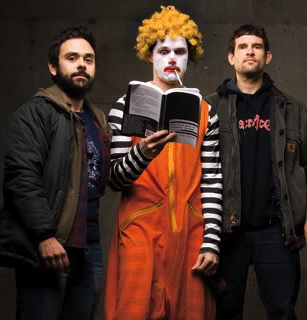
    Propagandhi are a good band. Given my tastes, I doubt I’d keep buying each new album of theirs if I didn’t care about their lyrics, but maybe; they’re a good band. Starting off with a 1993 album as a primitivist hardcore punk group who couldn’t sustain songs for two minutes and rarely propagandhi_clowntried, they’ve learned structure, drama, pacing, and many chords they didn’t begin with. Chris Hannah’s singing is still punk-shouty, melodic by implication (and not always that) rather than composition, and he articulates, but they’re essentially a metal band now. A more angular version of Metallica’s Ride the Lightning, perhaps, or then again a more militant version of Nothingface-era Voivod. They still do a few punk sprints, but as fun changes of pace, like System of a Down strewing Jet Pilot and Bounce amid songs proving they know better. Most of the songs on Failed States start right before the words do, and stop when the words run out, but there’s changes of riffs, changes of tempo, spectacular drum fills, even some guitar solos. On previous Propagandhi albums there was a distracting tendency for those musical events to interrupt Hannah in the middle of a thought, but on Failed States they’ve finally allied the music with the words.

    Because Propagandhi are a good band, I can happily exercise or fold laundry to this album — but that came after, at least twice, reading along to it. Their lyricist — I’m guessing that’s founding member Chris Hannah, but I’ve never managed to find out for sure — is an excellent, thoughtful, personal, periodically goofy writer who devotes his albums to his efforts to figure out the world, his place in it, and how to fix it. I know it’s cool to roll your eyes at “how to fix it”, but seriously: don’t you think it could use some repairs? Do you trust the corporate executives and politicians to do it for you? If not, it’s pretty much up to the unqualified rest of us, and part of the greatness of Propagandhi is that they know they’re unqualified. “29 years in human history: the total duration of time without war. What the fuck am I acting so surprised for? If I had a dime for every single idiotic time I felt like strangling some goof on the street, I could afford a business seat on the fucking Soyuz 13. Sandwiched straight between Tom Hanks and Lance Bass, already fighting, nowhere near space. Each of us a failed state in stark relief against the background of the perfect world we seek”. You can’t dis Propagandhi‘s idealism harder than they do on the title track, so why bother? Neither they nor you nor I will live perfectly, but that’s a crappy excuse for not trying.

    Some songs on Failed States are dedicated to heroes. Cognitive Suicide salutes two world-class female athletes who suffered — in lesbian/LGBT activist Eudy Simelane’s case, was beaten to death — for defying repressive gender roles. Rattan Cane supports Iranian punk-rockers. Unscripted Moment is basically a love song to two close friends.

    Some are endearingly personal. Devil’s Creek is fond but jarringly honest nostalgia for a childhood place he misses: “Squatting in the cool of the rotting of the reeds, enveloping. Never understood the other kids; the adults even less. So I hung out by myself in a backroad drainage ditch. I called it Devil’s Creek so it wouldn’t seem so sad. When you can’t have what you want, you learn to want what you have”. More upbeat, Things I Like is a catalog of just that, from “dark planetariums” to “a rowdy fuckin’ Pride parade” to “the Supremes’ You Can’t Hurry Love” to — a more common form of fun than one might expect — “speculative fiction: dark narratives of the future that looms”. Duplicate Keys Icaro is an outsider science-geek’s consideration of the offered peace of mind from LSD and magic mushrooms: “Cryptic ring structures bind to receptors” and “Our confirmation biases leverage everything we perceive”, but still, mulling it over, tempted by others’ “haunting certainty that the unifying principle of the universe is love”.

    Regardless of which, some songs on Failed States are dedicated to statements of the challenges. “No-fly list. No-drive list. No-walk list. No-talk list. No muckraking journalist left to take stock of the wholesale omission of outside perspectives. How does it make you feel to know that you voted for this?… We frantically click our heels, already home”. And while Propagandhi have by no means given up on politics — active for Amnesty International, the Rainforest Action Network, Sweatshop Watch, local Winnipeg initiatives, and a variety of vegan/ animal rights causes — they seem proudest asserting lifestyle as activism. You might mock this too, and if so I need to disagree on several grounds. (1) There is almost no chance that your political vote will ever do anything (though it’s worth casting), but voting by dollars always makes its small difference in the capitalist system: either for your beliefs, or against them. (2) If your behavior and dollars don’t fit your opinions, what’s the point of having opinions? Don’t say “entertainment”; for that, sex and video games and sports are way better.

    And (3), one of those better entertainments can be, in fact, living your beliefs. Eco-friendly, Hannah “ride[s] a single speed, my toque and mitts protect me from the freeze… I’m ripping through a cloud of exhaust. A fucking conniption, in their cages on wheels they fucking rot. I might be trapped in a world going backwards, but nothing’s in vain: right now I’m just happy to clog up your lane”. Those of us who worry at injustice, who make our tiny attempts to live out a better world: we often began as lonely kids, but we get happier as we get older, articulate better, listen better, find others who see sense and nonsense in the same places we do. We enjoy trying new ideas, swapping strategies. And as we hope to improve things, we figure it will also benefit the jackasses who pollute all they want, cheat on their taxes, yell at the unemployed to “Get a job!” (but don’t offer them one), and accuse us of rooting for tragedy to further our agenda. A rising tide lifts even the smokiest, leakiest, most carelessly piloted of motorboats. Or it should. But, y’know, we’ll get over it if it doesn’t.

    – Brian Block

    To see the rest of our favorites, visit our Favorite Albums of 2012 page!
     

  • #26 album of 2012 – the House That Jack Built by Jesca Hoop

    Artist: Jesca Hoop

    Album: the House That Jack Built

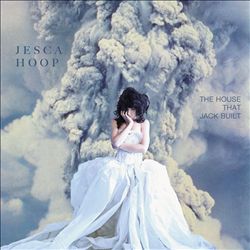
    Jesca Hoop makes albums rooted in skewed folk-pop. Her melodies, however hummable many of them are, refuse to resolve neatly, and her arrangements often unfurl with a private logic.  The House That Jack Built features, for example, Ode to Banksy, girl-group pop by way of jesca_hoop_jackrapid Madchester drum shuffle, where the chorus hook is a key change that’s exactly one bar long. Or, much darker, there’s Deeper Devastation‘s soft guitar, distant theremin-like wailing, slow cavernous drums, and African-style call-and-response vocals that feel as holy as they are imperfectly tuned. When I’m Asleep is perky and almost power-pop, but if that’s not a quick-fingered yet droney sitar and hand drums in the background, along with metallic clanking, it’s a good imitation. Moon Rock Needle is even perkier, constantly threatening to outrace itself. But it features a mechanical cackling dog and mad-scientist percussion worthy of Tom Waits. Even the essentially straightforward single Born To puts the vocals through various odd production and mixing tricks, and suspends its chorus on a fourth in what isn’t even the song’s home key.

    That’s without mentioning the extraordinary Peacemaker, which turns Aristophanes’s great play “Lysistrata” — in which the title character ends the Peloponnesian War by persuading the women of Greece to withhold sex until peace is achieved — into one of the most intensely, sinuously sexy songs I’ve ever heard; a song that persuasively clarifies the stakes. Jesca Hoop has an interesting mind, one especially tuned to relationships. Hospital (Win Your Love) is about exactly that: starting with the parental attention from a childhood broken bone (“Sister Jen, she doesn’t exist til when I need something/ she’ll bring me ice creams”) and carrying the lessons forward (“Oh my old friends, I’m voting you in or out/ You envy me, I walk through red carpet to my cast signing … Now come on, you cunt, come and hit me/ there’s no kind of attention that a black eye wouldn’t get me”).

    Ode to Banksy insists “My pencil is dull… there’s no wheels a-turning in my skull”, putting all her dependence on “My mystery man, so provocative, so underground… You come invisible to paint the town”. But her head’s active enough that she runs him an agenda from graffiti on billboards, to nuclear terrorism (referencing the bombs dropped on Hiroshima and Nagasaki: “Ring around the Fat Man, arms around Little Boy/ Daddy gave me this fantastic toy/ Let’s go and find out what it can do/ Oh oh oh/ Ashes ashes we all fall down/ There’s nothing standing for miles around”). The song’s final vandalism is “Tiananmen Square, Mickey D’s in the air”; it’s probably a comedown in scope, but she doesn’t say.

    D.N.R., sad and straightforwardly folky, is simpler, a loving tribute to her widowed father after “No antidepressant of any sort/ could change the weather report/ When the wind chill factor was high, he took the whole bottle down/ He’s got his paperwork now: D.N.R.” (Do Not Resuscitate). But even as she sings of who will take care of the dog, she doesn’t overlook the larger implications of suicide: “Jesus wants me for a sunbeam, he raised me up right/ but being raised in the light of Christ adds insult to injury that night”.

    I won’t deny the validity of Hoop’s darkest thoughts: her songs can be disturbing, as can the world they discuss. But I will say her records aren’t depressing. They’re too interesting for that, too playful. “You cannot trust a human being to do the right thing”, she sings: true. But you can trust one to be distracted by the nearest shiny thing. And you can trust *this* one to fit said shiny thing into her thoughts, and her record, somewhere.

    – Brian Block

    To see the rest of our favorites, visit our Favorite Albums of 2012 page!