web analytics

Tag: Crowded House

  • Stephen King’s “The Stand”: An Epic Showdown of Good vs. Evil (Music)

    Though I’m sure he’s done okay for himself as a novelist, I’ve always believed that deep down inside, Stephen King really always dreamed of being a rock star. Or barring that – there is, after all, the matter of his looks – a rockin’ rollin’ DJ in the 50s mode, when local DJs were bigger rock stars than the rock stars themselves. When I was in junior high and high school, I spent a lot of time reading Stephen King’s books and one of the things I remember loving – in fact, the one thing that drew me to his books long after the stories themselves ceased to interest me was the way he worked music into them. (I loved a lot of Robert Cormier’s books for the same reason – he introduced me to the Stones’ “19th Nervous Breakdown” via his novel I Am the Cheese, at a time when those old British fogies were bogged down in crud like “One Hit to the Body” and nothing could seem less cool than a Rolling Stones song to a 10-year-old whose musical memory ended somewhere between Andy Gibb and Captain & Tennille.)

    A lot of times, King’s inner DJ came out in the epigram (or three) at the beginning of each book (and maybe each chapter of the book too) – a stanza from Dylan, a couplet from CCR, etc. But Stephen King was also never above letting his characters give his inner record critic a voice. And it was a critic of the old school “rockist” variety. I can’t remember exactly which book it is (The Tommyknockers?), but I remember feeling awfully put out when one of his characters thought to himself, upon hearing T. Rex’s “Bang A Gong”, that Marc Bolan was better off dead in a world where the Power Station could cover his glam rock anthem.
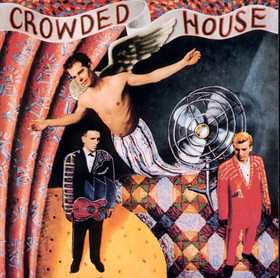
    Good
    Yesterday, the Syfy Channel devoted its entire programming schedule to movies (or rather, made-for-TV miniseries) adapted from Stephen King stories, and I am sad to report that I spent very nearly 8 hours (interrupted only by a quick trip to Pizza Hut) watching “The Stand”, an epic in four two-hour parts starring Rob Lowe as a deaf mute, Gary Sinise as a reluctant prophet, and Molly Ringwald as a Mary figure – hers is not a virgin pregnancy, but the baby’s father was killed in a massive superflu plague that wiped out most all of humanity. Like the massive 1978 novel it was based on (made even massiver when a “complete and uncut edition” was published 12 years later), the miniseries is a pulpy vision of an apocalyptic showdown between good and evil in the Great American West, with the devil (incarnate as a man called Randall Flagg) setting up shop in Las Vegas (surprise!) and the righteous, led by a mystical, 106-year-old black woman who plays guitar and sings hymns on her porch (didn’t see that one coming, did you?) flocking to a land of milk and honey called Boulder, Colorado.

    Stephen King wrote the tele-play for the series and there are times when I wonder if he was being intentionally unintentionally hilarious with the dialog. Bill Fagerbakke (better known to folks my age as that big dimwitted Dauber from Coach, and to the kids of folks my age as the voice of Patrick Star) gets the best worst line when, playing to type as simpleton-with-a-heart-of-gold Tom Cullen, he laments (I’m paraphrasing), “I hate being a retard.” Several times, I got the feeling that this movie would be so much more fun if I could watch it in the same room with Sarah Palin. Stephen King even makes a cameo!
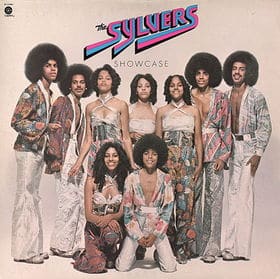
    Evil
    And then I noticed that Stephen King’s inner rock critic also makes a cameo. In the opening scene of the second part, we see Mother Molly Ringwald listening to Crowded House’s “Don’t Dream It’s Over” on a turntable. Meanwhile, another one of his heroes is Larry Underwood, an aspiring musician who carries a guitar on his back. In one scene, he sits on the hood of a car singing 60s folkie Barry McGuire’s “Eve of Destruction” while Des Moines burns in the background. On the other hand, here’s one Harold Lauder, an insecure nerd (and unwitting minion of Satan – you can tell by his studded leather jacket) who’s never recovered from high school, plotting a terrorist attack on the “Free Zone” to exact revenge on Molly Ringwald for rejecting his affections in favor of Gary Sinise. And what’s Harold playing (on a cassette, no less!) while he’s building his bomb in the basement? The Sylvers’ “Boogie Fever”. The message of the movie couldn’t be clearer! Acoustic folk rock singer-songwriters, good. Disco: evil. Whoever said that rock n’ roll is the devil’s music?

    Then again, the message gets muddy during the climactic final battle between the forces of good and evil. Larry Underwood, one of three emissaries from the Free Zone sent to represent in the final battle against Randall Flagg in Las Vegas, is first arrested, and then besieged by a bloodthirsty mob. At one point, one of Flagg’s henchman confiscates Larry’s guitar and smashes it to bits, shouting “Disco is dead!”

  • Respect Due: Crowded House

    crowded-house


    About two summers ago, I found myself in a place where if you’d have told me a year before that I’d be there, I’d have laughed in your face. Where was this place? At a Crowded House concert being held at a masonic temple in New York City. My disbelief wouldn’t have resulted from the location of the event, and it certainly wouldn’t have been because I dislike Crowded House. Quite the contrary, the New Zealand-based band has been a favorite of mine since I was a teenager., and their music has become more meaningful to me over the 20 or so years since. However, when the band split in the mid Nineties, the breakup had an air of permanence that I thought was never going to be breached. The exclamation point seemed to jump onto the end of Crowded House’s sentence when drummer Paul Hester committed suicide a couple years back. However, Neil Finn and company hit the road in support of 2007’s comeback effort “Time on Earth”, dedicating the tour to Hester’s memory, and that’s how I found myself in a corner of this temple, listening to the audience sing back the indelible chorus of 1986’s “Don’t Dream it’s Over” with tears streaming down my face. It was one of those transcendent musical moments that can’t be done justice with mere words.

    The music that Crowded House made  lends itself to those types of emotions very well. Their songs straddle that very thin line between happy and sad. Melancholy yet uplifting songs like “Better Be Home Soon”, “Distant Sun” and “Weather with You” should be standards-it speaks very strongly to the complete lack of taste most Americans have in music that they aren’t. Of all the songwriters and singers in the world who have had the tag “Beatle-esque” used in reference to them, Finn and Crowded House came the closest of any band to earning it. Finn and his brother Tim preceded (and foreshadowed) Crowded House’s excellent work as members of Split Enz and have continued together (they’ve recorded as a duo and Tim even joined Crowded House for a short time), separately and even via offspring-Neil’s son Liam released an excellent album, “I’ll Be Lightning”, last year.

    Maybe the best description of Crowded House’s music and its’ emotional impact comes from the liner notes of their anthology, “Recurring Dream”. Peter Paphides writes: “British humourist Spike Milligan once recalled how he was in the throes of a nervous breakdown. Alone in bed and crying uncontrollably, he noticed his baby daughter walking towards his bed, arms outstretched. In her hand was a glass of water. She wanted to give something. Something to make it alright. This was all she could find. A while ago, someone asked me to sum up the music of Crowded House. For some reason, I responded with that tale-perhaps because it was simultaneously the saddest and most uplifting thing I’ve heard”.

    You also might want to read


  • Crowded House, Rage Announce Reunion Plans

    Two bands gone from the public eye for years are due for comebacks in 2007 according to media reports. Crowded House, the popular band from Down Under, and Rage Against The Machine, a group often collapsing into a melange of sound, have both announced plans to reunited and tour.

    Rage, the LA-based band that broke up in 2000, had #1 albums on the Billboard charts in 1996 and 1999. The band fared less well with singles play (but so did Led Zeppelin), charting only a minor hit with Guerrilla Warfare from 1999’s The Battle of Los Angeles. The song also won a Grammy for Best Hard Rock Performance, the second of two Grammys the band took home.

    Crowded House, built from the remnants of Split Enz, was an older band that was a smash throughout New Zealand and Australia. Their success translated to Europe, especially England, but never enjoyed the album success or Grammys that Rage pulled in with the exception of Don’t Dream It’s Over, a worldwide hit that reached #2 in the U.S.

    Spinning In The CD Player Today
    K.T. Tunstall’s Eye to the Telescope has finally wound its way up to the top of the stack. Forget Black Horse and the Cherry Tree. This Scot can do it all.