web analytics

Blog

  • Feels Like Home

    Feels Like Home

    Randy Newman
    Randy Newman

    Feels Like Home is a lovely song written by Randy Newman. Who sang it best?

    This morning, I was writing a review of Feels Like Home, an album Linda Ronstadt released in 1995. I was left with a somewhat mediocre impression of Ronstadt’s version of the title song, which I had originally heard sung by Bonnie Raitt on the soundtrack of Randy Newman’s Faust. Linda Ronstadt had also performed on that album, which featured an all-star line up of singers, including: James Taylor, Don Henley, Elton John, and Randy Newman. I used to listen to Newman’s Faust all the time when it first came out and really enjoyed everyone’s performances. Bonnie Raitt played sort of a loose woman named Martha, while Ronstadt’s character, Margaret, was sweet and virtuous. It seemed to fit. And yet, Bonnie Raitt’s loose character, Martha, sang the very sweet number “Feels Like Home”, a song that is becoming sort of a wedding standard.

    In my opinion, “Feels Like Home” is a really great song, even though I read somewhere that Randy Newman didn’t think it was particularly special or meaningful. The lyrics are about a relationship that makes the singer feel very comfortable and “at home”. It’s kind of the way I feel about my husband, Bill, who manages to make me feel beautiful and loved no matter how batshit crazy I get at certain times of the month. In fact, I even recorded my own version of this song for Bill on SingSnap.com. He doesn’t mind. He’s had to listen to me sing ever since we got married over ten years ago. Besides, he knows when I sing this song for him, I sing it with heartfelt devotion and true LOVE…

    But what about the other singers? I can think of six different interpretations of this one song. They’re all different and, I’m sure, each version speaks to different people in a different way. So today, I want to compare and contrast the many stylings of Randy Newman’s “Feels Like Home”.

    Version #1- Randy Newman

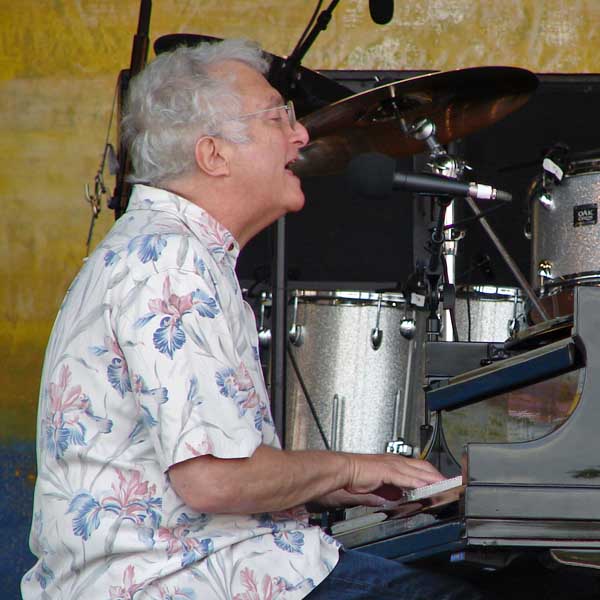
    Randy Newman wrote this song and he included it on his 2008 album Harps and Angels. Bill gave me that album as a Christmas gift one year, knowing that I really enjoy Randy Newman’s music. No, he’s not the greatest singer in the world, but he’s witty and charming and his piano playing has a certain recognizable character. Here’s his version of his song, “Feels Like Home”.

    Listening to this, I hear that Randy Newman’s quirky vocals are not particularly tuneful. And yet, there’s something kind of moving about the way he sings this song. He sells it with his quirkiness. I also like the key he sings this in and the subtle orchestral backing to his piano. I think songs often sound better when they’re sung by the person who created them. Randy Newman knows what he was thinking of when he wrote this. Still, he wasn’t the first one to make “Feels Like Home” popular.

    Version #2- Bonnie Raitt

    Bonnie Raitt sang this for Faust and here she is, singing it on Rosie O’Donnell’s talk show circa 1997.

    I think Bonnie Raitt’s vocals are very warm and heartfelt when she sings “Feels Like Home”. I like the way she keeps it sweet and simple. And of course, this is the very first version I was exposed to, so it has a special place in my heart. On the other hand, if you are familiar with Newman’s Faust, you realize that this song is not as sweet as it seems, especially given the character of Martha, who was a bit of a ‘ho. Martha was being deceptive when she sang this love song for Faust; it was intended to trick him. Seems kind of funny, now that it’s a wedding standard.

    Version #3- Linda Ronstadt

    Linda Ronstadt covered this song on her 1995 album Feels Like Home.

    Linda Ronstadt sings this in the same key Bonnie Raitt did and has help from Emmylou Harris on the chorus. I think she did a nice job on this song, though it seems a bit bloodless and sterile to me. Obviously, it’s about perfect in terms of Linda’s singing, but I don’t get the same sense that Linda was as into it as Bonnie was. But that’s just me.

    Version #4- Chantal Kreviazuk

    Canadian singer-songwriter Chantal Kreviazuk sang a version of “Feels Like Home” that appeared in the films The Notebook, How To Lose A Guy In 10 Days, and The Terminal, as well as the television show, Dawson’s Creek.

    I must confess I first heard this version of Randy Newman’s song when I saw the film The Terminal. While I love the key she sings this in, I’m not that wild about Chantal Kreviazuk’s take on “Feels Like Home”. She has a very thick accent that is distracting to me. Still, this arrangement turns the song into an emotional love song and I can see why so many people are using it at weddings.

    Version #5- Edwina Hayes

    Edwina Hayes’ version of “Feels Like Home” was used in the soundtrack for the 2009 film, My Sister’s Keeper.

    English singer-songwriter Edwina Hayes sings a gorgeous version of “Feels Like Home”. I have goosebumps when I hear her sing this song, even though I didn’t actually see the film it was featured on. I like the simple guitar arrangement. This makes me want to seek out more music by Edwina Hayes. As this ends, I have a lump in my throat, which means it got to my heart.

    Version #6 Raul Malo and Martina McBride

    This duet version appeared on Raul Malo’s 2006 album, You’re Only Lonely.

    I heard this version for the first time this morning. I think Raul Malo and Martina McBride both have beautiful voices, but I don’t really feel like they have a lot of chemistry on this song. When they sing it, I don’t believe it. Still, it’s technically very good. I’m not that familiar with Raul Malo, who is the frontman for The Mavericks and a member of Los Super Seven. I might have to seek out more of his music, too.

    The verdict

    I think my favorite version of “Feels Like Home” is probably still Bonnie Raitt’s, but that might be because her version was the first one I ever heard. I also really love Bonnie Raitt’s voice, which sounds so real and warm to me… like it comes from someone who has really lived. I’m very impressed with Edwina Hayes’ version of “Feels Like Home”, though the sheer perfection of her vocals is almost more than I can stand. Randy Newman’s version, while technically imperfect, touches me because the words and music are his and he knows just how he wants to sell it. I also love the way he plays piano.

    Ordinarily, I love a lot of Linda Ronstadt’s music, though I’m left a little cold by her version of “Feels Like Home”, even though she had some help from Emmylou Harris. And while Chantal Kreviazuk has a lovely voice and I love the key she sings “Feels Like Home” in, I am distracted by her thick accent and breathy emotion. On the other hand, I think her reading is probably what really put this song on the map. Raul Malo and Martina McBride turn “Feels Like Home” into an appealing duet, though to me, the chemistry between them is a bit lacking.

    My version

    You get extra credit if you listen to my version of “Feels Like Home”. And there’s really no need to compare it to those sung by professionals!
  • Songs that signal closing time…

    Songs that signal closing time…

    Time to go home?
    Time to go home?

    Songs that signal closing time are meant to get people to get up– and get OUT– into the world…

    When I was younger, I had a series of jobs that required me to work evenings. One job I had was working at a men’s clothing outlet, where I usually worked until closing time. Invariably, people would show up a few minutes before closing time to do their shopping. As I tried to get things straightened up for the end of the day, they would leisurely shop for pleated pants and matching sweaters, oblivious to my desire to call it a night.

    Years later, I took a job waiting tables, where we’d have people show up a few minutes before closing time for late night noshing or perhaps a scrumptious dessert. Unlike a lot of my peers, I was less concerned about making an extra tip or two than I was about getting home. I seem to have been born without the business gene. Actually, those late night diners usually weren’t so bad. Many of them realized they were showing up late and we were about to close. But every once in awhile, there would be a lovestruck couple who would sit in the Garden Room of our restaurant and gaze passionately at each other while S-L-O-W-L-Y sipping their wine. They were oblivious to all the people they were holding up with their extended date. We’d stand around, side work all done, waiting for these people to pay their check. One couple was particularly clueless and our chef actually turned the lights down on them to give them a strong hint that it was time to GTFO.

    Anyway, the other day I was sitting at my desk, listening to the 11,000 plus songs on my iPod, when a song from the late 1990s popped up. It was a song by Semisonic called “Closing Time”. I remembered it was played on the very last episode of the original incarnation of Melrose Place, a trashy 90s era primetime soap that I was hooked on back in the day.

    The lyrics took me back to those many evening nights I waited for people to finish up and hit the road. This song brings more to mind barflies than restaurant patrons, but the sentiment is the same.

    Lyle Lovett also has a song called “Closing Time”, though its mood isn’t nearly as much fun as Semisonic’s. Lyle Lovett’s “Closing Time” is a gentle ballad, with acoustic guitar and piano and Lovett’s sweet tenor. His song is more about a musician saying goodnight to an appreciative crowd and his roadies.

    Speaking of appreciative songs for roadies, how about Jackson Browne’s “The Load Out”?

    This is a great song to end a night to… whether you’re at one of Jackson Browne’s shows or trying to close up a restaurant.

    While I’ve never heard Supertramp’s “Goodbye Stranger” used as a closing song, it occurs to me that it might make a good one, though I’ve always suspected this song was really about Supertramp’s Rick Davies and Roger Hodgson becoming increasingly annoyed with each other to the point of the band’s breakup.

    Back in the early 90s, when I’d frequent karaoke night at a bar near my college, the karaoke jockey would signal the end of the evening by playing the theme song for Rawhide. I always thought that was pretty clever, since it got the point across without resorting to anything offensive. On the other hand, I don’t have any issues with using profanity if it’s effective. Another karaoke jockey I knew introduced me to Red Peters’ brand of comedy with this song…

    The first time I heard this song, I about peed in my pants laughing. I can’t tell you how many times I had these very same thoughts running through my mind as I took care of the last stragglers sitting in my station. There’s a good reason why I don’t wait tables anymore. But I can still laugh at the memories and anyone who has spent an evening dealing with drunks or overly demanding people can relate.

    If you want to be elegant about calling it a night, you could always play “Time To Say Goodbye” by Sarah Brightman and Andrea Boccelli, otherwise known as “Con te partirò”.

    Personally, I’m partial to the way Red Peters does it, even at his live shows. As a side note, I once played this at a party I threw because I wanted a couple of guests to hear it. They took it as a hint that I wanted them to leave. Luckily, they later forgave me. Be very careful how you use “The Closing Song”!

    And with that, I bid you adieu until my next post…

  • #9 album of 2012 – In Somniphobia by Sigh

    #9 album of 2012 – In Somniphobia by Sigh

    Artist: Sigh

    Album: In Somniphobia

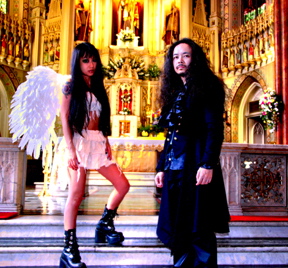
    It may be me showing my age, but I choose never to hang my reviews on your assumed knowledge of today’s fragmented genres. For one thing, the huge, goofy grins I get playing Sigh‘s In Somniphobia  have nothing to do with, e.g., All Music Guide’s claim that Sigh began in 1993 as a founder of Japanese black metal with thrash leanings, then evolved towards extreme sigh_japanese_metalmetal with avant-garde leanings. But even if that description did feel true, I’d want to start you somewhere more familiar, part of shared culture.

    For Sigh, to me, that’s easy. Thirty years ago, anyone who cared to could keep up with heavy-metal, and millions did: it sounded triumphant, like Deep Purple, Judas Priest, Iron Maiden, Van Halen (wagging their dicks to Eddie’s glorious pseudo-classical riffs), and Andrew Lloyd Webber’s Cats (uh, work with me on this one, k?). Sigh play faster, have a better/ fiercer drummer (Junichi Harashima), and replace the singers with grunting trolls. But they also take those old tropes, and infuse them with endless cascades of melody. Despite the vocals, In Somniphobia is the most tuneful heavy metal album I’ve heard — and quite possibly, despite lyrics about enslavement and eternal torment and “nocturnal visions invad[ing] my sanity”, the most joyous. If Ludwig van Beethoven had composed his symphonies for modern metal bands, Sigh would get the parts marked “vivace” and “allegro con brio”.

    The most traditional circa-1980 riffs and solos here are on Purgatorium, the Transfiguration Fear, and Fall to the Thrall. The textures behind the loud guitar-/bass/drums are varied, though. Purgatorium has violin, elegant enough to play for customers at fancy restaurants; sprinklings of piano; and organ fanfare. Transfiguration Fear features hand-drums, hand-claps, spooky theremin whistling, female Viking backup singers, and a poppy saxophone solo by full-time band member Dr. Mikannibal. Fall to the Thrall also has thrashy Metallica Master of Puppets-style sections, but balances them with passages of romantic lead piano for the guitars to play shiny tunes alongside.

    Stuff like that would already avoid metal’s most frequent failing for me, the part where a band’s songs blend together (an issue even Sigh faced on my prior exposure to them, the darker, heavier, and otherwise quite impressive Scenes from Hell (’10)). But those songs understate how many tricks Sigh have mastered. Somniphobia‘s riffs are meaner, more angular, elevated by singing orcs and hints of saxophone squall, before breaking into a slow-dance for Mexican robots and airport P.A. announcers. L’Excommunication a Minuit has a pulse-racing propulsion that reminds me the “Mission Impossible” theme, peppy sax, and cackling birds. Far Beneath the In-Between, in 3/4 time, is truly dark and howling for much of its length, but can’t resist a glorious melodic refrain that feels like a bar mitzvah band after the part where all the adults have had time to get drunk. (Assuming the adults are old-time Jewish dwarf miner/ warriors, sure.) Amnesia, also in 3/4 time with lots of sax and piano, would be sexy-time music in a movie, at least the kind of movie where the sex scene is intercut with the gathering outside the building of the specialist-team hunting for (or planting) explosives. Amongst the Phantoms of Abandoned Tumbrils — dusky and dramatic, soaring with bells and synth-birdcalls when a lift is needed, with too a decent synthesizer replacement for harmonica — would be perfect for improving for the 55% of Peter Jackson’s “Lord of the Rings” movie trilogy that’s long, long, long shots of characters walking. Equale doesn’t sound to me like Deep Purple, Sting, Dire Straits, and Slayer jamming together with a harpsichordist on variations from baroque sheet music, but only because — as I don’t think that collaboration would — it flows smoothly, like the most obvious thing in the world.

    I review Sigh as a heavy-metal fan (although less of one than my 2012 countdown must imply; 2012 was, for me, an *amazing* year for the genre). Heavy metal fandom is certainly useful for appreciating it: the riffs, the gleaming solos, the blastbeat drums. It’s useful for accepting the shredded vocal croaking as amusingly beside-the-point, for hearing the giddiness in routine lyrics like “Bring out your dead withered skin/ Bring out your dead languid limbs”. Maybe it’s even helpful for appreciating the basic stupid joy of, on separate songs, “I live! You die!”, “You will die tonight!”, “Your fate is on fire, the trap behind you!”, and — for variety — “Kill me now!”.

    But I’m not kidding about Beethoven. In Somniphobia is a huge burst of melody-driven expressionism. It’s a burst that at least seems informed by the classics. Ludwig didn’t live to experience electricity, amplifiers, distortion pedals; he put his grooming into powdered wigs instead of flowing, chest-length natural hair dyed Manic Panic yellow. I think the poor guy missed out. And I think it’s at least 50/50 that he’d agree with me.

    – Brian Block

    To see the rest of our favorites, visit our Favorite Albums of 2012 page!