web analytics

Blog

  • #24 album of 2013 – the Root, the Leaf & the Bone by Manning

    #24 album of 2013 – the Root, the Leaf & the Bone by Manning

    Artist: Manning

    Album: the Root, the Leaf, and the Bone

    Manning, the band led by songwriter/ singer/ many-instrumentalist Guy Manning, play long, evolving, mostly very pretty songs notable for (1) Guy Manning’s Ian Anderson (Jethro Tull)-like voice and melodies and (2) lots of opportunities for different instruments (flute, Manning_Root_Leaf_Boneclarinet, sax, piano, rock organ, violin) to get little show-off moments. The Root, the Leaf, and the Bone is only the second of their albums I’ve heard, meaning I was startled to discover it’s their 13th record of original songs since 1999. I like it a fair bit better than 2004’s (good) a Matter of Life and Death, but all I can say of the Root, the Leaf, and the Bone‘s place in the Manning discography is that their 2004 and 2013 incarnations are quite obviously the same band, in a way that some 9-year separations of Cure or Rush or Radiohead albums might not be.
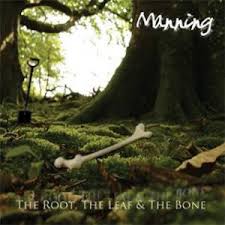
    I’m dodging the words “progressive rock” because surely that term means “music that makes my wife say ‘Please turn that off’”, and Manning don’t annoy her. Guy’s handsome voice is a scruffy, manly British baritone; the songs are mostly in 4/4; the solos don’t show off *that* much; and the lyrics make sense. The one radio-length song here, Decon(struction) Blues, is as catchy, rocking, and flute-driven as any of Jethro Tull’s Classic Rock hits, and the longer tracks fill out their Tull melodic frames with the pleasant stateliness recalling early, Peter Gabriel-led Genesis. I learned of this new Manning album from ProgArchives, though, and its title track is 12 minutes of heavy segmentation; it’s one thing for me to argue that they deserve a fair chance from skeptics, but there’s no point in denial. It’s a classic-rock friendly, and pastoral-folk friendly, version, that’s all.

    I’ll focus on the lovely Autumn Song as my example of how Manning operate. Lyrically it’s about the season when plants, still vibrant, prepare for a season of bleakness and sleep: “The meadow blooms are waning, the hedge rows limply thin/ displaying the empty nests, where the birds were held within/ How easy for time to slip away”. Implicitly, it’s also about death, but “Don’t get depressed too soon/ we all are alive and in tune/ remember this is just an Autumn Song”.

    * It begins with two verses of a simple, thoughtful piano ballad, soon accented with saxophone, then joined by shimmering, oscillating high synthesizer, then too by a flute on the chorus as the drum-beat starts pushing it along.

    * Two more ballad verses are centered on that flute and sax (oboe? clarinet? the tone feels in-between to me). The second chorus ends on a slightly unnerving note, and a drum-and-several-woodwind instrumental slips towards dark carnival territory.

    * A multi-vocal bridge, with sax in smooth-jazz mode, brings the tone from questioning back towards confident.

    * Two more verses, louder than before, center on piano and swiftly-picked mandolin. Now the chorus remixes different instrumental tones from before; it re-uses the odd-note ending but moves straight into a confident re-use of the vocal bridge.

    * The song’s final minute, of seven, is instrumental, pretty, and reflective, with Guy crooning absently a couple of times: you don’t expect a sudden blooming of new ideas as a song about autumn flows towards winter, but there’s still time to wander around noticing nifty features.

    The Forge starts out with a harsh anvil percussiveness, and more forceful organ, but on the whole it’s still gentle, alternately jazzy and full of Manning @ Int'l Prog Rock Showrousing group vocals. It celebrates how “the bellows and furnace dance in furious harmony/ wind and flame on a bed of earth in elemental symmetry”, more than it mourns their replacement by assembly line and time-study men; the organ turns winding and sinister when the song comes ’round to the latter’s ascendance, but the sax still tootles along pleasantly. The expansive Old School feels very Supertramp Crime of the Century to me, although its lyrics are a much better-written version of Another Brick in the Wall. The bouncy, fiddle-driven, group-chorusing Huntsman and the Poacher is the 2nd-shortest, 1st-or-2nd-liveliest, and 2nd-most-radio-plausible song here — it eventually fills out with organ, cello, and clarinet arrangements, though, too nicely composed and developed to pass off as a minor deviation. Mists of Morning Calling to the Day is full of percussive oomph and Guy Manning’s loudest, most impressively breath-control-testing vocals.

    The Root, the Leaf, and the Bone makes the case for Jethro Tull as an important, inspiring band, and for pianos, violins, woodwinds, and both paganism and guild-craftsman pride as natural parts of classic rock. I am sympathetic to these arguments. But it’s the thoughtful loveliness of the music that counts.

    – Brian Block

    To see the rest of our favorites, visit our Favorite Albums of 2013 page!
  • Icky songs from the 80s…

    Icky songs from the 80s…

    Just the other day, while riding in the car with my husband, I was reminded of just how many icky songs there are out there…

    You’d think in this day and age, as Miley Cyrus twerks with Robin Thicke and shows us her tongue, people would have a rather high “ick” tolerance. And maybe they do. I can’t speak for everyone, especially as I’ve become middle-aged and decidedly uncool. Actually, I don’t think I was cool even when I was a young lass, but that’s beside the point. What I’m thinking about today is icky songs from the 80s. There were a lot of them back in the day.

    I started thinking about icky songs while listening to my iPod. A song from 1983 started playing. It was Kenny Rogers, back when he was still more or less “flavor of the month” and he was singing a song called “Scarlet Fever”. You’d think this was a ditty about a devastating communicable disease, but actually it’s about an underaged exotic dancer named Scarlet. Kenny sings the part of a horny middle aged man who went to the club where she was performing. There he was, lusting after a woman who looked 25, but he was told that she was just 16. The lyrics suggest that the guy just watches and appreciates her dance moves, but I think we know what he did when he went home.


    In 1983, this song was okay… but today, people would probably be scratching their heads and saying, “Eeeew.”

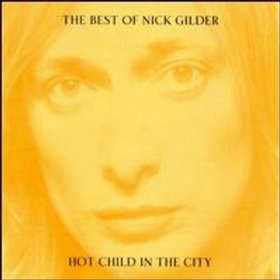
    After listening to this happy go lucky song about a middle aged man lusting over a teenager, I started thinking of other icky songs. One that popped into my head was Nick Gilder’s 1979 hit, “Hot Child In The City”. This was a one hit wonder about a guy who notices a hot young thing, loose and alone on the streets. I loved this song when I was a little kid, but now it kind of makes me cringe a little. It still has a great rock beat, but it’s basically a song about a mysterious girl who makes grown men lust after her.


    Keep your mind out of the gutter, you perverts!

    Sheena Easton had a hit song in 1984 called “Sugar Walls”. I always thought this song was kind of nasty. It was written by Prince during his nasty years and supposedly refers to the walls of Sheena’s vagina.


    This is a far cry from “Morning Train”, isn’t it?

    Benny Mardones had a hit with his song, “Into The Night”, which originally hit the charts in 1980, but made a comeback in 1989. I don’t know why this song became popular again since, to me, it sounds very much like a hit from 1980. But people apparently loved it, despite the lyrics about a guy lusting after a sixteen year old.


    It should be noted, Benny Mardones was 33 years old when this song originally charted. That doesn’t mean he was chasing teenagers, but still… eeew!

    The Police had a famous song in 1981 about a teacher tempted by a teenager… It’s one of their best songs in my humble opinion. Granted, The Police aren’t the ones chasing the young girl, though Sting was a teacher at one time. Perhaps this song was inspired by those days he spent in the classroom. In 1986, it was remade into an equally creepy slower version. For awhile, I liked the 1986 version better, but then I wised up.


    Lots of raw testosterone in this video…

    The Police had another creepy but awesome song in their 1983 hit, “Every Breath You Take”. That song was presumably about a woman who was fully grown, but the subject of a man’s relentless obsession.


    This song never gets old.

    In contrast to The Police and their brand of raw maleness, we have George Michael’s cool, obsessive, and slightly creepy number from 1987, “Father Figure”. I always liked this song, even though it’s definitely kind of icky.


    This video is high on estrogen… and rich with supermodels… George Michael was very much into sex in the 80s.

    And finally, there’s Madonna’s “Open Your Heart”. On the surface, this song doesn’t seem that icky… It’s the video that kind of skeeves me out. A young boy watches as Madonna gyrates and spins tassels on her boobs. Then, at the end of the video, they seem to strike up a playful friendship.


    Compared to “Sugar Walls”, maybe this is pretty tame… Still, I wonder how people would react if Madonna were an exotic male dancer and a young girl was in the role of the voyeur.

    Despite the ickiness of some of these songs, I like all of them. I guess that makes me a pervert.

  • Remembering Gerry Goffin…

    Remembering Gerry Goffin…

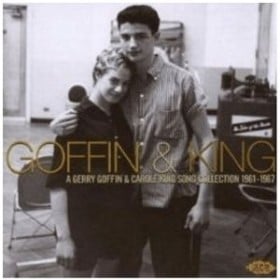
    The world lost a great lyricist yesterday. Today, I’m remembering Gerry Goffin.

    Carole King is one of my favorite singer-songwriters. Since I was a small child, I’ve loved her very personal music which is often accompanied by meaningful lyrics. Because I’m such a Carole King fan, I follow her on Facebook. Yesterday, she posted that her ex husband, the father of her two daughters, and former song writing partner, Gerry Goffin, died of natural causes. He was 75 years old.

    During his lifetime, Gerry Goffin wrote the lyrics for seven Billboard Hot 100 chart toppers and a total of 59 Top 40 hits. Though Goffin was best known for writing hits with Carole King, he also worked with some other big names in the music business, including: Russ Titleman, Barry Mann, Carole Bayer Sager, and Michael Masser. Goffin was also one of the first people to recognize Kelly Clarkson’s talent as a singer. He hired her to sing demos in 1995, years before she became famous for being the world’s first American Idol.

    I don’t want to write too much about his personal life, because honestly, I don’t know much about his personal life. What I know about are his songs, which could serve as a wonderful soundtrack for people who came of age in the 1960s, 70s, and 80s. In fact, I have an interesting anecdote related to Carole King and somewhat loosely to her first husband, Gerry Goffin.

    Back in April 2010, my husband Bill and I were on our very first cruise on SeaDream I, a small luxury mega yacht. It was a five night cruise in the Caribbean and, though we are definitely not financially well off people, it was populated by some folks who have ties to show business. One night, they had karaoke. It was very poorly attended. I think maybe six people showed up, most of whom didn’t want to sing. Since I love singing, I was game. I sang “I Feel The Earth Move”, which is a song that was written by Carole King alone.

    When I was finished singing, a lady approached me, along with a couple that she introduced as her parents. She complimented me on my voice and asked if I was in the music business. I said I was a housewife. We ended up hanging out for awhile and she told me that her husband works with Joan Jett. I later met her husband and was left with the impression that maybe he was in Joan Jett’s band. Her husband was wearing a USO baseball cap and told me he appreciated Bill’s service in the Army. Later, they had a brief conversation and the guy gave Bill his card. When we got home, I looked them up on the Internet and it turned out that the couple were Joan Jett’s managers and they were pretty much responsible for helping her to launch her career.

    Ever since then, anytime I listen to a song by Carole King– and so many of her best songs were co-written by Gerry Goffin– I think of meeting my friend Meryl and her husband, Kenny. In fact, when I shared Carole King’s status update about Goffin, Meryl shared in the sadness with me.

    One of my favorite songs penned by Gerry Goffin and Carole King is “Up On The Roof”. It was originally recorded by The Drifters. My favorite version is, of course, the one James Taylor recorded in 1979. I think it was the first song I ever heard by JT and it made me fall in love with his music. Who hasn’t fantasized about getting away from it all, even if it’s only for a little while, up on the roof?


    Gerry Goffin’s lyrics are so relatable in this song about escaping it all and gazing at the stars with someone special.

    Gerry Goffin and Carole King wrote “Take Good Care of My Baby”, a song that was a hit for Bobby Vee and was later used in lots of commercials… especially for baby products.


    Catchy, isn’t it?

    He also helped write a huge hit for the late Whitney Houston…


    Whitney Houston singing Goffin’s lyrics at the 1986 Grammys… I have always loved “Saving All My Love For You”.

    And one for Glenn Medeiros, popular when I was in high school…


    I confess, I didn’t know Gerry Goffin helped write this song until this morning…

    Another one of my favorite songs by Gerry Goffin is another one he wrote with Carole King… It’s been covered by so many people, myself included.


    Carole King sings “Will You Love Me Tomorrow”, her breakthrough hit with her ex husband, Gerry Goffin…

    The Shirrelles made “Will You Love Me Tomorrow” famous, but I love the way Carole King does it, especially when she’s backed up by James Taylor and Joni Mitchell. And I love the words, which captures the feelings of any young woman unsure of her paramour’s love for her. Obviously, the song resonated with a lot of people besides me.

    Today happens to be my birthday and it hasn’t gotten off to the best start. It’s a little sad to be listening to these great songs by Gerry Goffin and knowing that there won’t be any more from him, now that his work on Earth is done.