web analytics

Blog

  • Let the holidays begin!

    Let the holidays begin!

    Thanksgiving is over! Let the holidays begin!

    Okay, I know… Thanksgiving is part of “the holidays”, but as I was stressing like a madwoman over Thanksgiving, I feel like I can relax a little now. I’m not one to get as wrapped up in Christmas music as some people do, but I will admit to having some favorite albums for this time of year. Last Christmas, I made a huge holiday music mix that had songs by everybody from Sting and James Taylor to Kathleen Battle and Eden’s Bridge. My mix has bluegrass, classical, rock, pop, soul, and everything in between. What can I say? I have very eclectic tastes.


    Bruce Springsteen’s “Santa Claus Is Coming to Town” was recorded in 1975, but was pretty popular in the 80s…

    Having come of age in the 80s, a lot of my favorite music comes from that era. Christmas music is no exception. Bruce Springsteen and the E Street Band famously covered “Santa Claus Is Coming To Town” in December 1975 and then released it as a B side to his 80s era hit, “My Hometown”. It’s now a holiday staple! But as much as I like The Boss, I find my tastes lean more toward the traditional. Must be a feature of getting old.

    In 1987, Sting made a haunting cover of “Gabriel’s Message” for the 1987 compilation, A Very Special Christmas.


    Love this contemplative Christmas song…

    Years later, Sting refurbished “Gabriel’s Message” for his 2010 album, If On A Winter’s Night.


    Updated with strings and horns, this version is also haunting in a different way.

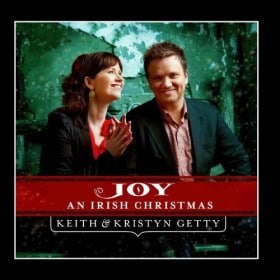
    Last year, I discovered the wonderful holiday offering Joy- An Irish Christmas by Keith and Krystyn Getty. If you like a little Celtic flavor to your holiday music, I recommend it highly! There’s an exciting mix of exciting fast paced music countered by peaceful beautiful songs.


    “Jesus, Joy of the Highest Heaven” sung here by Krystyn Getty.


    A live version of their “God Rest Ye Merry Gentlemen.

    And there are also a number of soulful classics available. “Do You Hear What I Hear” by Gladys Knight and the Pips immediately comes to mind… So does the Jackson 5’s Christmas album, which comes complete with Christmas greetings from the brothers. Given that they were Jehovah’s Witnesses at the time they made the album, that must have been an awkward recording session.


    “Give Love On Christmas Day” by the Jackson 5.

    Or there’s blue-eyed soul by Hall & Oates…


    I must admit, I like this song for the video…

    And “Please Come Home For Christmas” by The Eagles…


    Pat Benatar also does a fine version of this bluesy Christmas staple, but I am partial to Don Henley’s soulful vocals.

    Here’s Pat singing “Have Yourself a Merry Little Christmas”.


    Talk about a classic. This was done in 1988, when I was still a lass.

    My all time favorite Christmas album, though, has to be James Taylor’s A Christmas Album, which he made in 2004 for Hallmark. The album was produced by Dave Grusin, who wrote all the wonderful arrangements of the music. James later re-released the album with two more songs. I didn’t buy the re-released version because I already had all the songs on it.


    “Go Tell It On The Mountain” is one of my favorite JT Christmas songs!

    I’m sure as the month wears on, there will be more posts about Christmas songs… but for now, I think we’ve gotten things off to a festive start! Hope your December has gotten off famously!
  • #17 album of 2013 – Magic Trix by Xenia Rubinos

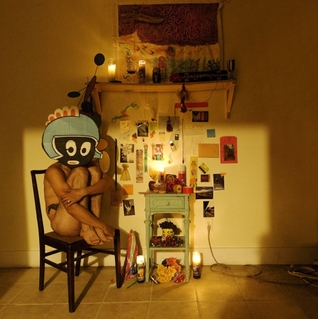
    Artist: Xenia Rubinos

    Album: Magic Trix

    Xenia Rubinos’s debut album Magic Trix lays out its niftiest tactics quickly — many of them within the five minutes of its opening song Help.  Her lilting voice, which by later in the album will suggest to me Bjork as a rowdy young NYC Latina, starts out cautiously by itself, picking its way up scales like Little Engine up a big hill: “My name is Rosa/ I live under Xenia-Magicthe bridge/ I live under the tree/ I do magic tricks for money. Whoo!” A distorted organ-like electronic keyboard comes in, as do drums, both jarringly percussive and both refusing to emphasize the beats you’ve learned to expect; her voice doubled, she sings of Rosa third person (she now “will raise your dead for money”). The keyboard is replaced by a syncopated, traditionally funky bass (although the drums are still spastic punctuation), and Xenia transforms into a soul singer (“I didn’t want to end up like this way/ I was just trying to do good for myself and my two kids”). As the ingredients bounce off each other in different combinations, they change, intensify; the off-center drums get more thunderous, an organ solo sends frightening CGI-enhanced tremors through the buildings of the land, her soul singing gets more urgent, and breezy handclaps lighten things until the sheer robotic speed of them gets weird. The songs ends soft and lilting like it began, but the keyboard and drums stay softly with her, unsure if they’re ready to leave her alone again.

    Ultima, the second song, has swagger; it also, at the ingredients level, introduces jubilant nonsense vocal loops, a conventional 4/4 hip-hop beat, and confident breathy Spanish rapping. Her singing portions are pitched somewhere between birdsong and cheerful lullaby. The drumming still uses unconventional timing, and late in the song there’s a buzzing electronic organ solo in 5/4 time.  Hair Receding wrings darkness and drama from Help’s basic elements by programming its organ to a cathedral grandeur, and pushing Rubinos’s voice into minor keys at the very bottom of her range. Pan y Cafe makes the case that her voice is interesting enough to enjoy having it rhythmically yell at you in different rhythms over deranged marching-band percussion, which works for its 1:48 length anyway. Los Mangopaunos compresses her 15/8 rhythms, sneaky-loud percussion, and beeping multi-layer keyboards into a catchy 2:48 single, with a happy synth-flute hook and vocals like excited gossip. When You Come slows a fast record down to a mid tempo 6/8, and pares down the instrumentation a bit to treat us to multi-Rubinos vocal harmonies. And Let’s Go Out risks slowing down the organ and drums to a thudding, echoey crawl.

    This is the point in the countdown where I’m looking for excuses to choose which perfectly delightful albums can’t be in the top ten. In the case of Magic Trix, I have “I can’t make out very many of the lyrics, though they seem to be interesting. And after inventing a completely new, manically fragile style of progressive-New-Wave-hip-hop-salsa-rock in her first two songs, she just keeps mining the same brand new territory. Plus she slows the music down at the end, which is hardly ever a thing I’d suggest”. If those seem like actual reasons not to give Xenia Rubinos a full try-out, you’re a harsher judge than I.

    – Brian Block

    To see the rest of our favorites, visit our Favorite Albums of 2013 page!

  • #18 album of 2013 – Good Things by Half Past Four

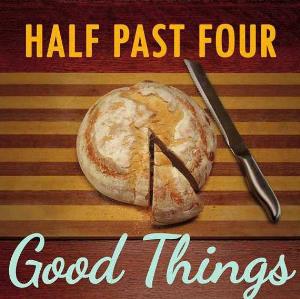
    Artist: Half Past Four

    Album: Good Things

    The logic of belatedly reviving my best-of-2013 countdown on Thanksgiving weekend — after having left it too often neglected in a 2014 that’s been dominated for me by my mother’s fatal cancer, which has left me busier, less-helped, and sadder HP4 - Good Thingsthan usual — is that I personally tend to write music reviews in the spirit of giving thanks, a spirit I’d like to get back into.

    As an extra incentive, given which album I had waiting at #18, Thanksgiving is also a holiday about immigration. Or at least, some of my Facebook friends treat it that way, passing on cartoons and sly jokes about the original Thanksgiving fest being one where white Europeans were the undocumented aliens who didn’t speak the language. I find the politics of this dubious. Thanksgiving is if anything the worst case scenario, where you reach out to the undocumented and they kill most of you with plague, shoot enough of the survivors to quell further resistance, and steal your land and herd you into grim “reservations”. I prefer to focus on basically every subsequent example of American immigration instead. Like the welcome provided to my mom’s ancestors, supporters of Bonnie Prince Charlie’s failed Scottish revolution against the English crown, who were allowed to emigrate to the colonies instead of being executed. Or to the more fortunate of my dad’s Jewish ancestors, who decided to put as much space as possible between themselves and the pogroms, instead of waiting around to die, however bravely, in the Warsaw Resistance against Hitler’s death camps.

    Welcoming my family didn’t lead to anything extraordinary for the United States, but it led to a lot of positive ordinariness: a large, productive scattering of city planners, teachers, librarians, nurses, classical musicians, cryptographers, and other people notable for not burning the country down and destroying civilization forever. Multiply them out and you get enough immigrants to supply one of the richest, most diverse, most creative societies the world has ever known. Whereas a lot of the financial sector we can still blame on descendants of the Mayflower crew.

    Starting in the 1980s, the United States has undergone one of its periodic eras of treating immigrants with deeper suspicion and fewer social services, so perhaps for that reason, or perhaps by coincidence, the core members of Half Past Four — bassist Dmitry Lesov, keyboardist Iggy Kurtzman, and guitarist Constantin Necrasov — found themselves leaving the former USSR, as boys or college students in the mid-to-late 1990s, and moving to Toronto, Canada instead. I won’t imply the U.S. made a tragic error in not recruiting them first; you can buy their two albums, including 2013’s Good Things, quite easily here, and nowhere near enough people have done so yet to much impact the trade deficit.

    In doing so, you’ll get what sounds like a glossy ‘80s hard rock band, with a smooth, soulful, supple-voiced female (Canadian) singer who calls herself Kyree Vibrant. Except I don’t know of any actual ‘80s hard rock albums as musically interesting as Good Things, because Half Past Four keep crossing you up. There’s all the jazz chordings, some as pretty as a Stevie Wonder or Steely Dan record and others more unnerving like King Crimson. There’s riffs that, however glossy, are too heavy to have made the radio before Metallica became superstars in 1991. There’s the casual use of piano and 7/8 time on the title track. Rise breaks into surf-rock midway through the song. Spin the Girl is joyously cuckoo, a heavy-metal Broadway folk dance at a crazed waltz-of-death pace. Fate’s verses are piano-centered and in 9/4 time, but Necrasov’s guitar work still makes them sound like Pink Floyd somehow. The Earth ends the album centered around a 5/8-time sprint — and later a 7/4 stomp — that’s heavier than even the 1980s version of Metallica, as well as (this part is easier to achieve) more operatic.

    I still think it will aid Half Past Four appreciation if you enjoy the commercial primes of Van Halen and Guns’n’Roses and Bon Jovi, at least their singles. But hey, time was when that music was illegal, back in the USSR. One assumes it was sought out, on average, by the especially curious. And it’s the nature of the especially curious, and their offspring, to tamper heavily with the things they love.

    – Brian Block

    To see the rest of our favorites, visit our Favorite Albums of 2013 page!