web analytics

Category: Videos

  • Commercial-isms:  T-Mobile vs. Laurie Anderson “O Superman”

    Commercial-isms: T-Mobile vs. Laurie Anderson “O Superman”

    HTC O… M Effing G
    I took it as further evidence of my exceptional parenting when my 17-year-old son perked up at the sound of Laurie Anderson’s “O Superman” coming across from the TV and pronounced “Awesome song!” In my head, I was congratulating myself: My son knows Laurie Anderson’s music! I am a good dad! I am a good dad! But this moment of parental pride was sullied when I realized that familiar “hah hah hah hah hah hah” (I always thought it sounded like a robot breathing) was being played in the background of a commercial. For T-Mobile’s new HTC One phone.

    Really?

    Now I’m not so naive to actually believe that, at least when it comes to pop culture, some things might actually be sacred. But seriously: what’s “O Superman” doing in a cell phone commercial? Suddenly the tired arguments about artists “selling out” with their licensing choices feel freshly relevant. Not that I think Laurie Anderson has sold out, nor do I begrudge her whatever money she might be making from a 30-year-old song that might only be regarded as a “hit” in the most artsy-NYC-hipster-ish sense. (It did top the Village Voice’s 1981 Pazz & Jop singles poll.) But there is something sad about such a monumental song reduced to… this.

    If you’ve never heard “O Superman”, you may be asking yourself just what the big deal is. And if you’re just hearing “O Superman” for the first time, you should know: it’s damn weird. But it’s also wonderful. As proud as I am that my son could identify it so readily, he was a tiny bit wrong in pronouncing “O Superman” an “awesome song”. It certainly is awesome, and I don’t mean “awesome” in the deeply trivializing 80s-vintage colloquialism sense, but rather in the Old Testament music to bring down the walls of Jericho sense. It is awesome. But to call it simply a song is also a little trivializing.

    For one thing, it’s just not very song-like. For another, it’s massive: eight-and-a-half minutes massive, sustained without benefit of a catchy chorus or an extended guitar jam or even a drum solo. The music is stark and electronic, the words poetic and prayerful, and delivered (through a vocoder) alternately as a monologue and a chant – ah-hah-hah-ah hah-hah-hah-ha-ah. It is by turns funny and sweet (“Hi Mom!”), and chillingly prophetic:

    Here come the planes
    They’re American planes
    Made in America
    Smoking
    or Non-smoking

    There’s also a visual element that is integral to the song itself. In live performance, Laurie Anderson would play her synthesizer with one hand, and with the other, punctuate her lines with hand and arm gestures projected as shadows in a circle of light on a screen behind her.

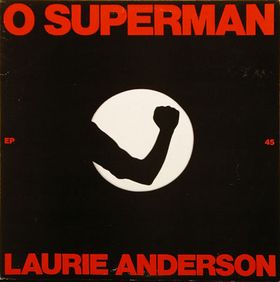
    Laurie Anderson “O Superman” (1981)

    The song was first released as a NEA-funded limited edition 7″ single in 1981; the following year it became the centerpiece of Anderson’s major label debut record Big Science, which, itself, was conceived as part of an epic scale multi-media performance piece called United States, inspired largely by a four-year field trip Anderson took around the country, working various sorts of jobs as she went. “O Superman” is still regarded as Anderson’s masterpiece, and in the same way the “Hallelujah Chorus” (all 100 or so seconds of it) has become “bigger” than the larger work it was part of (Handel’s “Messiah” oratorio), “O Superman” has eclipsed United States in sheer concentrated power and historical resonance.

    The song was inspired by the aria O Souverain, O Juge, O Pere, from French composer Jules Massenet’s opera Le Cid, and alludes to its words. Laurie Anderson described the aria as a “prayer for a knight on the eve of a hopeless battle… a prayer about empire, loss, and ambition.”

    ‘Cause when love is gone, there’s always justice.
    And when justice is gone, there’s always force.
    And when force is gone, there’s always Mom.

    “O Superman” was also inspired by current events: specifically a tragically failed military mission during the Iran hostage crisis of 1979. But 9/11 and the government’s ongoing struggle to respond to it – both the military interventions in Iraq and Afghanistan, as well as the domestic policies passed in the name of security – have given the new song an even more powerful and unforeseen resonance. Here’s Laurie on performing the song to a New York audience a week after 9/11, from her notes to the 2007 reissue of Big Science:

    “During a top-secret mission to rescue hostages being held in Tehran, American helicopters crashed in a sandstorm and blew up. The mission’s failure was a blow to the United States’ reputation as a technological superpower and played a role in the downfall of the Carter Administration and the rise of Reaganism. Almost thirty years later we’re fighting the same war… I suddenly realized I was singing about the present.”

    So yeah, how about that skydiving fashion photographer? Here’s the song that opens the Big Science album:

    Laurie Anderson “From the Air” (1982)
  • Commercial-isms:  Swedish House Mafia vs. Absolut Vodka “Greyhound”

    Commercial-isms: Swedish House Mafia vs. Absolut Vodka “Greyhound”

    Run, Swedish House Mafia, Run!

    After the apocalypse the only things remaining were the desert, some wealthy (and competitive!) Euro-disco freak-a-zoids, and a grapefruit. Oh, and also a sliver of post-nuclear genetic material, which would later be identified and decoded by the machines as the rapidly mutating, radioactive stem cells of that instrumental break from Michael Jackson’s “Thriller” – y’know the one, that part where the zombies do the zombie dance. The scientists, because they had nothing better to do, took the ribonucleic remains of that long-extinct groove, and reconstructed it, magnifiying it, amplifying it, creating the Third Millennium sonic beast they called “Greyhound”. This, much to the amusement of the freak-a-zoids.

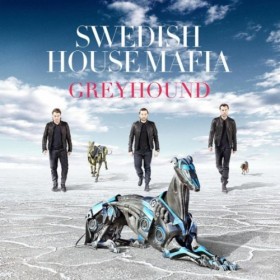
    Is this a music video for the latest single from Swedish House Mafia? Or is it the latest ad from Absolut Vodka, introducing their new Greyhound brand? Unlike the latest video stunt by , “Greyhound” succeeds wildly as both. There’s an edited version of this that’s starting to show up on the TV, but you can see the whole wonderful George Lucas fever-dream of it below. Then you can (and should) go download the full seven-minute single, put it on your iPod, and go running (with the dogs, tonight). Enjoy this responsibly.

  • Remember This?  OK Go “Get Over It”

    Remember This? OK Go “Get Over It”

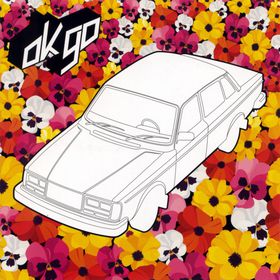
    Look, there's a car on the cover!
    A couple weeks ago, Chicago-based alt-rockers OK Go put out their latest born-to-be-wildly-viral video – this time, it’s essentially a commercial for the Chevy Sonic in which the band performs their song “Needing/Getting” while driving a course lined with various musical instruments that are strummed, plucked, banged, plinked, and otherwise crashed into by a seemingly random array of objects attached to the car, thus creating the song’s musical (sorta) accompaniment. Each couple of lines, the music stops as lead singer Damian Kulash frantically steers the car onto the next segment of the course, kicking up a cloud of dust and, oh I don’t know, showing off the Chevy Sonic’s handling against a picturesque landscape. It’s kinda thrilling, I guess, but it isn’t pretty.

    “Needing/Getting” (2012)

    This sort of thing is what OK Go does these days – spectacular video stunts that do less to promote a song (which, y’know, is what the original point of music videos was) and more to get clicks and likes and shares (and future sponsors). Which is all well and good, I suppose. The band have gone on record as saying that don’t really see themselves strictly as musicians, but more broadly as performers. As musicians, they’re not terribly prolific: “Needing/Getting” is from their 2010 album Of the Blue Colour of the Sky, only the third studio album they’ve released in their decade-plus-long career. By my count, this is sixth song from that album to be used in a video (one was used twice). Their songs, with few exceptions (“Needing/Getting” is not one), range from fairly decent to pretty okay – mostly likeable but generally unmemorable, were it not for, say, that “animations on toast” video (etc.) they did.

    OK Go seems to be running into the Lady Gaga problem: what do you do to top the last thing you did to top the thing you did before? Watching “Needing/Getting” made me really miss the band OK Go (as opposed to OK Go, the viral video auteurs), and it made me want to go back and re-acquaint myself with the song that introduced me to these four company-computer-guys turned awesome-semi-rock-star-guys.

    Not that there aren’t any visual gimmicks in their debut video “Get Over It” – ping pong ping pong – but the song’s the star of this particular show, and it’s really good fun just to watch these guys bash it out. As far as I’m concerned, those last choruses where it sounds like they hired Def Leppard to sing back-up are more satisfying than anything in the video for “Needing/Getting”. It’s two weeks old, and I’m already over that one. “Get Over It” rocked 10 years ago, and this relatively un-stunty video still does.

    “Get Over It” (2002)