web analytics

Category: Music

  • PAUL’S TOP 100 OF 2010 – PART 2: #90-81 “Ich will noch ‘n bischen tanzen…”

    And the countdown continues…

    #90
    #90: “THE GHOST INSIDE” by BROKEN BELLS.
    Broken Bells are the non-singing guy (Danger Mouse) from Gnarls Barkley, and the singing guy (James Mercer) from The Shins. Here’s the second single from their self-titled debut album. The video, starring Mad Men’s Christina Hendricks is a sci-fi movie on the dangers of deficit spending. In order to get herself to a fabulous resort planet, space traveling hottie Hendricks pawns all her limbs (and probably compromises her position on the repeal of DADT) and still ends up on a deserted island planet in an intergalactic middle-of-nowhere.
    #89
    #89: “HARD TIMES” by JOHN LEGEND & THE ROOTS.
    There are only two covers included on my list this year, and this is the second of them, from one of my favorite records of the year. For Wake Up!, John Legend and the Roots, inspired by the political engagement they saw during the 2008 elections, recorded a passionate set of socially conscious soul songs from the late 60s and 70s, many of them long forgotten like this one originally performed by Baby Huey and the Babysitters.
    #88
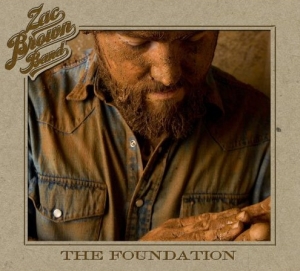
    #88: “HIGHWAY 20 RIDE” by ZAC BROWN BAND.
    Tearjerker alert! Tearjerker alert! Are they a jam band? Are they outlaw country? Are they southern rock? Are they sentimental cornballs? They’re a little bit of all of the above. With a great big beard!

    Although they’d already scored a few big country hits (which also had some mild crossover pop success) from their 2008 major label debut The Foundation, it was with their performance at this year’s Grammy Awards that made the band not just the latest country thang, but actually a previously implausible contender for greatest band in the world. This, the fourth single from The Foundation showed up shortly thereafter and became the band’s third Country #1, and fourth Top 40 hit a year and a half after the album’s release.

    #87
    #87: “MORNING SUN” by ROBBIE WILLIAMS.
    “After a long and sleepless night, how many stars would you give to the moon…” The third single from Robbie’s latest solo album Reality Killed the Video Star (he’s since re-joined his former bandmates in the British boy-band Take That), this weepy ballad follows Elton John’s Yellow Brick Road all the way to Strawberry Fields and back again.

    #86
    #86: “NEIN, MANN!” by LASERKRAFT 3D.
    a.k.a. The German theme song for Paul Lorentz at any given wedding reception. Don’t be daunted by the language barrier – the video provides black-lit hand-drawings as “subtitles” over the actors’ faces. It goes roughly along these lines:

    Verse 1: A friend says “Hey, let’s get out of here. The DJ sucks and he’s just playing electro music and not even David Guetta”

    German Paul Lorentz reply: “No man. I don’t want to go yet. I want to stay and dance.”

    Verse 2: A hottie approaches: “Grab your coat and say goodbye to your friends. I want to take you where the night never ends. You and me, we should be dancing in the sheets.”

    German Paul Lorentz reply: “No man. I don’t want to go yet. I want to stay and dance.”

    Verse 3: Bouncer: “Really, dude, you should go. The bartender wants to go home. The dj’s falling asleep at the decks. Seriously, go.”

    German Paul Lorentz reply: See above.

    I like that German Paul Lorentz in the video has a belly like real-life Paul Lorentz. I also like that tick-tock-with-the-tie dance move that he does. I need to use that at my next wedding reception.

    #85
    #85: “MADDER RED” by YEASAYER.
    “Never gave a thought to an honorable living, always had sense enough to lie. It’s getting hard to keep pretending I’m worth your time…” Yeasayer’s neo-psychedelic ode to justifiable feelings of family man inadequacy is appropriately doleful, but not especially apologetic. It’s a domestic drama done up in exotic, futuristic colors. It’s hipster ear candy that sounds a lot like something the Thompson Twins would have done in 1982. It’s also got a real music video, but the video’s really gross and it’s, frankly, distracting from the song – which really is lovely. Thus this live version.
    #84
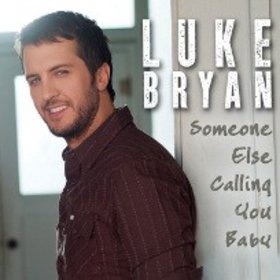
    #84: “SOMEONE ELSE CALLING YOU BABY” by LUKE BRYAN.
    If we were living in the 1970s, we’d call this pop/rock and it’d be a song by Eddie Rabbitt or Firefall or England Dan and John Ford Coley… But it’s 2010, so we call it country and it’s by a guy who was likened to a cross between Elvis Presley and Gomer Pyle when he appeared at the center of a challenge of the Donald Trump reality show Celebrity Apprentice. That appearance would help push his single “Rain Is a Good Thing” to #1 on the country charts. This song – an inducement to just break-up with the poor guy already – was the follow-up to “Rain”.

    #83
    #83: “WHAT PART OF FOREVER” by CEE-LO GREEN.
    Apparently this ran over the closing credits of The Twilight Saga: Eclipse. I wouldn’t know. I haven’t seen any of the Twilight Movies. But I LOVE their soundtracks (so far). This song was co-written with a group called Oh, Hush, who appropriately enough, have never posted a band photo or identified their band members who, according to their facebook page, are various male and female superheroes. Here’s a live performance of the song from George Lopez, featuring Cee-Lo’s super-awesome all-girl back-up band.
    #82
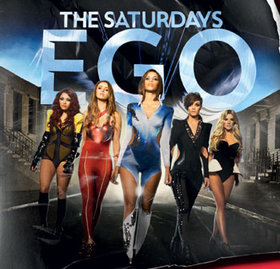
    #82: “EGO” by THE SATURDAYS.
    Five hotties with superpowers, British accents, and a flair for public revenge. “Don’t tell me that you’re done as far as we go – You need to have a sit-down with your ego.” Did I mention hotties? With superpowers? And British accents?

    The Saturdays “Ego” from Robin van Calcar on Vimeo.

    #81
    #81: “HOLLYWOOD” by MARINA AND THE DIAMONDS.
    Welsh singer-songwriter Marina Diamandis parties it up in a fake White House with cake and cheerleaders, fake Mariylns, fake Elvises, and… wait… is that a fake Barack in there too? At a time when it seems you can’t watch or read the news without hearing some politician talking about things being rammed down throats, it’s sort of refreshing to hear someone sing about “puking” up “American dreams.” And when she confesses she’s “obsessed with the mess that’s America”, it sounds genuine and even sort of affectionate. Sorta like my obsession with the mess that’s European pop music.

    Coming up in the next block: one sad song about the summer and one happy song about the summer, one song about a shotgun wedding, and one about wedded bliss.
  • What’s in a Logo? What the Gap Coulda Learned from Chicago 21.

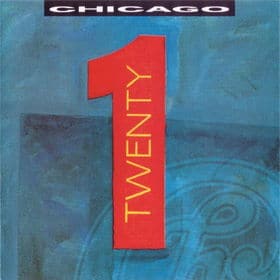
    This week, The Gap renounced its plans for rolling out a new logo, mainly due to a massive social media uprising in opposition to the change. And I thought, really? There are that many people that personally invested in a clothing manufacturer’s corporate identity that they would so passionately oppose a logo change? Corporate identities change all the time. Who cares, right? But I turned it around on myself. Wasn’t there a part of me that thought the cover art of Chicago’s 1991 album Chicago 21 delegitimized the record? You may recall (but you probably don’t unless you are a serious Chicago fanatic, of which I believe there are painfully few) that Chicago 21 (or Twenty 1, as it were) marked the first time where the band’s logo didn’t appear on the cover. Okay, so you saw the upper left corner of the logo in the blue background, but the only place the word “Chicago” appeared was in generic block lettering across the top. Fail.

    Chicago 21
    The album was a commercial fail as well, effectively ending the band’s decade-long second heyday. But listening to it 20 years later, the record’s no worse, and it is in many ways better than a few of the hit records that preceded it, being one of the most band-written records they’d put out since the 70s and reclaiming the social consciousness they’d suppressed in favor of Peter Cetera power balladry. All this time, I thought I’d hated the record, but I actually like a lot of it. Could I be so shallow that the mere non-appearance of the band’s logo on the cover art would influence my reaction to and memory of the record so thoroughly? Or was my devotion to Chicago – my very ardent devotion (as evidenced by untold numbers of graffitied high school notebooks) – really less about their music and more about brand loyalty?

    Chicago VIII (1975)
    The question disturbs me a little. Because I think that I really love Chicago’s music. Not just the early Chicago that a few charitable rock critics might point out as being not-unbearable and semi-respectable – the Chicago of “25 or 6 to 4” and “Beginnings” and “Does Anybody Really Know What Time It Is?” – but also the 80s power-ballad Chicago that no rock critic (except Jody Rosen, perhaps, and that is why I love him) would be caught dead defending. But as much as I love the band, I have to admit I love the brand as well. The logo. The numbered albums. The defiant decentralization of their sound and image that, for years, led them, against all the prevailing wisdom regarding the marketing of pop music, to make sure none of their lead singers ever landed consecutive single A-sides.

    Chicago 13 (1979)
    Until David Foster’s anointment of Peter Cetera as their primary lead singer on Chicago 16 in 1982, the closest thing the group had ever had to a frontman had been its horn section of Walt Parazaider, Lee Loughnane and James Pankow; and though throughout the 80s, that horn section had been increasingly marginalized on record, that trio of players – along with singer-keyboardist Robert Lamm, the only remaining original members of the group still performing today – remained the stars of the band’s live show. [Disclosure: the first three concerts I ever saw were Chicago, in 1987 (at Summerfest), 1988 (a very wet Wisconsin State Fair), and 1989 (co-headlining with the Beach Boys).] Is it any surprise that the group’s most recognizable face and voice – Peter Cetera – would find it impossible to stay in the band?

    Chicago III (1971)
    The band rarely shows up in their cover art. I count only three albums (and a box set) in their 40 year recording career where the band members are depicted on the front cover. Despite their success in the 80s, and to their own eventual detriment in that image-centric decade, Chicago’s most recognizable face remained the guitar shaped script of their logo; and just as Madonna morphs from wily street urchin to boob-tasseled exotic dancer to mystic mother-figure to disco Che Guevara, the Chicago logo morphs from album to album to album. Part of the joy of any new Chicago album – quite apart from whatever they might be doing musically – is seeing what they’ll do next with that logo of theirs.

    Chicago X (1976)
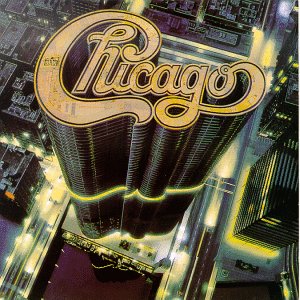
    Sometimes the treatment was political, like the battered flag of Chicago III in 1971. Sometimes it was just timely – the Chicago 13 skyscraper is pure disco (and so was that 1979 record’s lead single “Street Player”), while the logo was seen, partially through a magnifying glass, imprinted on a computer chip for 1982’s Chicago 16. They went through an artsy-craftsy phase in the early 70s – Chicago V was a wood carving, Chicago VII was leatherwork, and Chicago VIII was, inexplicably, embroidered over a cardinal. (That album came with a t-shirt iron-on of the album cover.)

    Chicago 19 (1988)
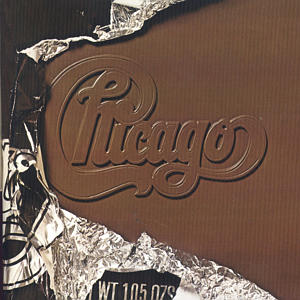
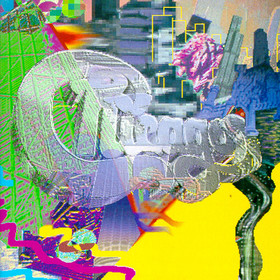
    For Chicago IX, the band’s first greatest hits record, the logo was featured on both the front and back covers – on the front, the guys are working on painting the logo onto a wall; the back cover shows the finished product. Chicago 19 (one of my personal favorites) was a computer-generated mash-up of the band’s logo with shapes from their namesake city’s skyline. Chicago XI is a map. Chicago XIV is a thumbprint. Chicago X is a chocolate bar. (They won a Grammy for packaging that year!)

    Chicago certainly didn’t invent the notion of a band logo, and theirs may not even be the best. The prog-rockers and hair metal bands of the 70s and 80s may be most responsible for turning the band logo into an art unto itself. It’s hard to hear the words Def Leppard or Metallica without picturing the band’s logo. Moreover, current bands like Cake and Weezer, whose members probably graffitied the hell out of their own high school notebooks with KISS logos, have taken the perpetuation of their own band logos very seriously.

    Also, even though we often think of metal bands when we think about band logos, it’s generally true that logos know no genre. Like the logos of Chicago and Kansas, ABBA’s mirror-imaged block lettering is a registered trademark. Air Supply’s, though less consistently used, is a flamboyantly calligraphic woosh that pretty precisely represents the band’s musical mission. Similarly mission-oriented (however musically opposite) is the confrontational stencil lettering and crosshairs graphic of Public Enemy.

    Still, there may be no other band that has gotten as much mileage out of a single band logo as Chicago has. You sorta have to admire the logo’s tenacity. And if the Chicago 21 experience proves anything, it’s that there are some brands you just don’t mess with. Learn from it, Gap.

  • The Daily Awesome: The Beach Boys “This Whole World” (1970)

    “Late at night, I think about the love of this whole world…” Last night, I was taking a walk, now that the weather has cooled off some and we can be outside without being immediately attacked by mosquitoes. It was one of those rare walks that I took without headphones. It was more laziness than anything that kept me from going upstairs to get my iPod before I left the house. We’d spent a lot of the holiday weekend working out in the yard with the kids and I was sore all over. But the night was gorgeous, and even though we worked hard, I think we all had a lot of fun – we all felt good about what got done, the garden and the yard looked better than they had all summer. We’d spent some time with two of my sisters and their kids. We’d even carved a little time out for ourselves – playing lazer tag, bowling, go-karting, and eating a lot of pizza on Saturday afternoon.

    Last week, my partner and I attended a funeral for a woman we’ve known for a long time. She died of cancer – only a year older than myself. She was not really part of our regular circle of friends, and so it was hard to know what to say, or if there was really anything to say. The tragedy of it was so obvious that it felt vulgar to try to even say so out loud. I was thinking about her on my walk and about her little girl who would do the rest of her growing up without her, and I was thinking about my own family, my own kids, my own brothers and sisters, and how wonderful it is that we have each other – to play “dogs versus humans” in the park, to burn hot dogs on the grill, to roast marshmallows and watch our son discover how cool a styrofoam plate looks when its melting over the hot coals of a campfire.

    I’m not a religious person, but in the years since I first heard the Beach Boys’ 1970 Sunflower album, I’ve come to regard this little song – not quite two minutes long even – as a sort of profession of my own personal faith. “And when I go anywhere, I see love.” Enjoy.