web analytics

Tag: The Temptations

  • Commercial-isms: BlackBerry Playbook vs. The Temptations

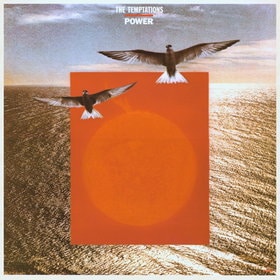
    The Temptations ”Power” (1980)

    The new ad campaign for the roll-out of BlackBerry’s PlayBook tablet is based around a long-forgotten song – a flop upon its release – by a vocal group who, while regarded as legendary today, was generally (and sort of accurately) considered a bunch of has-beens when they recorded it all of 31 years ago. First of all: Thank You, BlackBerry! Your taste in music is awesome. Secondly: Good luck with that.

    When we think of The Temptations, there are two different incarnations that come to mind. There’s the early-mid-60s Smokey Robinson-produced Temptations, who, after toiling away fairly fruitlessly in Motown’s gold (record) mines for nearly three years, finally hit the motherlode with ebullient pop ditties like “The Way You Do The Things You Do” and the lovely, beaming “My Girl”.

    Then there’s the darker, funkier Norman Whitfield Temptations of the late 60s and early 70s, defined by its flights of social commentary set to increasingly elaborate and psychedelic orchestrations. These were songs that sounded spacey and felt spacious, draped in echoes and strings and deep, almost subliminal basslines, culminating in the twin peaks of “Just My Imagination (Running Away With Me)”, a lushly harmonized, string-bedded, ballad of wishful thinking so beautifully and precisely realized it’s almost physically painful (in the best possible way) to hear, and the 1973 epic “Papa Was a Rolling Stone”, a song The Temptations didn’t even get the first stab at (Whitfield had recorded it with The Undisputed Truth a year earlier), but which remains one of the group’s most iconic hits.

    But The Temptations discography gets a little fuzzy after that. In fact, though The Temptations, amidst myriad personnel changes, continued recording on a fairly regular basis well into the 90s (they still pop out an album every now and then), they’ve never come close to their earlier successes, and virtually everything they’ve recorded since, say, 1975, has gone largely forgotten, even by many Temptations anthologies. Which makes hearing their 1980 single “Power” on a new commercial for BlackBerry’s PlayBook tablet such a great surprise.

    Anchored by the late great Melvin Franklin’s distinctive “po-ower, poom, poom” vocal bassline, “Power” is a fire-and-brimstone gospel sermon delivered over a just-past-disco groove by Dennis Edwards in full-on revival preacher mode: “All you poor!” Edwards declaims, “All you needy! All you’re doin’ is givin’ to the greedy!” The song clearly spoke to its own end-of-the-Carter-era moment although its prescription for salvation pointedly disincludes anything about, say, electing Republican candidates to national office. It’s more about giving glory to God than giving glory to people who pay God lip service. 30-plus years later, it feels utterly true to the weird conflation of religious zeal and the mightily propagandized fiscal policy panic of 2011. Go, BlackBerry!

    The song was to have been the group’s great comeback single: Like The Spinners before them, The Temptations left Motown in the mid-70s to record for Ahmet Ertegun’s Atlantic label. They were one of the last of the classic Motown acts to either disband or defect from Motown. But unlike the Spinners who found their greatest success on Atlantic with an enviable string of hits between 1972 to 1980, The Temptations’ Atlantic tenure was brief and depressingly hitless. PlayBook! Yes!

    It was Berry Gordy himself who’d wooed the The Temptations back to the fold with “Power”, a song he’d co-written, which he’d claimed to have been sitting on because he didn’t have anyone like The Temptations to record it. Gordy produced the track with a hearty nod to the group’s Norman Whitfield heyday, and it became the title track of the group’s 1980 homecoming album.

    But even though “Power” became the group’s biggest hit in 5 years (and, sadly, it remains the group’s best charting single since their return to Motown), it stalled just outside of Billboard’s Top 40. The hedonistic days of disco weren’t yet a distant memory, and the song’s fate seems to speak more to pop radio’s BeeGees hangover than the song’s quality: people just weren’t ready to hear something this sincerely angry just yet – not on Top 40 radio at least. Which makes the song’s Age of AutoTune resurrection in the form of a national ad campaign for a semi-snazzy (although somewhat late-to-the-party, it seems) new tech gadget one of the sweeter, most out-of-nowhere musical surprises of this year. Hear the song in all its righteous fury here:

  • Paul’s Top 15 Songs of Fathers and Sons

    In lieu of a Sunday Brunch Buffet playlist this week, and in honor of Father’s Day, I’ve decided to get in touch with my Inner Casey Kasem and count down my Top 15 songs about Fathers and Sons. There are a lot of great songs out there about all sorts of different father/son relationships. Not all of these are loving songs. Some are angry. Some are ambivalent. Some are very well-known, some not so much. Some are old, some are new. There are almost certainly a few really good ones I missed (or don’t even know – please post your own favorites in the comment section).

    #15: “KINKY AFRO” by HAPPY MONDAYS (1990). An alarming number of these songs are about Dads warning their sons not to turn out like them. “Kinky Afro” is not like that. Sure, the Dad basically says he’s a scum in the first verse (“I only went with your mother ‘cos she’s dirty, and I don’t have a decent bone in me”), but it’s not like he cares if his son turns out that way. And in the second verse, his son basically says that he’s a big scum too. And he’s kinda okay with that I guess.

    #14: “RUNNING IN THE FAMILY” by LEVEL 42 (1987). The title track of their 1987 album… “Our dad would send us to our room and be the voice of doom. He said that we would thank him later.”

    #13: “A BOY NAMED SUE” by JOHNNY CASH (1969). A tribute to a forward-thinking (however sadistic) absentee father. “So I give you that name and I said good-bye, and I knew you’d have to get tough or die…” I like listening to this song just fine, but watching Johnny Cash sing it to an audience of San Quentin inmates heightens elevates it beyond simple folksy novelty.

    #12: “MY FATHER’S CHAIR” by RICK SPRINGFIELD (1985). The 1981 death of his father loomed large over Rick Springfield’s early 80s career. His 1982 album Success Hasn’t Spoiled Me Yet ended on a brief memorial coda and his 1983 album Living In Oz closed with “Like Father, Like Son”. Sure, he was at his most famous, singing silly power-pop ditties about girls, but each of his albums had the incongruous undertow of grief. His 1985 album Tao closes with a song that feels more like an intimate conversation or a diary entry – no verse/chorus, no rhyme scheme – written the year his first son was born.

    #11: “REVEREND MR. BLACK” by THE KINGSTON TRIO (1963). This is a Lorentz family favorite. For me, pretty much every Kingston Trio song is a father/son song because some of my favorite memories of growing up involve sitting around the stereo with my parents and brothers and sisters listening to Dad’s Kingston Trio records. We kids made fun of them when we were little, but as soon as I moved away to school, one of the first CDs I picked up was a Kingston Trio hits collection. Even now, a bunch of us will swoop into an unsuspecting karaoke bar and take the place over. We can always count on my brother to sing Louis Armstrong’s “What a Wonderful World”; they can always count on me to rock out “Baby One More Time”; but we won’t be leaving the joint until all of us have gotten up together to sing “Tom Dooley”.

    #10: “THE MAN I USED TO BE” by JELLYFISH (1990)

    A message from a dead soldier to his fatherless son. The highly underappreciated band Jellyfish could be awfully silly sometimes. At a time when rock music was rejecting hair spray in favor of the unwashed “authenticity” of Seattle’s grunge scene, Jellyfish attempted a serious revival of 70s bubblegum and glam, god love ’em. That said, the first track of their first album, 1990’s Bellybutton, is a somber tune about not being there. “Into battle, and in your shadow, your daddy loves you still. Yes he does.”

    #9: “HIGHWAY 20 RIDE” by ZAC BROWN BAND (2010). Another serious tearjerker, this time from a divorced dad to his son. “When you drive, and you think about your life, I hope you smile if I ever cross your mind…” I choke up at that part every time I sing along – it’s just so heartbreaking. I love this video too – it’s got a great ending.

    #8: “AMBLING ALP” by YEASAYER (2010). In which the Brooklyn hipsters dispense little nuggets of fatherly wisdom with references to early 20th Century European champion boxers and one heckuva surreal video. “Now, the world can be an unfair place at times, but your lows will have their complement of highs…” Note to the initiated: this is the censored version of the video. Note to the uninitiated: Nekkid People Alert! (Blurred Nekkid People, that is.)

    #7: “COWARD OF THE COUNTY” by KENNY ROGERS (1980). A story about a father who died in prison, a gang rape, and an act of vigilante justice. Gangsta rap has nothing on Kenny Rogers. This one’s for Becky, Gatlin bitches!

    #6: “COLOR HIM FATHER” by THE WINSTONS (1969). The Winstons were a great Chicago soul group in the late 60s (they were based in DC, but signed to Curtis Mayfield’s Curtom label) who just had an unfortunate run of luck. Their biggest hit song is this son’s tribute to his truly awesome stepfather that pointedly never mentions the word “stepfather”). Though it hit the top 10 on the pop charts, narrowly missed hit #1 on the R&B charts, and won a Grammy, the song and the group seem all but forgotten now.

    #5: “A LITTLE SOUL” by PULP (1998). One of my favorite “I failed in life” songs. “You look like me, but please don’t turn out like me… I had one, two, three, four shots at happiness. I look like a big man but I’ve only got a little soul.” The video is excellent too – a sad little movie with kids playing out the parts and/or doing the work of their pathetic, apathetic, and/or somnambulant grown-ups.

    #4: “CAT’S IN THE CRADLE” by HARRY CHAPIN (1974). You all knew this was coming, didn’t you? Based on a poem his wife Sandy had written, this is a song that, like Charles Dickens and his “Christmas Carol”, seems to have been written in fear – specifically, the fear of turning into exactly what we don’t want to turn into. Harry admits as much in his introduction to this song here: “… and frankly, this song scares me to death.” We had this on a K-Tel record when I was little and I played the hell out of it. I think my sister and I probably even made up a dance routine to this one once. I wonder what it must have been like for my parents to hear their 7 and 8 year old kids singing along to this song.

    #3: “PAPA WAS A ROLLIN’ STONE” by THE TEMPTATIONS (1972) / “BARBARA’S BOY” by THE FOUR TOPS (1969). I went back and forth on including the Temptations song because it’s at least as much (probably more of) a Mother and Son(s) song. So I’m posting an alternate #3. They’re both great Motown songs, both by foremost Motown acts, and from the same era. But they’re lyrically opposite. Here the Papa’s a lazy no-good-nik who ditches his family.

    Though “Barbara’s Boy” was released as a single, it was a not a hit, and it’s one of the Four Tops’ least anthologized performances. In this song, Papa’s not a rolling stone at all. In fact, it’s the boy’s mother whose fidelity is called into question, not so much by the father, but by other people spreading rumors. One thing not called into question is how much Levi Stubbs’ character in the song loves his son, whether they share DNA or not. And there is truly no voice better for this song than Levi Stubbs, whose voice, to me, embodies all the angst, insecurity, and heartbreak of a certain generation and demographic of men – steady, stand-up, post-war, middle-aged, working class guys – who, in real life, were/are especially reticent about talking about their feelings.

    #2: “THE LIVING YEARS” by MIKE + THE MECHANICS (1988). Like the Rick Springfield song, “The Living Years” mourns a loss as it celebrates new life. I love how the lyrics never really come out and say, Dad was awesome, he did everything right, blah blah blah. The lyrics, instead, deal more with all the conflicts, and how incredibly difficult it is to even talk about them, much less resolve them, but how we wish we could. This is not a song where Mike Rutherford (who wrote it with B.A. Robertson, both of whom had just lost their fathers) just wishes he could have told his father how much loved him. It’s a song that where he wishes they could have understood each other better: “It’s too late when we die to admit we don’t see eye to eye.”

    #1: (of course) “FATHER AND SON” by THE ARTIST FORMERLY KNOWN AS CAT STEVENS. In a couple of simple verses, Cat Stevens elegantly and movingly explains the essential dynamic of every father/son relationship. Father: “Take your time. Think a lot. Why think of everything you’ve got, for you will still be here tomorrow, but your dreams may not.” Son: “From the moment I could talk I was ordered to listen, now there’s a way and I know that I have to go away.” Here’s a terrific performance of the song Yusuf Islam gave on the BBC in 2007.

    HAPPY FATHER’S DAY, DADS! Paul’s Inner Casey Kasem signing off. Keep your feet on the ground and keep reaching for your beers.

  • Infatueighties: #76: Super Freak

    Rick James’ autobiography, “Memoirs of a Superfreak”, isn’t exactly an award-winning piece of writing. However, it gives you an idea of how much the title of “super freak” actually fit Rick. Somewhat shamefully, those freaky antics (immortalized in the legendary Dave Chappelle skit) have obscured the fact that Rick made some pretty good music.

    “Super Freak” is one of those near perfect fusions of rock and funk. While Rick (if he was still here) would say that Prince got much of his style from Rick (the two toured together in 1980), the fact is a) how the hell could Prince have followed Rick when their debuts came out the same year? (1978) and b) doesn’t “Super Freak” sound somewhat reminiscent of Prince’s “When You Were Mine”, which came out a year before “Super Freak” (and would have placed pretty high on this chart if I included tracks that were never commercially released as single A-sides)? Then again, Prince never had The Temptations sing background on his biggest hit. Either way, this song’s hard to knock. If the B-52’s met Parliament/Funkadelic, the result would have been “Super Freak”.

    I love the way Yahoo! Music follows “Super Freak” with “Trapped in the Closet”. Ladies & gentlemen, it’s the Sick Fucks of R&B playlist!!