web analytics

Tag: RIP

  • Davy Jones 1945-2012

    Davy Jones 1945-2012

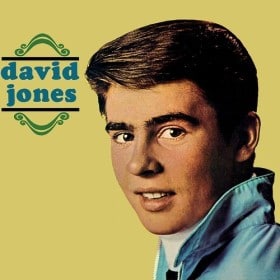
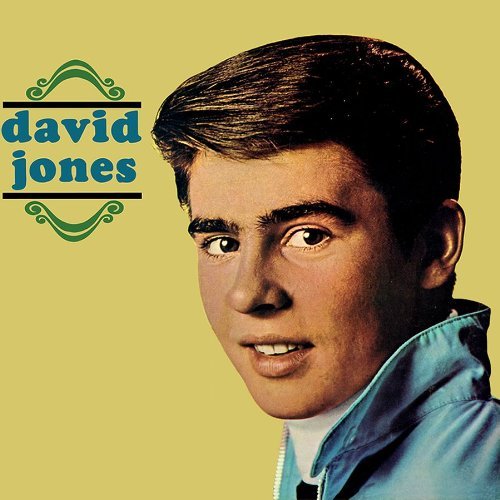
    Davy's Pre-Monkees Solo Album
    Before he was a Monkee, a teenaged Davy Jones originated the role of the Artful Dodger in the musical Oliver!, and even landed himself a Tony nomination when he played the role on Broadway in 1963. But he’ll best be remembered for creating a different kind of role: a model for virtual life-long teen idol-dom. Like all boy bands, the made-for-TV Monkees were an easy target for the scorn of an increasingly rock-oriented, album-oriented record-buying public. They played songs – rather, they played hit singles – written by other people (never mind that those other people included some of the greatest pop songwriters of their era); and they weren’t allowed to play their own instruments on their records. Thus, they were artistically illegitimate.

    Davy Jones “Girl” (1971)

    45 years later, of course, we know (a little) better about The Monkees, although the arguments trotted out for their illegitimacy back then are still in play for today’s boy bands and girl groups. The story of The Monkees came to be less about their TV show characters and more about the struggles of the real life band, and by its real life individual members to be able to transcend their TV/pop star packaging and stand artistically with the rock star peers of the era. See a rapt Mickey Dolenz watching Ravi Shankar at the Monterrey Pop Festival. See Michael Nesmith going country-rock and reinventing himself as the godfather of the music video. See Peter Tork bitterly lobbying for the band to be nominated for induction into the Rock ‘n’ Roll Hall of Fame.

    The quartet eventually won the right to play their own instruments live and to record their own songs (which, it turned out, were often as good as the Neil Diamond and Boyce & Hart gems they made famous, and which sometimes took some genuinely weird turns); they made a (genuinely weird) movie (Head) with Jack Nicholson. But they were still the Monkees, and despite their best efforts (and those of the folks at Rhino Records, who have packaged and re-packaged the band’s catalog with the meticulousness of a stalker), they’re still regarded by many as a bubblegum boy band prototype. Would we look at the music of Backstreet Boys any differently if they’d soundtracked and starred in a Christopher Nolan movie in 2002? I’m sure some of us would, but they’d still have “I Want It That Way” to live down.

    The Monkees “A Little Bit Me, A Little Bit You” (1967)

    But my sense of Davy Jones, more than any of his bandmates, is that he didn’t feel like he needed to live down The Monkees. Of the four of them, he’s the only one who actually seemed like a fan of the band. You could argue that it might have been easier for him to take as the group’s heart-throb focal point, but I don’t think that’s right. Those of us who either watched the Monkees on TV during their initial run, or (like me) watched them on reruns in the 80s (the group had a brief sans-Nesmith resurgence mid-decade) had their own favorites (I thought Mickey was the funniest and Michael the cutest). They were all focal points, which is why they made for good sitcom in the first place.

    I just think that Davy Jones had a gift for taking the mixed blessings of teen idol stardom with humility, gratitude, a winking sense of humor, and a strong appreciation of the absurd. He was still happily touring the oldies circuit when he died of a heart attack yesterday, playing to a fan base that wasn’t (isn’t) getting any younger, and apparently loving his life – like the lyrics of his 1971 single “Girl”, which might as well be a love song to his audience: “And what you are is all that I want for me, and it’s good to feel that way, girl.” In this sense, he truly invented the notion of the well-adjusted, non-pathetic, happily middle-aged-and-aging teen idol. Justin Bieber: take note, son.

    Davy Jones “Girl” (1995)
  • Whitney Houston 1963-2012

    Whitney Houston 1963-2012

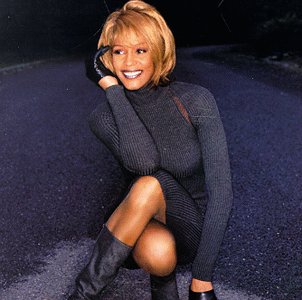
    My First Whitney Houston CD
    A few years ago, I was having a conversation with a woman at work about Whitney Houston. I had just heard news that she was in the studio working on the album that would eventually be released as I Look To You in 2009. It had been more than half a decade since she’d released a new album, and a full decade since she’d had a bona fide hit. I was excited. I wanted this new album to be great. I was rooting for Whitney. But my friend told me, “I don’t even want to hear it. She’s ruined. She’s not going to come back from it. Bobby ruined her.”

    As unfair and, frankly, unnecessary as it is to pin Whitney’s ruination on her ex-husband, the fact that Houston’s voice was a cracked shell of its former glory became apparent in live performances following the release of what turned out to be her final album. The album itself wasn’t bad, but it’s hard to hear a song like “I Didn’t Know My Own Strength” right now.

    “I Didn’t Know My Own Strength” (2009)

    I came late to loving Whitney Houston. I was in junior high when she released her first two albums. By that time, I was becoming less interested in what was playing on the Top 40 radio and more so in what Kevin Seal was playing on 120 Minutes. Besides, Whitney was a “VH-1 artist”, which, in the 80s, meant approximately that her music was for grown-ups. My mom bought her CDs. I avoided them. Or tried to. But how could one have possibly avoided “I Wanna Dance With Somebody” in 1987? Or “How Will I Know”? Or “So Emotional”? Or any of the other 11 songs she sent to #1 in the first ten years of her career?

    It wasn’t until I saw Whitney Houston performing the title track of her 1998 album My Love Is Your Love on the American Music Awards with Wyclef Jean (who wrote and produced the track) that I was finally able to open myself up to loving Whitney’s music. What I remember more than the song itself in that performance was the uncontainable joy Whitney brought to it. (It reminded me of an old In Living Color sketch called Whitney Houston’s Rhythmless Nation – a hilarious re-imagining of the Janet Jackson “Rhythm Nation” video with Houston replacing Janet, Houston’s wild movements knocking over the lockstep military back-up dancers around her.) I was a Whitney-hater no longer. I bought the album the next day.

    Whitney Houston at the American Music Awards

    I eventually went back and bought all of Whitney’s albums – the ones my mom loved when I was a kid, the 90s movie soundtracks, and later, I bought the 2002 flop Just Whitney on the day of its release. (I still think “Love That Man” should have been a bigger hit!) I eventually saw The Bodyguard. And The Preacher’s Wife. I retroactively picked up 12″ singles of “Love Will Save the Day” and “How Will I Know”. I finally learned to stop worrying about “alt-cred” and learned to love those big ballads – not just “One Moment In Time” and “Saving All My Love for You”, but album cuts like the gorgeous “Just the Lonely Talking Again” from her 1987 album Whitney.

    “Just the Lonely Talking Again” (1987)

    The thing about Whitney is that in an age where pop stars reinvent themselves for every new album, every new single, every new video; in stark contrast to the other pop icons of her time, and maybe in stark contrast to what was going on her personal life, Whitney’s pop persona remained fairly constant and steady. Her voice was strong. Her phrasing was extravagant. One of my friends derisively noted that she didn’t sing words – she sang notes with words attached to them. I think there’s some truth to that, but so what? She scarcely needed words. She had a voice. She could tell stories and she could preach sermons with her vocal dynamics alone.

    Listen to the way her rendition of “I Will Always Love You” builds from a whispery a capella contemplation to its iconic final declaration of love, and tell me you need to speak English to understand what’s going on in that song. It’s easy to get trapped into choosing between loving Dolly Parton’s original (which is deeply heartbreaking in its own right) and loving Whitney’s performance. I don’t think this is a mutually exclusive choice, but it seems to me that, while they’re both great performances (and props to Parton for the words and music), Whitney’s version is, for better and/or worse, more universal.

    “Love That Man” (2002)

    Whitney was not a costume-changer. She sang songs as herself. When you hear a Whitney Houston song, it feels like she’s letting you into her life a little bit. As RuPaul might have said, she always brought the Whitney realness. Even in her movies, you got a sense she was playing a version of herself, however idealized. She could be unabashedly dorky (see her video for “How Will I Know”). She could be deeply corny (see her cover of “The Greatest Love of All”). She could be your sweetest pal (see “Exhale”), and she could play the tough, wronged woman like no one’s business (see “I Learned from the Best”). But she was always “Just Whitney”.

    She wasn’t a lip-syncer either. So when it came down to promoting her last album, she let her broken-ness show in ways that she probably didn’t intend to. At a time when the industry and the audience might have accepted an Autotuned diva doing live performances backed by vocal-doubling tapes, Whitney had the courage to, y’know, sing. In doing so, she demonstrated her frailty and her ruin, and was rewarded for it with punchlines.

    “I Learned from the Best” (1999)

    In 1998, Whitney sang “If tomorrow is Judgment Day, and I’m standing on the front line, and the Lord asks me what I did with my life, I will say that I spent it with you.” Even then, it seemed a love song to her audience. Thanks, Whitney, for sharing your life and your talents with us.

  • Harvey Fuqua 1929-2010, Last of the Moonglows

    I’d never heard of Harvey Fuqua when I picked up that Moonglows 45 from the Goodwill store where I worked when I was in college. I’d never even heard of The Moonglows really, although, by then, they’d already been inducted into the Rock N Roll Hall of Fame. The reason I bought the single: the label, of course. It was on Chess Records. It looked like it was in good, playable shape, and even if it wasn’t, it was only going to cost me the price of a soda. If nothing else, with that elegant blue and silver label and its stately chess piece logo, it would look cool hanging on a wall, or from the ceiling of my dorm room. Of course, that 45 never had a chance to become such an ornament. I fell too hard in love with both sides of it. I didn’t know which was the “plug” side and which was the “b”. Frankly, I still don’t. They’re both just that great. On one side was “Over and Over Again”, an almost comical recounting of one man’s woeful inability to learn from his romantic miscalculations, delivered with full-throated devotion by Bobby Lester, Harvey’s singing partner since their high school days; on the other side was the quirky love-at-first-sight doo-wop testimonial “I Knew From the Start”.

    “Over and Over Again”

    “I Knew From the Start”

    As it turns out, neither side was much of a hit, although they were both featured in a 1956 movie put together by a rising-star DJ named Alan Freed who had been the Moonglows’ manager and earliest champion, a movie called Rock, Rock, Rock, starring Tuesday Weld which also featured performances by The Flamingoes, Chuck Berry, and Frankie Lymon and the Teenagers. I’d never heard of it either. But when the soundtrack album was re-mastered and reissued on CD a couple of years ago in conjunction with the 50th Anniversary of rock ‘n’ roll’s ascendance, I was very quick to snatch up a copy. Of course, I didn’t wait that long to expand my Moonglows collection. Shortly after I picked up that 45, I was eager to hear more of the group, and special-ordered a 2-CD anthology of the group that had, at the time, just been released via MCA.

    It was from that collection that I learned who Harvey Fuqua was, and learned not just the pivotal role the Moonglows played in bridging the gaps between rock ‘n’ roll, the dramatic vocal pop of their forebears the Ink Spots (Harvey’s Uncle Charlie was a member), and their contemporaries The Platters, and what would soon be called soul music (Marvin Gaye’s first recorded lead vocal was on a Moonglows single); but also the role Fuqua would play in the formative success of the Motown label as a songwriter, producer and A&R man working with the Spinners and Shorty Long (both of whom migrated with Fuqua to Motown after recording for Fuqua’s own Harvey and Tri-Phi labels), along with Marvin Gaye and Tami Terrell on songs like “Ain’t No Mountain High Enough”. (He also married Berry Gordy’s sister.) Even after leaving Motown in the early 70s, Fuqua went on to some of his greatest successes, producing one of the most iconic singles of the disco era in the form of Sylvester’s “(You Make Me Feel) Mighty Real”; and in 1982, closing a 25-year career circle by collaborating with Marvin Gaye on his final album Midnight Love. Few people know his name, but there’s no question that Harvey Fuqua had a direct hand in some of the most enduring music of the last 60 years. He was the last remaining Moonglow when he passed away on July 6, 2010, just a couple weeks shy of his 81st birthday.

    Here’s the song that put The Moonglows on the map, the Fuqua-penned 1954 hit “Sincerely” (which, yes, appeared in Goodfellas – what an awesome soundtrack that is!).