web analytics

Tag: John Lennon

  • FORTY-FIVE REVOLUTIONS PER MINUTE #39: Flannery Will Get You Nowhere

    The Beatles' "Lady Madonna" 45
    The Beatles' "Lady Madonna" single.

    THE BEATLES  “Lady Madonna”  b/w  “The Inner Light” (Capitol Records #2138, March 1968)

    As much as I loved John, the one I really miss is George.  With his quiet inner peacefulness, sly sense of humor and brilliantly innovative guitar licks ranging from bumble-bee stinging to waterfall fluid,  NO ONE, before or since, epitomized English cool like George Harrison.  Every hip Brit act in recent memory, from The Jam to Oasis to Arctic Monkeys, has featured at least one George look/act/sound-alike in their lineup.  As a high school freshman, I noticed, while paging through my gargantuan tome of World History text, that The Beatles were the only rock group mentioned by name.  Why?  Because of George’s influence, bringing Eastern musical styles into popular Western culture.  Sa-NAP! One-Song-Per-Album-Side, my ass;  a Quiet One shall lead them, ladies and gentlemen.

    A gorgeous two-and-a-quarter-minute blast of Fats Domino-inspired barrelhouse boogie-woogie piano, 1930’s-style Tin Pan Alley vocal chimes and honking Ronnie Scott sax, Lennon & McCartney’s (well, mostly McCartney’s) “Lady Madonna” was the final Beatles single to be released in the U.S. on the Capitol Records.  Their remaining  six official 45s, beginning with “Hey Jude” in August of ’68, would bear the imprint of their newfound corporation (soon to become a downward-spiraling tornado of bad finances), Apple.  Enjoy the ride while it lasts, boys.

    See The Beatles\’ promo clip for \”Lady Madonna\” here

    Recorded by George with a host of Indian musicians (plus John & Paul on backing vocals for good measure), the Tao-inspired “The Inner Light” was the first Harrison composition to be featured on a Beatles single.  Surprising in retrospect, considering how great “Taxman” and “If I Needed Someone” were.  But I’ll never forget placing the needle on this record for the very first time as a youngster, and suddenly being transported into another world that I knew must’ve existed somewhere.   Now I had the power to access it, without going out of my door.

    Listen to The Beatles\’ \”The Inner Light\” here

    Eastern sounds are common in Western pop music today, from the pulsating deep-dub club grooves of Thievery Corporation to more radio-friendly acts like Shakira and fist-pumping aggro-rock like System Of A Down.  But the next time you hear a sitar or tabla somewhere in your mix, take a moment to remember our dearly departed brother George.  Take a page from his solemn book of quiet dignity, and add it to your repertoire.  After all, the music George Harrison made was meant for you, to be carried with you, to walk along side you, for a lifetime.

    NEXT WEEK: A famous recluse makes a comeback.  Briefly.

  • Classics Revisited: Young Americans

    bowieBy the time Young Americans arrived in the mid Seventies, David Bowie had already made a career out of being a chameleon. Switching personas the way some of us switch our underwear, he’d already created theatrical characters such as Ziggy Stardust and had gained a reputation as one of the more interesting rock stars of the time. So, with Young Americans, Bowie decided to do the next logical thing a rock star could have done at the time…

    …He went to Philadelphia and cut a soul album. And a damn good one, at that.

    I guess what Bowie did back then (’cause, you know, I wasn’t around) is akin to what artists like Chris Cornell are doing with guys like Timbaland. Toying with an “urban” sound in order to test the parameters of their audience, to see if the fans will go along for the ride. Whatever way you look at it, the Thin White Duke did a bang-up job. Perhaps it’s because my initial exposure to music was through the portals of soul and disco, but Young Americans remains my favorite Bowie album (although, for the sake of honesty, I’ve only listened to a handful of his work prior to this album-of the four Bowie albums I own, this is the oldest by about half a decade).

    Part of the reason this album succeeds is because of the collaborators Bowie aligned himself with. The crack band was anchored by Carlos Alomar on guitar. Alomar’s funky licks invigorate songs like the strolling Right and the hit single Fame. David Sanborn’s recognizable sax livens up several songs, including the now-classic title track, and the prominent background vocalists are led by a youngster who went by the name of Luther Vandross.

    The result is a great album that ‘s not exactly disco (the tempos are too slow) but has much in common with the Philly soul that was popular around that time (which I guess makes sense, considering it was a soul album made in Philly). While David Bowie isn’t exactly Teddy Pendergrass or Eddie LeVert from a vocal standpoint, he actually carries these songs well. It’s not an ill fit, like when certain other artists try to incorporate soul music into their sound.

    Bowie’s obviously indulging something of a Beatles fix on this album as well. Not only does Fame feature John Lennon on background vocals (Lennon also co-wrote the song, which is by far the funkiest thing a Beatle has ever penned), but the album’s title track quotes A Day in the Life. Bowie also delivers a dreamy take on Across the Universe. Apologies to John, but Bowie’s voice, fuller than Lennon’s, makes his my favorite version of this particular song. Anyone who was watching the Grammys’ all star rendition of Across the Universe a few years back and wondered why David Bowie’s voice was coming out of Scott Weiland’s face, well obviously the STP frontman was using this as a guide.

    Other winners on this set include the slinky and sexy Fascination, the dramatic Win (which is as much a showcase for the background singers as it is for Bowie), and Right, which almost sounds like a James Brown homage in slow motion. Featuring some serious interplay with his backup singers and some grunting and groaning on Bowie’s part, hearing this would explain why the Godfather of Soul took the backing track to Fame and re-cut it with his band as Hot (I Need To Be Loved, Loved, Loved).

    I’m not the world’s foremost David Bowie authority, so I don’t know where Young Americans stands in the pantheon of critically adored Bowie reviews. Frankly, I don’t care. This is my damn review. Of the Bowie albums I’ve heard, this is my favorite. Again, it might be because I come from a soul music background, maybe it’s because it’s that damn good. Young Americans finds Bowie making one of his many stylistic transitions and succeeding with that transition through and through.
  • You Can Polish an Apple, But You Can’t Polish a Turd: 13 Crappy or at Least Mediocre Beatles Songs

    You Can Polish an Apple, But You Can’t Polish a Turd: 13 Crappy or at Least Mediocre Beatles Songs

    Yesterday, Strawberry Fields Forever, Come Together, Something, Let it Be – songs like these ensure The Beatles legacy as the greatest band ever.

    But what about the other songs – the ones that history would overlook if they hadn’t been recorded by the gods?

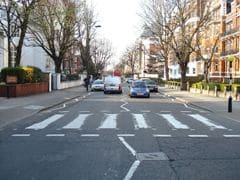
    Abbey Road by M. Caimary
    Abbey Road with no Beatles on it

    13 Crappy or at Least Mediocre Beatles Songs or…You Can Polish an Apple But You Can’t Polish a TurdLet’s go over the criteria first. Only songs that were widely-known during the Beatles era (ending 12/31/70) are eligible.  That excludes “Anthology” plus Star Club and BBC recordings because they were released later. (Some BBC material was circulating in the UK, but its existence was not widely known.) Songs by The Beatles will be included even if not all Beatles play on the song but we will exclude solo releases and guest sessions. We will also exclude George Martin’s instrumentals and anything else not definitely by the Beatles, such as mis-attributed Tony Sheridan recordings and fakes like Have You Heard The Word.

    And I Love Her (1964)  George Martin barely had to change the arrangement to record his cheesy instrumental version for the US .  ‘Nuff said.

    Two of Us (1969) I can’t imagine why Phil Spector chose to kick off “Let It Be” with this dismal song.  Maybe it was to make Dig a Pony sound better. It lacks that special sonic something most Beatles records have. One reason is because nobody is playing bass. (George plays bass lines on a guitar.) Even with three guitars, the most interesting thing anybody plays is that lick at the beginning. We get this from the guys who came up with the bang that opens A Hard Day’s Night?

    The lyrics are mostly meaningless. We are doing something together, but what? And why? The nonsense lyrics in I Am The Walrus and even Glass Onion work because the imagery is so strong. It’s like John just didn’t try on this one. Paul sings in his fake cheery mode. John sounds like he just got up and George can’t even be bothered to sing. Overall, it sounds like they never really figured out what to do with this song.  Too bad they didn’t have anything else ready.

    Dig A Pony (1969)  The riff is sluggish but not heavy, and syncopated but not funky. We get more half-assed Lennon-doing-Carroll lyrics with a mediocre lead vocal. Nice guitar solo, though.


    Mr. Moonlight (1964) Easy target. This song alternates with Revolution  (which isn’t on this list) for the top spot in any worst-Beatle-song fan poll. It has uninspired vocal arrangements, cornball lyrics and an organ solo only Walter Wanderly could love.

    The Long and Winding Road (1969)-Even without Phil Spector’s oft-criticized orchestration, it’s a very sappy song. It’s too long and boring the way the Beatles played it.  The Wings Over America version is better, but we wouldn’t have known that in 1970

    Her Majesty(1969)-Funny and cute, to be sure, but it totally spoils what they were building over the previous twenty minutes. People pretend it doesn’t exist when they say that “and in the end/the love you take/is equal to the love you make” was the last lyric on the last song on the last Beatles album. Come to think of it, they pretend that Let It Be doesn’t exist either.

    P.S. I Love You (1962)-It’s got a lousy beat and you can’t dance to it. It’s not his drumming.

    What Goes On (1965)-Horribly boring drumming from an otherwise exciting drummer. Blame Ringo. Not only does he drum here, he wrote the song.

    The Ballad Of John and Yoko (1969)-Yoko may have inspired John, but not the day he wrote and found Paul to record this song. It’s just lame rock and roll cliche without anything special.

    Baby’s In Black (1964)- Hack songwriting. They never found a good arrangement for the song. You can tell by the plodding waltz beat that the rhythm section had no idea what to do. We would have heard them butcher this on the 1965 tour.

    Matchbox (1964)- Obviously it was time to record a contribution from Ringo. They had nothing ready so they pulled out one of their old live songs. Matchbox’s lyrics are seemingly pulled at random from blues songs. The melody is boring but I guess Ringo could sing it, so it was good enough. It’s too bad, because we could have had another Boys instead.

    Chains (1962)- This is just a boring girl-group number. The Beatles were capable of great harmonies but they stuck with tried-and-true block harmonies here.

    There’s A Place (1962)- Like “P.S. I Love You”, this song is just too much like other pop songs of 1962.

    Did you notice a pattern? Most of these songs were recorded during three transitional periods of the Beatles’ career. They were at their worst right before they were at their best. The first transitional period was when they were beginning to record in 1962. Their songwriting skills were still immature and George Martin hadn’t figured out what was special about them. They had yet to prove that they – or any rock and roll band – deserved much time in the studio. It didn’t take long for the Beatles to get the hang of things.  She Loves You was right around the corner.

    Their next challenging period was in late 1964, while they were working on “Beatles For Sale”, “Beatles” and “Beatles VI”, (depending on where/when you grew up). They were exhausted after two years of Beatlemania and four years on the road. They didn’t have enough time to write songs. Recording sessions were rushed, snuck in between gigs. They took a vacation, grew up a little and gave us “Rubber Soul”.

    Finally, we get to depressing 1969 and the Let it Be debacle. Paul was the only Beatle interested in being a Beatle, so the quality suffered. John was strung out and contributed little of value, other than the excellent Don’t Get Me Down. George had some great songs, but John and Paul weren’t very interested. Ringo was there, but how much help was he going to be? Soon after, the Beatles reconvened for their last gasp and best album, Abbey Road.

    By 1970, they had gone their separate ways and over the next four years, they treated us to a fantastic array of solo albums: “Plastic Ono Band”, “All Things Must Pass”, “Imagine”, “Ram”, “Living In The Material World”, “Band On The Run”, “Ringo”, and others that are excellent in spots. Like everyone else, the Beatles sometimes sucked. One of the reasons they were so great was that they could pick themselves up, turn the corner, and be awesome once more.