web analytics

Tag: disco

  • Stephen King’s “The Stand”: An Epic Showdown of Good vs. Evil (Music)

    Though I’m sure he’s done okay for himself as a novelist, I’ve always believed that deep down inside, Stephen King really always dreamed of being a rock star. Or barring that – there is, after all, the matter of his looks – a rockin’ rollin’ DJ in the 50s mode, when local DJs were bigger rock stars than the rock stars themselves. When I was in junior high and high school, I spent a lot of time reading Stephen King’s books and one of the things I remember loving – in fact, the one thing that drew me to his books long after the stories themselves ceased to interest me was the way he worked music into them. (I loved a lot of Robert Cormier’s books for the same reason – he introduced me to the Stones’ “19th Nervous Breakdown” via his novel I Am the Cheese, at a time when those old British fogies were bogged down in crud like “One Hit to the Body” and nothing could seem less cool than a Rolling Stones song to a 10-year-old whose musical memory ended somewhere between Andy Gibb and Captain & Tennille.)

    A lot of times, King’s inner DJ came out in the epigram (or three) at the beginning of each book (and maybe each chapter of the book too) – a stanza from Dylan, a couplet from CCR, etc. But Stephen King was also never above letting his characters give his inner record critic a voice. And it was a critic of the old school “rockist” variety. I can’t remember exactly which book it is (The Tommyknockers?), but I remember feeling awfully put out when one of his characters thought to himself, upon hearing T. Rex’s “Bang A Gong”, that Marc Bolan was better off dead in a world where the Power Station could cover his glam rock anthem.
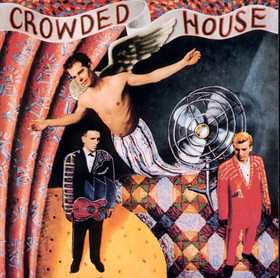
    Good
    Yesterday, the Syfy Channel devoted its entire programming schedule to movies (or rather, made-for-TV miniseries) adapted from Stephen King stories, and I am sad to report that I spent very nearly 8 hours (interrupted only by a quick trip to Pizza Hut) watching “The Stand”, an epic in four two-hour parts starring Rob Lowe as a deaf mute, Gary Sinise as a reluctant prophet, and Molly Ringwald as a Mary figure – hers is not a virgin pregnancy, but the baby’s father was killed in a massive superflu plague that wiped out most all of humanity. Like the massive 1978 novel it was based on (made even massiver when a “complete and uncut edition” was published 12 years later), the miniseries is a pulpy vision of an apocalyptic showdown between good and evil in the Great American West, with the devil (incarnate as a man called Randall Flagg) setting up shop in Las Vegas (surprise!) and the righteous, led by a mystical, 106-year-old black woman who plays guitar and sings hymns on her porch (didn’t see that one coming, did you?) flocking to a land of milk and honey called Boulder, Colorado.

    Stephen King wrote the tele-play for the series and there are times when I wonder if he was being intentionally unintentionally hilarious with the dialog. Bill Fagerbakke (better known to folks my age as that big dimwitted Dauber from Coach, and to the kids of folks my age as the voice of Patrick Star) gets the best worst line when, playing to type as simpleton-with-a-heart-of-gold Tom Cullen, he laments (I’m paraphrasing), “I hate being a retard.” Several times, I got the feeling that this movie would be so much more fun if I could watch it in the same room with Sarah Palin. Stephen King even makes a cameo!
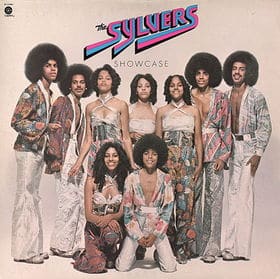
    Evil
    And then I noticed that Stephen King’s inner rock critic also makes a cameo. In the opening scene of the second part, we see Mother Molly Ringwald listening to Crowded House’s “Don’t Dream It’s Over” on a turntable. Meanwhile, another one of his heroes is Larry Underwood, an aspiring musician who carries a guitar on his back. In one scene, he sits on the hood of a car singing 60s folkie Barry McGuire’s “Eve of Destruction” while Des Moines burns in the background. On the other hand, here’s one Harold Lauder, an insecure nerd (and unwitting minion of Satan – you can tell by his studded leather jacket) who’s never recovered from high school, plotting a terrorist attack on the “Free Zone” to exact revenge on Molly Ringwald for rejecting his affections in favor of Gary Sinise. And what’s Harold playing (on a cassette, no less!) while he’s building his bomb in the basement? The Sylvers’ “Boogie Fever”. The message of the movie couldn’t be clearer! Acoustic folk rock singer-songwriters, good. Disco: evil. Whoever said that rock n’ roll is the devil’s music?

    Then again, the message gets muddy during the climactic final battle between the forces of good and evil. Larry Underwood, one of three emissaries from the Free Zone sent to represent in the final battle against Randall Flagg in Las Vegas, is first arrested, and then besieged by a bloodthirsty mob. At one point, one of Flagg’s henchman confiscates Larry’s guitar and smashes it to bits, shouting “Disco is dead!”

  • The Daily Awesome 8/20/10: Giorgio Moroder “Baby Blue” (1979)

    We may associate dance music with the clubs, the strobelights, the bathroom drug deals and sticky bathroom floors, but in this video for his 1979 hit “Baby Blue” (not to be confused at all with songs by Badfinger or Bob Dylan), Italian disco, bubblegum, and electronic music pioneer (not to mention mastermind behind some of the most memorable soundtrack music of the 80s) Giorgio Moroder – who, in April, celebrated his 70th birthday! – demonstrates what dance music is really all about: precision and professionalism, science and technology. Aww yeah. Shake that groove thing. Layers of interconnected, burbling synths, vocoders and cheesy falsetto harmonies, all backed by a solid disco beat? Just another day at the office for Giorgio Moroder.

  • FORTY-FIVE REVOLUTIONS PER MINUTE #37: Midnight At The Blurasis

    Desmond Child & Rouge "Our Love Is Insane"

    DESMOND CHILD & ROUGE  “Our Love Is Insane”  b/w  “City In Heat” (Capitol Records #4669, 1978)

    I was never one of those “Disco Sucks” guys.  In fact, disco pretty much freaked me out and blew me away from the beginning, before the genre even had a name.  George McRae’s super-sexy and shimmering “Rock Your Baby”…was it soul?  Funk?  Pop?  Or was it such a smash that it didn’t even matter?  On a daily basis, Merv Griffin brought the most inventive and outlandish disco acts of the ’70’s into suburban American living rooms via his afternoon syndicated chat show.  Among them were The Village People, Chic, Grace Jones, Sylvester and the unforgettable Donna Summer, whose operatic moans coupled with Giorgio Moroder’s pulsating European synthesizers propelled popular music into the techno-sexual stratosphere, never to fully recover.  By this time, disco was (and still is), like it or not, an indelible part of the American landscape.

    Trolling for obscure new wave imports in a little restroom-sized headshop called Grooves, I stumbled upon this pug-fugly slab of vomit-swirled purple vinyl by Desmond Child & Rouge.  I had never heard of them, but this record looked so disgusting (like a baby had puked up a messy mix of grape sherbet, blood and charcoal) that I just couldn’t resist.  I had seen colored vinyl before, even owned a few pieces of see-thru plastic, and picture-discs were popular then amongst collectors, but Lord Almighty.  I’d never encountered anything this revolting that didn’t require a mop and lots of Pine-Sol.  Sold!

    Our Swirled Purple Vinyl Is Insane

    From the opening bass-&-kick-drum punch on the first listen, it was very clear that “Our Love Is Insane” was not going to be the slick, glossy, overproduced kind of disco then cluttering up the post-Saturday Night Fever airwaves.  This was grittier, more underground and more urban in nature.  This was a foreshadowing of the dance-rock about to come.  This was the future.

    Play \”Our Love Is Insane\” by Desmond Child & Rouge

    The hot, pounding rhythm section and hard-rock guitars lay a nice rough bed for the intertwining, cascading vocals of the Rouge girls, who ooze a very natural, classy, liberated New York sexiness that I just don’t see anywhere anymore.  “Insane” never significantly charted, but became a considerable club smash.  Within weeks, more rock acts were allowing disco rhythms to creep into their repertoires, and more disco acts were beefing up the guitars and sneaking in a little more rock.  Soon Donna Summer herself would score big with the one-two punch of “Bad Girls” and “Hot Stuff,” which both sound eerily close to this track. On the streets of New York, rock drum patterns and disco basslines were being rapped over in the Bronx, and a young Madonna was planning her attack down on the LES.  Let the ’80’s begin.

    On the flipside, “City In Heat” provides a heavy swirl of hard guitars, piano, bongos and jazzy vocal scatting that ebbs downward and builds back up to staccato crescendos.  Perfect soundtrack music for an episode of Starsky & Hutch or S.W.A.T., but not the unique barn-burner the A-side proved to be.  That’s OK, though;  they can’t all be winners.

    “Winner” is, however, a word that can easily be applied to Desmond Child.  After a 2nd Capitol LP with Rouge, Child embarked on a songwriting career that singlehandedly leaves most others in the dust.  You can find a stunning (and ever-growing) list of his hit credits here, and you can see, hear and learn more at his website, but chances are you probably have a Child-penned song running through your head at any given moment.

    NEXT WEEK: Your head is shaking and your arms are shaking and your feet are shaking because the Earth is shaking.