The new ad campaign for the roll-out of BlackBerry’s PlayBook tablet is based around a long-forgotten song – a flop upon its release – by a vocal group who, while regarded as legendary today, was generally (and sort of accurately) considered a bunch of has-beens when they recorded it all of 31 years ago. First of all: Thank You, BlackBerry! Your taste in music is awesome. Secondly: Good luck with that.
When we think of The Temptations, there are two different incarnations that come to mind. There’s the early-mid-60s Smokey Robinson-produced Temptations, who, after toiling away fairly fruitlessly in Motown’s gold (record) mines for nearly three years, finally hit the motherlode with ebullient pop ditties like “The Way You Do The Things You Do” and the lovely, beaming “My Girl”.
Then there’s the darker, funkier Norman Whitfield Temptations of the late 60s and early 70s, defined by its flights of social commentary set to increasingly elaborate and psychedelic orchestrations. These were songs that sounded spacey and felt spacious, draped in echoes and strings and deep, almost subliminal basslines, culminating in the twin peaks of “Just My Imagination (Running Away With Me)”, a lushly harmonized, string-bedded, ballad of wishful thinking so beautifully and precisely realized it’s almost physically painful (in the best possible way) to hear, and the 1973 epic “Papa Was a Rolling Stone”, a song The Temptations didn’t even get the first stab at (Whitfield had recorded it with The Undisputed Truth a year earlier), but which remains one of the group’s most iconic hits.
But The Temptations discography gets a little fuzzy after that. In fact, though The Temptations, amidst myriad personnel changes, continued recording on a fairly regular basis well into the 90s (they still pop out an album every now and then), they’ve never come close to their earlier successes, and virtually everything they’ve recorded since, say, 1975, has gone largely forgotten, even by many Temptations anthologies. Which makes hearing their 1980 single “Power” on a new commercial for BlackBerry’s PlayBook tablet such a great surprise.
Anchored by the late great Melvin Franklin’s distinctive “po-ower, poom, poom” vocal bassline, “Power” is a fire-and-brimstone gospel sermon delivered over a just-past-disco groove by Dennis Edwards in full-on revival preacher mode: “All you poor!” Edwards declaims, “All you needy! All you’re doin’ is givin’ to the greedy!” The song clearly spoke to its own end-of-the-Carter-era moment although its prescription for salvation pointedly disincludes anything about, say, electing Republican candidates to national office. It’s more about giving glory to God than giving glory to people who pay God lip service. 30-plus years later, it feels utterly true to the weird conflation of religious zeal and the mightily propagandized fiscal policy panic of 2011. Go, BlackBerry!
The song was to have been the group’s great comeback single: Like The Spinners before them, The Temptations left Motown in the mid-70s to record for Ahmet Ertegun’s Atlantic label. They were one of the last of the classic Motown acts to either disband or defect from Motown. But unlike the Spinners who found their greatest success on Atlantic with an enviable string of hits between 1972 to 1980, The Temptations’ Atlantic tenure was brief and depressingly hitless. PlayBook! Yes!
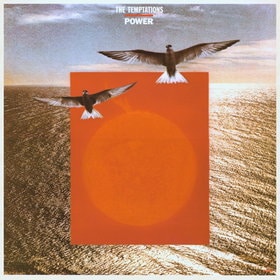
It was Berry Gordy himself who’d wooed the The Temptations back to the fold with “Power”, a song he’d co-written, which he’d claimed to have been sitting on because he didn’t have anyone like The Temptations to record it. Gordy produced the track with a hearty nod to the group’s Norman Whitfield heyday, and it became the title track of the group’s 1980 homecoming album.
But even though “Power” became the group’s biggest hit in 5 years (and, sadly, it remains the group’s best charting single since their return to Motown), it stalled just outside of Billboard’s Top 40. The hedonistic days of disco weren’t yet a distant memory, and the song’s fate seems to speak more to pop radio’s BeeGees hangover than the song’s quality: people just weren’t ready to hear something this sincerely angry just yet – not on Top 40 radio at least. Which makes the song’s Age of AutoTune resurrection in the form of a national ad campaign for a semi-snazzy (although somewhat late-to-the-party, it seems) new tech gadget one of the sweeter, most out-of-nowhere musical surprises of this year. Hear the song in all its righteous fury here: