web analytics

Category: Reviews

music-and-concert-reviews-you-wont-see-anywhere-else

  • #23 album of 2013 – Giulietta Masina at the Oscars Crying by Bob Wiseman

    #23 album of 2013 – Giulietta Masina at the Oscars Crying by Bob Wiseman

    Artist: Bob Wiseman

    Album: Giulietta Masina at the Oscars Crying

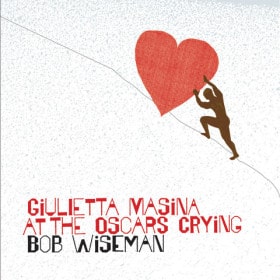
    Bob Wiseman first got my attention in 1993, in the wake of Prince legally changing his name (Prince Rogers Nelson) to a squiggle: Wiseman sent out press releases announcing that henceforth he, Bob Wiseman, would be known as Prince. Former bob_wiseman_giuliettaPrince’s lawyers were extremely aggressive in shutting him down, but I was charmed by Wiseman’s nerve, and picked up his compilation album In By Of. I found it full of quirky, minimalist, lo-fi arrangement ideas and odd-yet-earnest lyrics, and kept the album around. I also found his high, reedy voice incredibly tuneless and incompetent, so I virtually never *listened* to it. But when I read an extremely enthusiastic PopMatters review of his 2013 album Giulietta Masina at the Oscars Crying, I figured “Hey, maybe he’s learned to sing in the last two decades; what the heck”. He had indeed — his voice is still reedy and a bit imprecise, but tunefully gliding and expressive — while he’s also strengthened his arranging skills and lyric-writing, which were his strengths to begin with. And now I’m ready to be enthusiastic about him in my own right, for you.
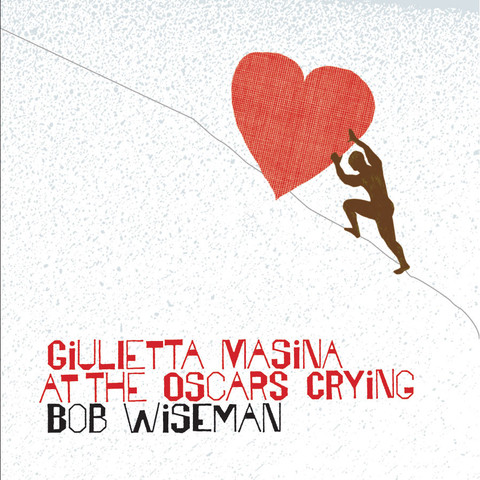
    All of the song titles form the structure “(person/thing) at (setting)”: these are songs as portraiture. The barbershop quartet-like title track (with exotic violin-and-chanting-and-soldier-drums break) salutes and sadly outlines the life of Federico Fellini’s actress wife: “Crying for her man and the recognition, no pension plans … played the part of a prostitute/ who would not lose her heart, let men lie and loot … 1 baby dead, 3 gravesites, 2 artists wed… 8 and 1/2”. Neil Young at the Junos, expansive and piano-driven like Elton John’s Goodbye Yellow Brick Road era, honors Young’s annual benefits for the Bridge School (for severely handicapped children), his willingness to pick political fights, and, why not?, his model train collection, even while being about the texture of a life where “People want their pictures taken with you, secretly afraid their hairstyle will be wrong” and “You lay down your head in some overpriced fancy hotel bed”. Mothface@yahoo.com, a jaunty yet awkward Broadway tune on brass and drums, is for a deceased performance-artist/ actress ex-girlfriend, but centers on how much he liked a speech at her funeral by someone he’d never expected to empathize with about anything.

    Many of the portraits on Giulietta Masina at the Oscars Crying also double as fierce critiques of the world they occur in. Robert Dziekanski at the Vancouver Airport, driven by percussive piano, tells us the too-easily-forgotten newspaper story of a Polish immigrant murdered by police in a Canadian airport: “People tried to tell them I didn’t speak English/ People tried to tell them I wasn’t stoned/ People tried to tell them I was unarmed and alone./ Took them almost five seconds to decide in their expert opinion to fire./They found themselves not guilty … surprise!” Ruby Bates at Grad School is about the Scottsboro Boys case — nine black boys jailed for decades on false charges of rape — but focuses, with respect, on one of their two accusers, the bob-wiseman (pic by Zachary Houle)one who later recanted her charges and devoted much of her life to civil rights in general and to unsuccessfully trying to free the people she’d doomed. Aristide at the Press Conference summarizes 200 years of Haiti’s history and honors its would-be president: “Democratically inspected, three times re-elected … the puppet turned around and faced the puppeteer:/ ‘You owe me lost wages, am I being clear?’ … Now shocked and afraid, the French and USA, and even their Canadian friends. He’s removed from power, it’s kidnapping hour, because he said ‘This extortion must end’”. It’s not the tale as the New York Times told it — I know this because at the time I would read their foreign policy coverage and assume its general accuracy — and it’s also not particularly subtle. But on its side it has warped and energetic acoustic blues guitar, rousing female backup singers (part gospel, part blues, part playground), sneaky electric solos, and righteousness. I like Bob Wiseman‘s weapons.

    The music on Giulietta Masina is striking for how weirdly hard-to-describe it is, when it’s built from mainstream elements. The ultra-danceable Reform Party at Burning Man has funk, circa-1970 Rolling Stones, jazz piano, James Brown, and Lovely Rita Meter Maid all influencing it somewhere. Lobbyists at Parliament, just as danceable, has Motown, Bo Diddly, exceptionally busy percussion, and a strange little drift that leads into a treble organ solo. Ruby Bates at Grad School is piano ballad and ghostly march, with a distinctive little violin piece, slide guitar, and female torch singing in the background. Portrait of Phil at Various Times in the Closet has the elements of 1970s The Band/ Eagles/ Warren Zevon/ Fleetwood Mac mainstream pop, but it shambles and wobbles and lurches and chants, and builds something memorable and softly dramatic.

    It all supports a set of lyrics determined to look at, and learn from, as much of his hemisphere as he can. The villains in Bob Wiseman‘s songs are the people (the many, many people) who use power to shut down protests, arrest inconveniently-elected officials, or just torment anyone who’s too different. He fights them using, not just stories, but variety, the tunes of every low culture he can find. Makes sense to me.

    – Brian Block

    To see the rest of our favorites, visit our Favorite Albums of 2013 page!

    Technical note: we include an Amazon link for Wiseman’s most recent album *prior* to Giulietta Masina because it’s good too, and we make a tiny but helpful bit of money when you buy albums through our links. That said, to buy the album under review, which might seem more directly on-point, go to his bandcamp page .

  • Review of The 1971 Fillmore East Recordings by the Allman Brothers Band

    Review of The 1971 Fillmore East Recordings by the Allman Brothers Band

    Sometimes it’s cool to write music reviews, especially if it gets you a sneak peak of live recordings by the Allman Brothers Band…

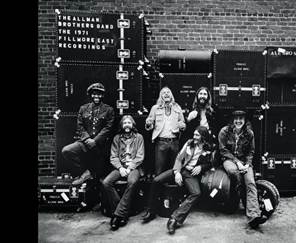
    On July 29, 2014, something old by the Allman Brothers Band will morph into something new. For many years, their album At Fillmore East has been regarded as a crowning achievement in the world of live rock recordings. But that album, as excellent as it is, was somewhat incomplete because it only included highlights of recordings made over the weekend of March 12-13, 1971 and Fillmore East’s closing night, June 27, 1971. Fillmore East was a legendary concert venue in New York City, which operated from 1968 until 1971. Promoter Bill Graham owned Fillmore East, as well as its counterparts on the West Coast, Fillmore Auditorium and Fillmore West, in San Francisco, California. Next week, on the 29th of July, Allman Brothers Band fans will get to hear all of the concerts played in March 1971 and the entire concert from June 27, 1971. What results is a new box set entitled The 1971 Fillmore East Recordings. The new box set will come in three formats: six CDs, four LPs, or three Blu-ray DVDs.

    I jumped when the opportunity came up for me to review this box set. I love the Allman Brothers Band’s music, especially when they play live. Though I didn’t happen to own a copy of their At Fillmore East album, I had heard enough of their live stylings to know that I’d enjoy this box set. I’ve spent most of today listening to the six CD version of this new box set and I have really gained a new appreciation for the Allman Brothers Band. These concerts were recorded just after the band, which is one of the defining examples of Southern rock, had released its second album. The live album put them on the map. Unfortunately, not long after At Fillmore East was released to great critical acclaim, founding member Duane Allman was killed in a motorcycle accident. The date was October 29, 2972 and he was only 24 years old at the time. Berry Oakley, the original bassist who played on these recordings, also died at age 24 in 1972.


    “Stormy Monday” from At Fillmore East.

    The 1971 Fillmore East Recordings is a great box set for hard core Allman Brothers Band fans. What you’ll get is a lot of joyfully played Southern rock, blended with blues and jazz and long, passionate jams by Dickey Betts on guitar juxtaposed with Gregg Allman’s too sexy for words vocals and Chuck Leavell’s sensual organ. I’m guessing that any one of the shows featured on this box set were unforgettable. That being said, I will comment again that I’ve been listening to this box set all day and as these are concerts from 1971, before some of the Allman Brothers Band’s biggest hits were recorded, you’ll get a lot of repetition. For example, this box set has four different versions of “Statesboro Blues”, all of which are only slightly different from each other. It also has three different versions of “Whipping Post”, each of which run for approximately 20 minutes. Don’t get me wrong… each version of these songs is a delight! But listening to this box set straight through may lead to overload, which is why I recommend taking your time and really savoring each disc. Taken just a bit at a time, these recordings are stellar, with amazingly creative jams that surely transfixed the audience. Moreover, you also get unedited versions of gems like “Mountain Jam”, which runs for over 35 minutes, and some previously unreleased material.

    It’s been such a pleasure to sit here and listen to the Allman Brothers Band play when they were up and coming. There are some moments on this box set that I like better than others. For instance, the song “Stormy Monday” is pure bliss, with its effortlessly bluesy sound and Gregg Allman’s soulful voice like an aural orgasm. As I’ve listened to them today, it occurs to me how much they’ve influenced other great acts… for instance, Robert Randolph and the Family Band, which has done some songs that remind me very much of early Allman Brothers Band. The Allman Brothers truly mastered the art of live jamming and others have taken note and emulated them.

    The 1971 Fillmore East Recordings are well worth owning if you’re a fan of The Allman Brothers Band’s music. It’s a box set that is great to just sit and listen to and admire. You can hear the band members banter and engage the crowd; it’s like hearing a piece of rock and roll history. For those who are hoping for “Jessica”, “Melissa”, or “Ramblin’ Man”, The 1971 Fillmore East Recordings will be a disappointment because those songs came later in the band’s history. If you want to hear where it all began– with all the original members– you’d do well to pick up a copy of this box set. I’m sure I’ll enjoy it for some time to come! Highly recommended!

    On another note, starting next week I will be very much engaged in my move to Germany, so I may not be around much until we get settled, which could take a few weeks. Until then, be well! See you on the flip side!

  • #24 album of 2013 – the Root, the Leaf & the Bone by Manning

    #24 album of 2013 – the Root, the Leaf & the Bone by Manning

    Artist: Manning

    Album: the Root, the Leaf, and the Bone

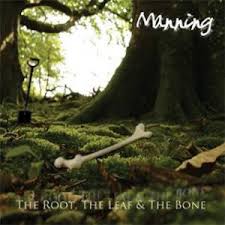
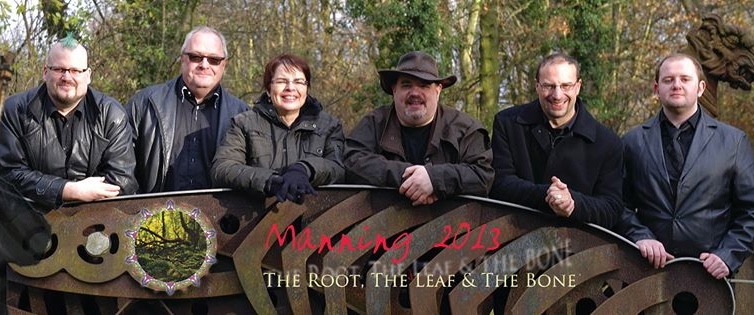
    Manning, the band led by songwriter/ singer/ many-instrumentalist Guy Manning, play long, evolving, mostly very pretty songs notable for (1) Guy Manning’s Ian Anderson (Jethro Tull)-like voice and melodies and (2) lots of opportunities for different instruments (flute, Manning_Root_Leaf_Boneclarinet, sax, piano, rock organ, violin) to get little show-off moments. The Root, the Leaf, and the Bone is only the second of their albums I’ve heard, meaning I was startled to discover it’s their 13th record of original songs since 1999. I like it a fair bit better than 2004’s (good) a Matter of Life and Death, but all I can say of the Root, the Leaf, and the Bone‘s place in the Manning discography is that their 2004 and 2013 incarnations are quite obviously the same band, in a way that some 9-year separations of Cure or Rush or Radiohead albums might not be.

    I’m dodging the words “progressive rock” because surely that term means “music that makes my wife say ‘Please turn that off’”, and Manning don’t annoy her. Guy’s handsome voice is a scruffy, manly British baritone; the songs are mostly in 4/4; the solos don’t show off *that* much; and the lyrics make sense. The one radio-length song here, Decon(struction) Blues, is as catchy, rocking, and flute-driven as any of Jethro Tull’s Classic Rock hits, and the longer tracks fill out their Tull melodic frames with the pleasant stateliness recalling early, Peter Gabriel-led Genesis. I learned of this new Manning album from ProgArchives, though, and its title track is 12 minutes of heavy segmentation; it’s one thing for me to argue that they deserve a fair chance from skeptics, but there’s no point in denial. It’s a classic-rock friendly, and pastoral-folk friendly, version, that’s all.

    I’ll focus on the lovely Autumn Song as my example of how Manning operate. Lyrically it’s about the season when plants, still vibrant, prepare for a season of bleakness and sleep: “The meadow blooms are waning, the hedge rows limply thin/ displaying the empty nests, where the birds were held within/ How easy for time to slip away”. Implicitly, it’s also about death, but “Don’t get depressed too soon/ we all are alive and in tune/ remember this is just an Autumn Song”.

    * It begins with two verses of a simple, thoughtful piano ballad, soon accented with saxophone, then joined by shimmering, oscillating high synthesizer, then too by a flute on the chorus as the drum-beat starts pushing it along.

    * Two more ballad verses are centered on that flute and sax (oboe? clarinet? the tone feels in-between to me). The second chorus ends on a slightly unnerving note, and a drum-and-several-woodwind instrumental slips towards dark carnival territory.

    * A multi-vocal bridge, with sax in smooth-jazz mode, brings the tone from questioning back towards confident.

    * Two more verses, louder than before, center on piano and swiftly-picked mandolin. Now the chorus remixes different instrumental tones from before; it re-uses the odd-note ending but moves straight into a confident re-use of the vocal bridge.

    * The song’s final minute, of seven, is instrumental, pretty, and reflective, with Guy crooning absently a couple of times: you don’t expect a sudden blooming of new ideas as a song about autumn flows towards winter, but there’s still time to wander around noticing nifty features.

    The Forge starts out with a harsh anvil percussiveness, and more forceful organ, but on the whole it’s still gentle, alternately jazzy and full of Manning @ Int'l Prog Rock Showrousing group vocals. It celebrates how “the bellows and furnace dance in furious harmony/ wind and flame on a bed of earth in elemental symmetry”, more than it mourns their replacement by assembly line and time-study men; the organ turns winding and sinister when the song comes ’round to the latter’s ascendance, but the sax still tootles along pleasantly. The expansive Old School feels very Supertramp Crime of the Century to me, although its lyrics are a much better-written version of Another Brick in the Wall. The bouncy, fiddle-driven, group-chorusing Huntsman and the Poacher is the 2nd-shortest, 1st-or-2nd-liveliest, and 2nd-most-radio-plausible song here — it eventually fills out with organ, cello, and clarinet arrangements, though, too nicely composed and developed to pass off as a minor deviation. Mists of Morning Calling to the Day is full of percussive oomph and Guy Manning’s loudest, most impressively breath-control-testing vocals.

    The Root, the Leaf, and the Bone makes the case for Jethro Tull as an important, inspiring band, and for pianos, violins, woodwinds, and both paganism and guild-craftsman pride as natural parts of classic rock. I am sympathetic to these arguments. But it’s the thoughtful loveliness of the music that counts.

    – Brian Block

    To see the rest of our favorites, visit our Favorite Albums of 2013 page!