web analytics

Category: Reviews

music-and-concert-reviews-you-wont-see-anywhere-else

  • Review – Whitney Houston Looks To You To Reinvigorate Her Music Career

    It took her seven years, but Whitney Houston is back, and if you believe the themes of her new album, I Look To You, she’s put her problems in her rear view mirror.

    The first thing that should be talked about is her legendary voice. It’s not the same Whitney voice that you remember, but that’s not a bad thing. It’s consistent and while it doesn’t seem that she can hit those crazy notes of yesteryear, it’s still good and in this case, less can be more.

    Whitty Hutton Wuld Tour
    Back in the mid 90s on Martin Lawrence’s hit TV show, there was a story line in which he was jobless and decided to sell bootleg Whitney Houston t-shirts outside of her concert. His partner Brother Man couldn’t spell very well, so instead of saying, “Whitney Houston World Tour”, the shirt said, “Whitty Hutton Wuld Tour”. When Whitney Houston became the “crack is wack” Whitney, I just started calling her Whitty Hutton. It fit. The once singer of golden songs became a joke.
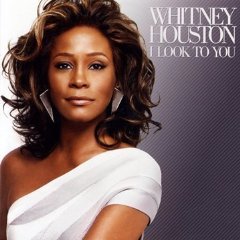
    Whitney Houston's I Look To You
    Whitney Houston’s I Look To You
    But if you believe the songs on her new album, that past is behind her. With songs like Nothin’ But Love, she forgives the haters, and even the people who tried to break her. The theme behind the song is that she’s so beyond her problems and thus, she has nothin’ but love for everyone. It’s not a very strong song and is plodding, but it provides a key point, and it’s that Whitney is trying to move forward. If only she tapped Heavy D for a fun sixteen bars.

    On Salute, which is written and produced by R. Kelly, she even borrows from Todd Smith’s classic line. Over a piano bed, she calls herself a soldier girl for standing strong.

    Don’t call it a comeback, I’ve been here for years.

    Who is she saluting? She’s trying to be the bigger person in saluting who you have to believe is Bobby Brown, as a way to get over her past issues and struggles in life.

    Is She Still Our Baby Tonight?
    Back in the mid to late 80s, Whitney Houston was so charming. I remember seeing her on the Arsenio Hall show and she had swagger before I knew what swagger was. She could’ve been Miss America, a great actress, and the world’s biggest pop star all in one, and I wouldn’t have been surprised. She played nicely, and while you could tell she had a little bit of a chip on her shoulder, but she gave you that wink and nod and simply owned the stage. Bill Cosby even wanted her to play his oldest daughter Sondra on The Cosby Show. But during the 90s, she wasn’t that Whitney anymore.

    Fast forward some 20 years and she’ll never be able to be America’s Sweetheart again. But can she get back some of what she lost?

    Lead single Million Dollar Bill has the team of Alicia Keys and Swizz Beatz behind it, yet it’s slightly underwhelming. It does put Whitney immediately in a positive light as there are only so many songs she can do with the comeback theme before people start rolling their eyes. It’s not as strong as the Akon flavored Like I Never Left, which except for the fact that it starts off annoyingly with Akon making sure we understand that it’s a Konvict record, is sweet and light. Call You Tonight is signature Starlight, the Spotlight (Jennifer Hudson), of the album.

    Whitney performs Million Dollar Bill on Good Morning American


    What’s The Big “Whitney” Song That We’ll All Remember This Album By?

    Sadly, there isn’t one. My favorite song on the album is the aforementioned Akon duet. But I think she and Clive Davis meant for it to be the title track. I Look To You is the second single on the album and is written by R. Kelly. It’s a slowly laced piano ballad in which she continues with the comeback theme. However, the stronger ballad in my opinion is the Diane Warren/David Foster helmed I Didn’t Know My Own Strength. It showcases Whitney’s voice in a very vulnerable place. The song builds up dramatically and is fulfilling by the end.

    Save for the terrible Euro-dance version of A Song For You, there’s absolutely nothing wrong with Whitney’s comeback album. But there’s nothing on here that’s going to shock the world either. It should appease her current fanbase, which I guess is the goal. It’s a nice album, but one in which most music fans will be able to do without.

  • BLACKsummersnight by Maxwell

    In, “BLACKsummersnight,” his 4th studio album, Maxwell scraps every single construct that has made him popular. The warm, afro coifed R&B god that could have passed for a fashion model is gone, replaced by a clean cut, moody man with a serious case of the thirty somethings. In place of the smooth, up tempo funk that seemed ready made for urban coffee houses is a darker sound; more attuned to low chords and minor keys; night time music too edgy for your modern night club. Even the record packaging is different; whereas Urban Hang Suite, Embrya, and Now emanated a bright, United Colors of Benetton vibe, “BLACK”, with the picture of him right profile in darkness, has the feel of a Himes novel cover.

    In short, he’s made a neo-soul album that will make your typical neo soul fan want to run from the room. Those more inclined to stay and listen to such outrages might love “BLACKsummersnight”, a near masterpiece full of uneasy, immense passions, a record as complex in it’s sadness as his earlier records were simple in their manners. In turns sardonic, wistful, smart and horny; it is as fierce a statement of individuality as I have heard from a top 40 R&B star. More than that, it is a genuine risk, a tremendous, yet thoughtful one, full of diverse influences, yet unafraid to make you slowly shake your ass. “BLACK” is Maxwell made new, full of fresh, bright ideas that need to taken seriously and listened to by as many people as possible.


    To understand how much of a gamble this is for him, you have to understand how much of a gamble his earlier records were not. With 1996’s Urban Hang Suite, Maxwell was packaged as a newer, nicer version of Marvin Gaye( going so far as to hire Leon Ware, one of Marvin’s old producers) and his subsequent records ,1998’s Embrya, and 2001’s Now, strayed little from the same formula. The records are nowhere near as bad or as good as their critics say they are, and it is a testament to his talent that he could carry them so successfully; even shining in the rare occasion that he broke his own mold. The problem with the records were that they were just that, a mould, something to fulfill a market niche.


    If you listen to it once, you might think that “Pretty Wings” his first single from “BLACK” is a continuation of that same mold; but only if you listen to it once. The same Muze sound is there, but Murkier, with muddy horns, slower chord progressions, and an organ that seems far, far too sleepy for church. Maxwell is there too, telling a lover goodbye in a passive aggressive language that harkens the creepy aesthetics of Eric Benet, R&B première sensitive phony. Just as you want to turn it off, however, Maxwell comes in with

    “I came wrong, you were right/Transformed your love into like”

    And begins to break down every convention of the R&B breakup song I have ever heard. Instead of phony I’m sorries, emo kiss offs, or quasi sociopathic sneers, Maxwell presents himself mixed up, vulnerable, willing to admit he’s stupid, but not to interested in wanting a cookie for it.Pretty Wings” is far more complex than any song with the hook “take your pretty wings and fly” needs to be; almost Ashberry esque in its garbled narrative. It is as odd a great R&B single as I have ever heard, but it’s a great R&B single.


    The bulk of the record is in that same vein, a picture of a man going through immense romantic drama and…..acting like an adult about it. From “Playing Possum” to “Fistful of Tears” (it’s actually about a fistful of tears, not domestic violence) to “Stop the World”; Maxwell goes through all the stages of a bad break up, denial, anger, and morose sorrow. Yet in the end, the sweetness, the charm that carried his early records is still there, just weathered a bit by life. Unlike 808 and Heartbreak, Kanye West’s breakup record that degenerated into a quasi sociopathic temper tantrum, Maxwell retains a sense of self, a basic decency that seems honest, pragmatic, and in the end, deeply likeable.


    This new sense of self burnishes even the songs when he comes on like a Wolf. “Bad habits” is a make out single that eschews the lite Marvin- isms that made him so famous; and in turn is his first great make out single. It exists in a messy space, full of emotions ranging from (slightly) dark, to deliriously sensual; kind of like what sex actually is but too few people are willing to admit it to be. There are no 8th grade metaphors or slam poet come ons, just a sweet growl that comes off real, sticky, and averse to convention. It n short, a booty call song for people who might not be inclined to listen to booty call songs.


    Because it is part of a trilogy, there will be those who will compare it to Erykah Badu’s Nu Amerykah series, and they will be wrong too. For as Great a murky make out record as “BLACK summer’s night” is, it doesn’t hold up to what Badu did with her first installation, 2008‘s “4th world war”. That’s unfair to Maxwell, however, as few records I have heard this decade has held to that standard( regardless of genre); and if there is a lesson to be learned from this new record , it’s that we don’t know what Maxwell can do yet. He is re-introducing himself to us for the first time; in layers rich enough to make you want to hear him show more of them. The one’s he’s shown here, however, are more than enough to make “BLACK” the R&B album of the year*


    * so far. Let’s see what Badu does this fall.

  • Michael Jackson 1958-2009

    MJfro

    And now there is only the music. There is no bleached, living corpse to ridicule, no mutilated goblin to speculate on; no daemonic, yet tortured soul to gossip over for years and years on end. There is nothing left but the beauty, the arresting, transcendent beauty that came out of him at his very best; a beauty as clear, yet unexplainable as December or June. Oh, people will talk still about the madness of the past quarter century that followed him, but those cases will fade into history. His music, the only thing that was permanent about him and the only thing that is left, will not.

    So listen to it. Listen to Off the Wall and Thriller, where all of his gifts where at their full flux, unfettered by time, constraints, or the madness to come. Intricately created masterworks where Michael bedazzled the world with masterfully layered textures of disco, Philly soul, watercolor jazz and structures borrowed from the old Motown machine. Masterworks headed by a walking dictionary of black music: blending Stevie’s vocal stutter, Jackie ( Wilson’s) soaring grace notes, and Marvin sense of emotional bravura into a package all his own. This Michael, Sly, sensual but cool, will last beyond anything brought forth from his decline.

    Writing this, I see the people at the Apollo, and I think of all the uncles, aunties and cousins who have mourned him for years before this afternoon. The history of black music, intertwined with the history of black people, has a special relationship with tragedy. Billie. Sam. Marvin. Donny. Minnie. Phyllis. If you have an intimate relationship with any hood in America, you know that these are ghosts that have not gone away, nor gone away from the record player. Michael Jackson is now one of them, a specter of such beauty and trauma so intense to think about that all you can do his mourn him and listen to the music. What the people at the Apollo are doing is just that, the right thing to do tonight. No TMZ. No Dateline. Just a home going. Michael Joseph Jackson’s great getting up morning. Fare thee well. Fare thee well.