web analytics

Category: Reviews

music-and-concert-reviews-you-wont-see-anywhere-else

  • #49 album of 2013 – Lousy with Sylvanbriar by Of Montreal

    #49 album of 2013 – Lousy with Sylvanbriar by Of Montreal

    Artist: Of Montreal

    Album: Lousy with Sylvanbriar

    Last year, when writing about Of Montreal‘s 2012 album Paralytic Stalks, I gave the outline of their career progression, and how they’d come to pile so many layers of disco, funk, and modern orchestral music onto a framework of Sgt. Pepper pop stylings. I thought Paralytic Stalks was their masterpiece; neither the critical nor the marketplace consensus agreed with me, so anyway, that’s not what they’re doing now.

    On Lousy with Sylvanbriar, Of Montreal haven’t merely backed up a step or three to where they were better loved. They’ve made … well, something Lousy with Sylvanbriarinstrumentally like an Eagles album, or maybe The Band in their more country-ish, non-epic modes. Languid rock riffs, acoustic guitar, pedal-steel, sometimes old-fashioned rock organ in the background. I don’t approve, exactly — it’s too close for my comfort to what the Decemberists did in 2011 with the King is Dead, quitting what had been their own excellent progression towards the riffs and energy and willfully mockable ambitions of Aqualung-era Jethro Tull. Also, steel guitar makes me shudder. But! Lousy with Sylvanbriar succeeds in setting Kevin Barnes’s songwriting in a context he hadn’t risked before: it puts his words, his melodies, and the band’s vocal harmonies more upfront than they’ve ever been. They prove worthy of the spotlight.

    As a melodist, he’s fairly Beatles-classicist, by which I mean you could arrive at most of them by writing a familiar catchy melody (or chord progression), then grabbing one or two notes (or chords) per extended phrase and yanking them somewhere else that’s not obvious at all, but works. His vocals are clear and articulate, but nonetheless give off — in this country-ish context — a weird drawling vibe of laziness, as if Barnes couldn’t possibly deign to care what notes they tread on next. It’s a vibe that disguises both the stranger-than-average wanderings of his verses (which normally fit inside half an octave, but not in the same way anyone else’s would), and the occasional choruses where he’s leaping improbable routes across an octave or more. The harmony vox from Rebecca Cash can be sweet, but when they’re both joined by the voice of drummer Clayton Rylchik, they invariably sound strange, distorted, disorienting.

    It is the lyrics that remain Lousy with Sylvanbriar‘s most distinctive feature. Of Montreal songs are always literate and precise, but have rarely been nice: Kevin Barnes displays positive feelings only about his favorite drugs and sex acts, while his relationship songs have tended to be some mix of demanding, spiteful, and desperate. Paralytic Stalks put the emphasis on “desperate”; Lousy with Sylvanbriar is *mean*. Now, even in grade school, when I did other sorts of things that I remember and cringe at, I was never once a bully, never once cheered a bully on. But the meanness of Lousy with Sylvanbriar … well, in its nerdishly insistent, amateur-psychoanalyst way, and its refusal to give an inch, I guess it feels like a chance to imagine for 40 minutes what sorts of pleasures being a total asshole a might bring.

    I mean, look at how I write. *If* I was going to be hateful to my friends, I’d have to find friends I hated first, but then I’d totally teach myself to say things like “You like to think you can live beyond good and evil/ amputated from humanity on some lifelong intellectual retreat./ When everything is conceptual and all is rhetorical, you can feel so Of Montrealpowerful/ but when forced to face the physical world you scurry like an insect”. Or “Well you post naked GIFs of your epileptic fits/ and keep track of your hits, and your friends don’t give a shit/ and view your fugues with amusement”. Or “Your addictions and shiftiness inherited from your father/ I know you struggle to keep them in check, but at this point why even bother?/ What friendships you have left, they’re not derived from love, they’re just some warped form of charity”. Or “Your mother hung herself in the National Theater when she was four months pregnant/ with your sister who would’ve been thirteen years old today./ Does that make you feel any less alone in the world?” Or, and the irony here is dripping, “How could you allow these people whom you don’t even respect to rape your self concept and make your inner world an ugliness?”. As opposed to letting Kevin do it.

    Each quote was from consecutive songs; I could keep going. He does. I’m not actively proud of enjoying it, but the fun of escapism is that it commits us to nothing, like deciding whose blood I’d drink if I became a vampire (which, honestly, wouldn’t you rather have a plan than not?). On my iTunes, Lousy with Sylvanbriar is followed at once by Paralytic Stalks, and I’m happier as soon as the pedal steel is gone and the flutes and booming timpanis are back, and Kevin is sounding more vocally passionate about his jibes. But they’re two different artworks, each unique, and, y’know. They’re both good.

    – Brian Block

    To see the rest of our favorites, visit our Favorite Albums of 2013 page!

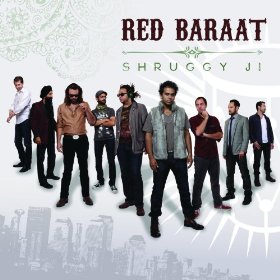
  • #50 album of 2013 – Shruggy Ji by Red Baraat

    Artist: Red Baraat

    Album: Shruggy Ji

    Before I digress for two paragraphs, let me tell you that the Brooklyn-based, half-Asian-immigrant band Red Baraat claim to center their sound on “hard driving North Indian bhangra rhythms with elements of jazz, go-go, brass funk, and hip-hop”. (They also Red Baraat - Shruggy Jiwinkingly adopt the genre name “dhol-and-bass”.) I don’t know anything about bhangra or go-go, but I can’t see what they’d gain by lying, so I take this assessment as true.

    As I’m starting my 50 Favorite Albums countdown here, I wanted to make a couple of public notes about the composition of this list. I’m happy with the fifty I chose, but I could certainly have made other choices. Most notably, I could have included some better-known records near the bottom of this list. David Bowie had a 2013 record; so did Nine Inch Nails; so did Camper Van Beethoven; they’re good records. I didn’t get much out of the new OMD album, but maybe if I’d worked at it harder I’d’ve loved it, like I do their 2010 comeback History of Modern. More likely, though, I’d’ve felt the way I do about the others I just mentioned: that while they’re fine, I haven’t found any reason why I, personally, would want to listen to them when the Man Who Sold the World or the Downward Spiral or Key Lime Pie (or the gallivanting Goblin King from Labyrinth) are still waiting in my collection for a fresh dose of ardor.

    I don’t mean to be unfair. There’s a dozen-plus artists on my list here who are also operating below the level of what I feel was their peak; it’s a basic statistical principle that the more you enjoy an album, the more likely it is that you won’t enjoy any of the artist’s other albums as much, and that’s fine. Many of my old loves this year still made albums that — regression to the mean aside — don’t need from me the benefit of any doubt. But all else being equal? I’m less likely to return to my 5th-favorite Camper Van Beethoven album than to the best album of blazingly modern Central Asian folk-dance music I’ve ever heard. Even if “best” is a near-synonym to “only”.

    **********

    Genre labels aside, then: what does Shruggy Ji sound like? Lots of clattering percussion, played by three of the eight band members, including band-leader Sunny Jain. Lots of cheerful assertive brass – the trombonist, Ernest Stuart, plays with a far snazzier personality than his instrument normally allows – and trickier, more oblique tunes played by (I think) saxophonist Mike Bomwell, who’s also a superb soloist. Lyrics that are rarely in English (and never in Spanish, the only other language I can occasionally fight to a draw), but — when they are — imply the kind of depth and political instincts we first encountered in Fight for Your Right to Party. (This may, obviously, be unfair.)

    The lead vocals, loud and gliding, sing melodies that may suggest, if you’re as ignorant as I am, snake-charmer music or Islamic summonings to prayer (what’s a couple thousand miles and a religious difference between friends?). The lead vocals are supplemented with jock-like backup grunts, “I’m too sexy for my shirt”-style low murmurs, and various noises I can best duplicate by vibrating my tongue really, really fast.

    Red BaraatThe review that drew my attention to Red Baraat was, of course, favorable, but criticized the songs for all sounding alike. I’ll first say this needn’t be bad if true: I think the Sex Pistols’ Never Mind the Bollocks and U2’s Boy and Metallica’s And Justice for All and the Cure’s Disintegration are great records, and they’re all variety-impaired. Then I’ll say that I’m not convinced it’s true of Shruggy Ji anyway. The songs certainly mix from similar ingredients, but Halla Bol has a bouncy, dancing-under-the-influence feel that reminds me of “gypsy-punk” bands like Gogol Bordello; Burning Instinct, on the other hand, starts from gleaming precision — like a top high school marching band dressed up for a guest appearance on Miami Vice — then piles on layers of dissonance and a steadily more march-like harshness without ever breaking stride. Dama Dam Mast Qalandar feels solemn, pensive, without needing to clear away the percussion or slow down the hyperspeed sax solo. Shruggy Ji itself is a methodical slow-building juggernaut, several cycling drum lines giving it a fantastically assertive yet swaying groove as the horn section swaggers forward. Sialkot is a particularly strong drum showcase; Private Dancers, rhythmic as Morse Code, somehow manages to be funk, klezmer, and hip-hop all at the same time. Azad Azad has the sneaky propulsion of a nighttime chase scene in an old movie.

    Red Baraat is only #50 on my list, for now, because I don’t understand the words, and I don’t really understand the musical traditions either. I can easily tell (some of) the songs apart by concentrating, but no matter how varied Shruggy Ji may be, it kind of all sounds like “oh hey, here’s more Red Baraat” to me because I have only a few other even remotely similar albums. (I can triangulate, badly, from Kultur Shock, Gogol Bordello, the Klezmatics, and the Debo Band, all of whom are strange to me in their own right). In other words, it’s only #50 on my list due to *my* weaknesses; ones I’m surely capable of fixing. And since it’s kinetic and jolly and exciting — well, as long as my stamina holds — it makes me wish to do so.

    – Brian Block

    To see the rest of our favorites, visit our Favorite Albums of 2013 page!


  • A review of Pat Benatar’s Between a Heart and a Rock Place

    A review of Pat Benatar’s Between a Heart and a Rock Place

    Between A Heart and a Rock Place
    Between A Heart and a Rock Place

    With a career spanning decades, Pat Benatar is one of rock’s leading ladies. Here’s a review of Pat Benatar’s Between A Heart and a Rock Place.

    I have enjoyed Pat Benatar’s powerhouse vocals ever since I was a young girl. I was introduced to her music by FM radio and my older sister, Sarah, who happened to own a copy of Benatar’s 1980 album, Crimes of Passion, on vinyl. That album has the distinction of being the very first one I ever purchased with my own money. I bought it at a local discount store, having walked there all by myself. I took the record home and played it over and over again. Pat Benatar’s music was a big part of the soundtrack of my youth. I was excited when I saw her 2010 memoir Between a Heart and a Rock Place for sale on Amazon.com. I managed to finish it within a couple of days.

    Benatar starts at the beginning, writing about her upbringing in Lindenhurst, Long Island in a close-knit Polish-Irish family. She took to music early and caught the attention of choir teachers in her local school district. Because she had an extraordinary voice from an early age, she took voice lessons. She set her sights on attending Juilliard and becoming an opera singer. Her voice was supposedly not unlike Julie Andrews’. But then Pat fell in love with her first husband, Dennis Benatar, and temporarily abandoned her music dreams in favor of a brief stint in college. She decided she’d teach sex ed.

    Dennis Benatar was a draftee in the Army and when Pat married him, she became an Army wife. She was moved to South Carolina and Virginia and she eventually took jobs working in banks. She was good at the work, but still wanted to sing. After seeing Liza Minnelli perform at the Richmond Coliseum, Pat’s desire to be a singer was rekindled. She took a job as a singing waitress in Richmond. Later, when Dennis got out of the Army, they moved back to New York and Pat started singing regularly at a club called Catch A Rising Star.

    It wasn’t long before Pat Benatar’s star began to rise. She found a manager and assembled a band. She recorded some songs and soon met the man who would become her star guitarist and husband, Neil Giraldo. Pat Benatar refers to him as “Spyder”. Though their relationship was initially professional, Pat eventually divorced Dennis Benatar and married Spyder. They have two daughters, Haley and Hana, and have been married since 1982.

    One thing I like to do before and after I read a book is check out what other people have to say about them. Many folks on Amazon.com seemed to think Pat Benatar’s life story is dull and boring. I didn’t feel that way at all. It’s true that as rock stars go, Pat Benatar has led a pretty straight-laced lifestyle. She doesn’t smoke, drink, do drugs, or have random sex with other celebrities. She doesn’t have a lot of juicy gossip to share with readers. What she does have is a story about her time pioneering rock music as a woman. Back in the dark ages of the 1980s, there weren’t a whole lot of female rock stars. Benatar was expected to be sexy and sultry, even though she wasn’t really like that. She had to deal with a lot of sexism.

    Benatar writes a lot about her dealings with her first label, Chrysalis, which was co-founded by Briton Terry Ellis. I was interested in reading about Ellis because I read Ray Coleman’s 1994 book The Carpenters: The Untold Story, which revealed that Ellis had dated Karen Carpenter. Coleman wrote a lot about their relationship and why it eventually failed. I got the impression that Terry Ellis was “fun” and liked to go out on the town. Pat Benatar’s comments about Ellis were far from complimentary. They had a strictly business relationship and Ellis apparently overworked her and treated her like a sex object. He even told her that people don’t go to a Pat Benatar concert to hear her sing! What?!!

    Aside from the business aspect of her music career, Benatar also writes about working with her husband, who is quite the musical genius. She comes across as very down-to-earth and family oriented. I got the sense that I would like Pat Benatar as a person. Benatar also includes color photos, which were fun to look at. I particularly enjoyed the photo of her daughters, born nine years apart. They look like they could be twins! Benatar was a very devoted mother to them and writes of getting them tickets to see Miley Cyrus, N-Sync, and other teen oriented acts. She’s charming as she explains that just like every other mom, she’s been to her share of teeny bopper concerts!

    Benatar also has a special love for a place in Hawaii. She writes lovingly of Hana, a small town in Maui, where she and Spyder got married and eventually built a home. Her description of the place makes me want to visit. It sounds heavenly.

    I really enjoyed Between a Heart and a Rock Place and would recommend it to anyone who likes to read memoirs about rock stars. Don’t read it expecting to read juicy gossip, though. Read it to learn about an extraordinary and dynamic woman’s rise to the top in a male oriented business. Pat Benatar is a great role model for young women. I’m proud to endorse her book.


    Pat Benatar sings “Heartbreaker” in 2001.